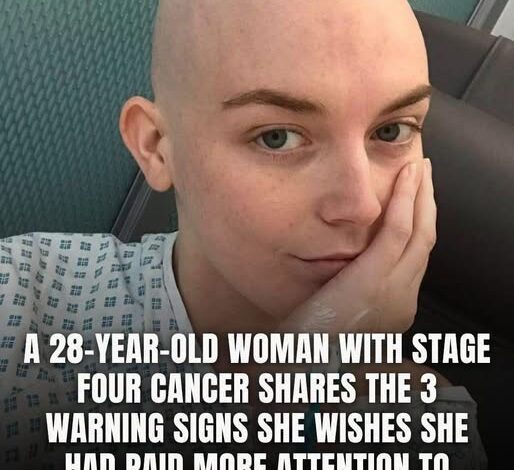
The moment Georgie found the lump, the room seemed to go silent.
Her fingers stopped moving.
Her breath caught.
There it was—hard, unmistakable, impossible to explain away.
For a few seconds, she simply stood there, frozen between disbelief and terror. Then, slowly, the past several months began rearranging themselves in her mind. The exhaustion that had settled into her bones. The night sweats that soaked through her sheets. The itching that became so unbearable she sometimes scratched until her skin broke.
She had been told it was stress.
Burnout.
A busy life catching up with her.
She had told herself the same thing.
Like so many young women trying to keep going, Georgie had learned to push through discomfort. She had convinced herself that tiredness was normal, that her body was simply protesting long hours, responsibilities, pressure, and ambition.
But standing there with her hand over the lump, she knew something deeper had been happening.
Her body had not been failing her.
It had been warning her.
And for months, those warnings had been dismissed as ordinary fatigue.
That realization was terrifying.
Because when symptoms are vague, people often hesitate to seek help. They worry they are overreacting. They worry about wasting a doctor’s time. They worry someone will tell them it is nothing and send them home feeling embarrassed.
Georgie had carried those same doubts.
The tiredness felt extreme, but life was demanding.
The night sweats were strange, but maybe it was hormones.
The itching was alarming, but perhaps it was allergies, dry skin, or anxiety.
There was always another explanation.
Until the lump made denial impossible.
The diagnosis that followed changed everything.
Suddenly, Georgie was no longer planning her life around work, friendships, travel, or ordinary dreams. She was sitting in medical rooms, listening to words no young person expects to hear. Scans. Results. Treatment. Chemotherapy. Survival.
Cancer turned her world into a calendar of appointments.
Her life became measured in blood tests, hospital visits, side effects, waiting rooms, and the quiet terror of not knowing what would happen next.
Chemotherapy became the treatment that gave her a chance to live.
But it also took something from her that she had not been ready to lose.
Her fertility.
Before Georgie had even fully decided whether she wanted children, the choice was pulled away from her. Treatment pushed her body into early menopause, forcing her into a grief that many people around her did not immediately understand.
Because survival is supposed to be the happy ending.
People are relieved when treatment works.
They celebrate when the cancer responds.
They say things like, “At least you’re alive.”
And of course, Georgie was grateful to be alive.
But gratitude did not erase the loss.
It did not erase the pain of realizing her ovaries had shut down.
It did not erase the ache of watching friends talk about future pregnancies, baby names, family plans, and possibilities that now felt painfully distant from her own life.
She was alive.
But she was also grieving.
That is one of the cruelest truths about serious illness. It does not only threaten the body. It changes the future. It takes choices, assumptions, plans, and versions of life that once seemed possible.
For Georgie, the physical fight was only part of the story.
There was also the emotional aftermath.
The anger.
The sadness.
The questions.
Why had she dismissed her symptoms?
Why had it taken a lump for everything to be taken seriously?
Why had her pain been so easy to explain away?
Those questions could have swallowed her.
Instead, she chose to speak.
By sharing her story, Georgie turned one of the hardest experiences of her life into something that could help others. She began speaking not only about cancer, but about the subtle warning signs that are too often ignored.
Fatigue that does not feel normal.
Night sweats that keep returning.
Itching that has no clear cause.
Lumps that should never be brushed aside.
She wanted people to understand that symptoms do not have to be dramatic to matter.
Sometimes the body whispers before it screams.
And those whispers deserve attention.
Her story has become especially powerful for people who second-guess themselves. People who have been told they are anxious. People who worry they are being dramatic. People who sit with unexplained symptoms and wonder whether they should just wait a little longer.
Georgie’s message is simple but urgent:
You are not a nuisance for asking questions.
You are not difficult for requesting tests.
You are not weak for admitting something feels wrong.
You are allowed to advocate for your body.
That message matters because many people, especially young women, are conditioned to minimize pain. They are taught to keep functioning, keep smiling, keep working, and keep explaining away discomfort until it becomes impossible to ignore.
But health should not depend on how loudly the body has to suffer before someone listens.
A doctor’s appointment may feel inconvenient.
A question may feel awkward.
A test may feel frightening.
But answers matter.
And sometimes, asking “What if this is something more?” can change everything.
Today, Georgie’s story is more than a personal account of illness.
It is a warning.
A lifeline.
A reminder that survival can come with hidden grief, and that healing is not always simple.
It is also a testament to her strength.
Not the kind of strength that pretends everything is fine.
The kind that tells the truth.
The kind that admits loss.
The kind that turns pain into purpose.
Chemotherapy helped save Georgie’s life.
But her voice may help save someone else’s.
Every person who hears her story and books an appointment instead of waiting is part of that legacy. Every person who stops dismissing their own symptoms because of her courage carries that message forward.
The lump she found changed her life.
But the truth she chose to share may change many more.
And that is why her story matters.
Because somewhere, someone is lying awake right now, drenched in sweat, exhausted beyond reason, scratching at skin that will not stop itching, telling themselves it is probably nothing.
Maybe it is.
But maybe it is not.
And Georgie’s story reminds them they deserve to know.