Some earthquakes shatter cities. Others expose the fault lines already running through politics, public life, and the private struggles of people the world thought it knew.
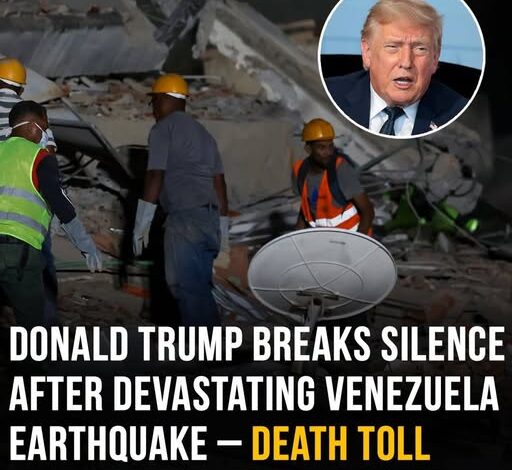
In Venezuela, two powerful earthquakes left a trail of destruction, reducing homes to rubble and forcing frightened families into the streets. Rescue crews worked through unstable buildings, searching for survivors beneath collapsed concrete while hospitals struggled to care for the injured. As officials warned that casualty figures could rise, entire communities waited desperately for news of missing loved ones, knowing that every passing hour made the search more urgent.
The disaster briefly cut across political divisions.
Despite years of strained relations between Washington and Caracas, Donald Trump publicly pledged American assistance, offering search-and-rescue resources and humanitarian support if needed. In moments of catastrophe, diplomacy sometimes gives way to something more immediate: the shared recognition that saving lives matters more than settling political differences.
Yet while Venezuela battled a visible crisis, other stories revealed very different kinds of upheaval.
Music legend Lionel Richie recently prompted concern after reports of a health scare interrupted a performance, reminding fans that even the most celebrated entertainers are not immune to physical limits. Behind decades of sold-out concerts and timeless songs stands a human being whose health, like anyone else’s, deserves care and compassion.
Elsewhere, renewed scrutiny surrounding Jeffrey Epstein has continued to draw prominent names back into public discussion.
Congressional inquiries and newly examined records have once again fueled conversations about powerful individuals, accountability, and the complex web of relationships surrounding Epstein’s network. Among those whose past associations have received renewed attention is Microsoft co-founder Bill Gates, whose meetings with Epstein have previously been the subject of public reporting and explanation. While public curiosity remains intense, ongoing discussions continue to distinguish between documented facts, allegations, and speculation.
In Texas, education has become another national battleground.
Debates surrounding proposals involving Bible instruction and religious content in public schools have divided parents, educators, lawmakers, and communities. Supporters argue that biblical literacy reflects an important part of American history and culture, while critics worry about the constitutional balance between religious freedom and public education. At its heart, the controversy reflects a broader question that extends well beyond one state: what role should religion play inside publicly funded classrooms?
Meanwhile, actor Joe Manganiello has spoken candidly about living with Type 1 diabetes, a condition he was diagnosed with as a teenager. Managing the disease has required constant discipline, careful monitoring, and lifelong commitment—an often invisible struggle that unfolds far from movie sets and red carpets. His openness has helped raise awareness that many serious health challenges remain hidden from public view, even when those living with them appear strong and successful.
Taken together, these stories share an unexpected connection.
Some disasters arrive without warning, shaking cities in seconds.
Others develop quietly over years, inside institutions, public debates, personal relationships, or the human body itself.
Some are witnessed by the entire world.
Others remain invisible until someone chooses to speak.
Whether the challenge is rebuilding after an earthquake, navigating public controversy, confronting illness, or wrestling with deeply held beliefs, each story reminds us that resilience often begins long before headlines appear.
The world may focus on dramatic moments, but recovery—whether personal or collective—is almost always measured in the quieter choices that follow.