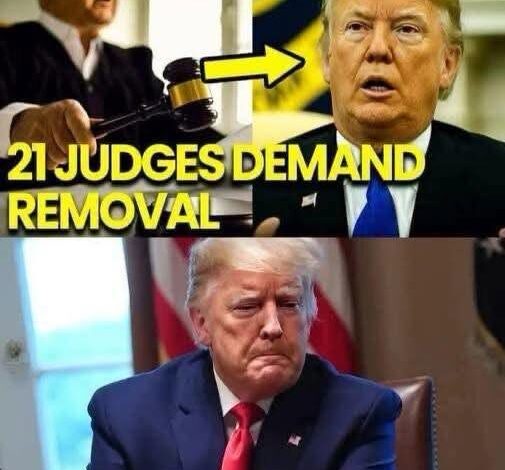
The letter itself drew immediate attention, but so did the people who signed it.
Federal judges rarely speak publicly on political controversies, making any collective statement by members of the judiciary highly unusual. That is why the document quickly became a focal point of debate in legal and political circles. Supporters viewed it as an extraordinary response to what they believed were extraordinary circumstances. Critics questioned whether such public intervention risked blurring the traditional boundaries between the judiciary and politics.
The letter carried no legal force. It could not compel Congress to act, overturn a decision, or determine the outcome of any investigation. Its significance instead lay in its symbolism. When members of a branch of government known for restraint choose to speak publicly, their words inevitably attract attention far beyond the courtroom.
The response was sharply divided.
Some lawmakers and legal scholars described the letter as a principled warning, arguing that judges have a responsibility to defend constitutional institutions when they believe those institutions are under strain. Others argued that public statements on politically charged matters risk undermining the appearance of judicial neutrality, even when motivated by genuine concern.
The debate extended well beyond the contents of the letter itself.
It raised broader questions about the role of judges in a polarized democracy. Should members of the judiciary remain silent except through their rulings? Or are there rare moments when speaking publicly becomes part of protecting the constitutional system they serve?
There is no universal answer.
The episode underscored how differently Americans view the responsibilities of public institutions during periods of political tension. For some, the letter represented courage. For others, it represented an uncomfortable departure from long-standing judicial norms.
Whatever one’s perspective, the controversy highlighted a larger challenge facing modern democracy: maintaining public confidence in institutions while navigating increasingly polarized political debates.
The discussion ultimately became about more than a single letter.
It became a conversation about the delicate balance between judicial independence, constitutional responsibility, and public trust. When confidence between branches of government begins to fray, even carefully considered actions can be interpreted through competing political lenses.
Whether the letter will be remembered as an important civic warning or as an unusual moment of judicial activism will likely depend on history’s broader assessment of the events that surrounded it.
What remains clear is that the episode reignited a fundamental question that extends beyond any individual president, judge, or Congress:
How should democratic institutions respond when those entrusted with preserving them disagree about where the boundary lies between restraint and responsibility?