Cutting into a piece of chicken only to discover an unexpected green patch can be enough to make anyone lose their appetite. For many people, the first thought is that the meat has gone bad or is unsafe to eat. While that can sometimes be true, a green discoloration doesn’t always mean the chicken is spoiled. The cause depends on where the color appears, how the meat looks and smells, and what happened before it reached your kitchen.
Understanding the difference can help you make a safer and more informed decision.
One of the most common explanations is bruising.
Like people, chickens can develop bruises after bumps, rough handling, or vigorous movement. When small blood vessels break beneath the muscle, blood becomes trapped in the tissue. As that blood gradually breaks down, its color changes over time—from dark red or purple to greenish or yellowish shades. It’s the same process that causes an old bruise on human skin to change color as it heals.
If the green area is simply the result of bruising, the meat itself is not automatically unsafe. Many people choose to trim away the discolored section before cooking, although the appearance alone may be enough for some to discard it.
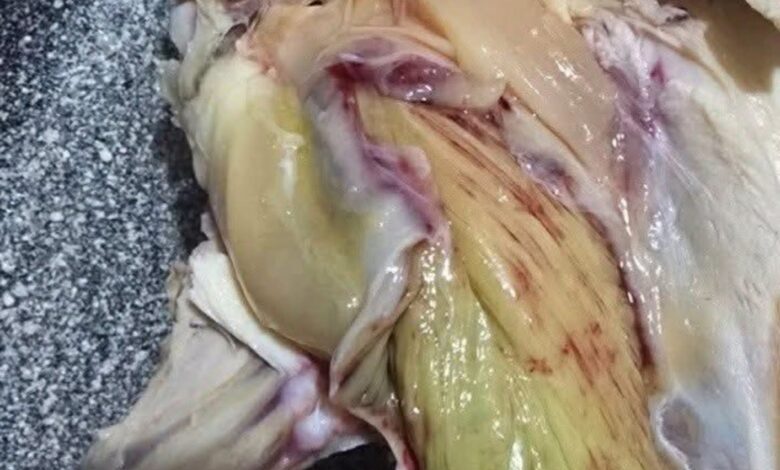
Another possible cause is a condition commonly known as green muscle disease.
Despite its alarming name, this condition is different from bacterial spoilage. It occurs most often in fast-growing broiler chickens and turkeys, particularly in the tenderloin portion of the breast. As these birds grow rapidly, the inner breast muscle may not receive enough oxygen-rich blood. Without adequate oxygen, parts of the muscle can become damaged and eventually die.
When processed, the outside of the chicken may appear perfectly normal while the inner tenderloin reveals a greenish-brown or olive-colored section. The affected tissue often has a firmer, spongier, or unusually dry texture compared with healthy meat.
Although green muscle disease is generally considered a quality issue rather than a food safety hazard, many consumers choose not to eat the affected portion because of its appearance and texture. If the bird was properly processed, stored, and thoroughly cooked, the condition itself is not typically associated with harmful bacteria.
The situation changes completely when spoilage is involved.
Spoiled chicken usually sends multiple warning signals—not just a change in color.
A sour, rotten, or sulfur-like smell is one of the strongest indicators that bacteria have multiplied to unsafe levels. The surface may feel slimy or sticky instead of clean and slightly moist. The meat may also become unusually soft, mushy, or develop discoloration that spreads beyond a single localized area.
If any of these signs are present, the safest decision is simple:
Throw the chicken away.
No amount of cooking can reverse decomposition or restore spoiled meat to a safe condition. If you’re questioning whether it’s safe, it’s usually better to replace the chicken than risk foodborne illness.
Sometimes, however, what appears to be green isn’t actually part of the meat at all.
Certain packaging materials, lighting conditions, and the natural structure of muscle fibers can create an iridescent or rainbow-like sheen across the surface of chicken. This optical effect is especially common with vacuum-sealed products and freshly sliced meats. Depending on the angle of the light, the surface may appear green, blue, or even purple.
Unlike true discoloration, this shimmering effect usually disappears or changes when the meat is viewed from another angle. The chicken should still smell fresh, feel firm, and show no other signs of spoilage.
When evaluating chicken, it’s important to look at the whole picture rather than focusing on color alone.
Ask yourself a few simple questions:
- Does it have a fresh, neutral smell, or is there a sour or unpleasant odor?
- Is the texture firm and slightly moist, or sticky and slimy?
- Is the discoloration confined to one area, or does it appear widespread?
- Could the color be caused by light reflecting off the surface?
Your senses are valuable tools for spotting food that may no longer be safe.
Proper storage also plays an important role in preventing spoilage. Raw chicken should be refrigerated promptly and cooked or frozen within the recommended time. Leaving poultry at room temperature for extended periods allows bacteria to multiply rapidly, even if the meat still looks normal.
Cooking chicken thoroughly is also essential.
Use a food thermometer to ensure the thickest part reaches an internal temperature of 165°F (74°C). Proper cooking destroys many harmful bacteria that may be present in fresh poultry, but it does not make spoiled meat safe to eat. If the chicken has already begun decomposing, cooking cannot undo that process.
In the end, discovering a green spot doesn’t always mean the chicken is dangerous, but it should never be ignored.
Bruising and green muscle disease are relatively common explanations that mainly affect appearance and texture. Optical color changes caused by packaging or lighting can also create harmless greenish reflections. Spoilage, however, is an entirely different matter and should always be treated seriously.
When you’re uncertain, trust more than your eyes.
Smell the chicken.
Check its texture.
Consider how it has been stored.
If anything seems off—especially if there’s an unpleasant odor, excessive slime, or widespread discoloration—the safest choice is to throw it away. Replacing a package of chicken is a small inconvenience compared with the risk of food poisoning.
When it comes to food safety, caution is never wasted.