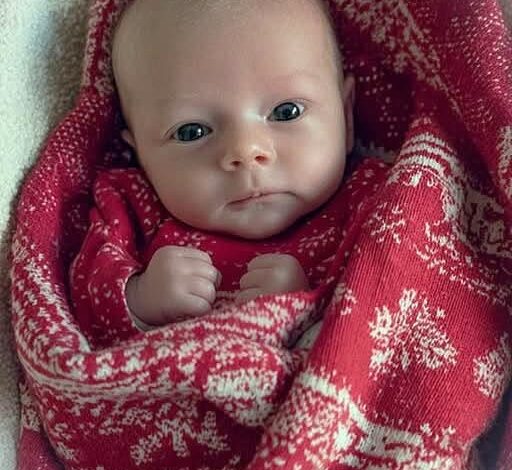
The room fell silent the moment my sister spoke the words.
“I can’t do this.”
For a second, I thought she meant the exhaustion, the emotions, or the overwhelming reality of finally becoming a mother after years of heartbreak.
Then she looked away from the tiny newborn sleeping peacefully in my arms.
“I don’t want the baby.”
The words didn’t just surprise me.
They shattered something I had spent the last nine months believing with all my heart.
This little girl hadn’t arrived by accident.
She was the answer to years of tears, prayers, and impossible choices.
My sister, Rachel, had dreamed of becoming a mother for as long as I could remember. I had stood beside her through three devastating miscarriages, each one stealing a little more of the hope that had once come so naturally to her. After every loss, I watched her become quieter, more guarded, afraid to imagine a future that kept slipping away.
When doctors finally told her another pregnancy carried significant medical risks, she mourned not only the children she had lost but the family she feared she would never have.
That was when I offered to become her surrogate.
It wasn’t a decision either of us made lightly.
There were months of conversations, medical appointments, counseling sessions, and legal paperwork. We talked through every possibility, every fear, every responsibility. By the time the embryo transfer finally happened, we both believed we were walking toward the same dream.
Throughout the pregnancy, Rachel was there for everything.
She attended nearly every doctor’s appointment.
She cried the first time we heard the heartbeat.
She laughed when the baby kicked so hard that my stomach visibly jumped beneath my shirt.
Together we chose nursery colors, folded tiny clothes, argued over baby names, and imagined birthdays, school plays, and family vacations.
Every milestone felt like another step toward the miracle she’d waited years to hold.
Then everything changed after the birth.
The delivery itself went smoothly.
When the nurses placed the baby in my arms, I immediately looked for Rachel.
Instead of joy, I saw confusion.
Beside her stood her husband, Daniel.
His face had gone pale.
“It’s a girl,” the nurse announced warmly.
No one answered.
Daniel’s expression hardened almost instantly.
Outside the room, I later overheard the argument that changed all of our lives.
“You promised we’d keep trying until we had a son.”
“This wasn’t supposed to happen.”
Rachel’s voice trembled.
“She’s our baby.”
Daniel shook his head.
“I wanted a boy.”
“I can’t do this.”
At first, I assumed he simply needed time.
But over the next two days, he refused to hold the baby.
He barely looked at her.
Every conversation centered on disappointment rather than gratitude.
By the third day, he delivered an ultimatum.
“If we’re taking a child home, it won’t be her.”
The words made my stomach turn.
Rachel looked trapped between the husband she loved and the daughter she’d dreamed about for years.
Then she walked into my hospital room.
Her eyes were swollen from crying.
“I don’t think we should keep the baby.”
I stared at her, unable to believe what I was hearing.
“What?”
“Daniel says…”
“I don’t care what Daniel says.”
She broke down.
“I can’t lose my marriage.”
I looked down at the sleeping newborn wrapped in a pink hospital blanket.
She yawned softly, completely unaware that adults were debating whether she deserved to be wanted.
In that moment, everything became painfully clear.
I pulled the baby a little closer.
“If neither of you wants her…”
My voice shook.
“…then leave.”
Rachel stared at me.
“What?”
“I carried her.”
“I protected her.”
“And I’m not handing her to people who see her as a disappointment before she’s even opened her eyes.”
Daniel didn’t argue.
He simply walked out.
Rachel followed him.
For the first time since giving birth, I cried.
Not because I regretted becoming a surrogate.
Because I couldn’t understand how unconditional love had become conditional so quickly.
The next several days were filled with difficult conversations involving attorneys, counselors, and social workers.
Everyone focused on paperwork.
I focused on feeding schedules, diaper changes, and holding a little girl who deserved so much better than uncertainty.
Then, four days later, there was another knock on my hospital door.
Rachel stood there alone.
The first thing I noticed was her left hand.
Her wedding ring was gone.
She looked exhausted.
But different.
“I left him,” she said quietly.
I didn’t speak.
“I kept hearing myself say I didn’t want my daughter.”
She covered her face with trembling hands.
“Those weren’t my words.”
“They were his.”
“I almost let someone else’s prejudice become my own.”
Tears rolled down her cheeks.
“I’ll spend the rest of my life making sure she never doubts she was wanted.”
I believed her.
Not because of what she said.
Because of the way she walked toward the bassinet.
She reached inside carefully, lifted her daughter into her arms, and began crying before the baby even opened her eyes.
“I’m so sorry,” she whispered.
“I’m so, so sorry.”
The road ahead wasn’t easy.
There were legal documents to revise.
Custody arrangements to confirm.
A divorce to navigate.
Therapy appointments.
Difficult conversations with relatives who couldn’t understand why Rachel had chosen single motherhood over staying with her husband.
But little by little, she rebuilt.
She learned midnight feedings.
She mastered diaper changes.
She celebrated first smiles, first steps, first words, and every tiny milestone she had nearly missed.
The fear that once controlled her slowly gave way to fierce devotion.
Years later, I watched my niece race across a playground before throwing herself into Rachel’s waiting arms.
The little girl had no memory of those frightening first days.
She only knew the woman who never missed a school recital, kissed scraped knees, read bedtime stories, and reminded her every single day that she was deeply loved.
Sometimes people ask whether I regret becoming a surrogate after everything that happened.
My answer is always the same.
Never.
Because surrogacy didn’t break our family.
It revealed what truly mattered.
It exposed prejudice that might otherwise have remained hidden.
It forced impossible decisions that ultimately led my sister toward becoming the mother she had always been capable of being.
Love isn’t measured by biology.
It isn’t determined by whether a child is a boy or a girl.
It isn’t something that depends on expectations being perfectly fulfilled.
Real love is a choice.
A choice made in difficult moments.
A choice renewed every day through actions instead of words.
Watching Rachel become the mother her daughter deserved taught both of us something we will never forget.
Children are never responsible for meeting the expectations adults place upon them.
They deserve to be welcomed exactly as they are.
And the strongest families aren’t built on perfect beginnings.
They’re built by people who choose, day after day, to love each other without conditions, without bargaining, and without exception.