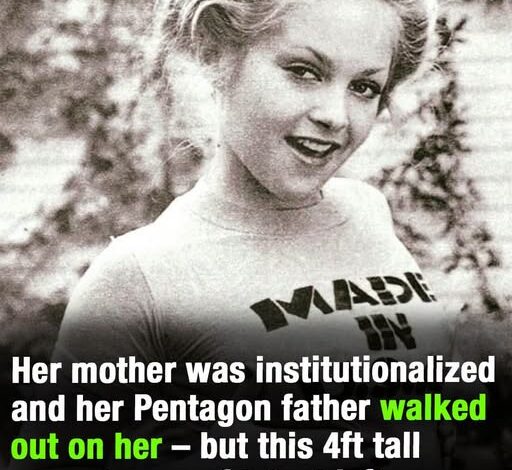
Charlene Tilton’s journey is one of extraordinary resilience—a life marked by profound hardship, unexpected triumphs, painful setbacks, and an enduring determination to keep moving forward. Long before millions of television viewers knew her as Lucy Ewing on Dallas, she was a little girl searching for stability in a world that rarely offered it. The obstacles she faced in childhood could easily have defined her future. Instead, they became the foundation of a remarkable story of perseverance.
Born on December 1, 1958, in San Diego, California, Charlene entered the world under difficult circumstances. Her father was absent from her life, and her mother struggled with severe mental illness that made it impossible to provide the consistency and care every child needs. Much of Charlene’s early childhood was spent moving through foster homes and temporary living arrangements, never knowing how long she would stay in one place before being uprooted again.
The emotional uncertainty left deep scars.
As a child, she often overheard adults discussing where she would live next or whether anyone was willing to care for her. Those conversations created an overwhelming sense of rejection, planting fears that many children would carry for a lifetime. Yet even during those lonely years, Charlene discovered a source of hope that no one could take away.
Movies and television became more than entertainment.
They represented possibility.
Watching actors transform into unforgettable characters allowed her to imagine a future beyond instability and loneliness. She began dreaming of becoming an actress herself, believing that somewhere beyond the uncertainty of foster care there might be a place where she truly belonged.
That dream quickly became her purpose.
Despite having no industry connections or formal advantages, Charlene refused to let her circumstances determine her future. She studied performances, attended auditions whenever possible, and looked for every opportunity to get closer to the world she admired. Rejection came often. She was told she lacked experience, was too young, or simply wasn’t the right fit.
Still, she kept showing up.
Persistence eventually opened the door that changed her life forever.
In 1978, Charlene was cast as Lucy Ewing in the primetime drama Dallas. Although initially intended as a smaller role, Lucy’s spirited personality and Tilton’s natural charisma quickly captured viewers’ attention. As the series exploded into one of television’s biggest global phenomena, Charlene became one of its breakout stars.
Practically overnight, she found herself recognized around the world.
The success brought opportunities she had once only imagined. Magazine covers, television interviews, public appearances, and devoted fans followed as Dallas became a cultural sensation. For someone who had spent her childhood wondering whether anyone wanted her, the sudden admiration was both exhilarating and overwhelming.
Yet fame could not erase old wounds.
The insecurities formed during childhood continued to linger beneath the surface, even as success surrounded her. Like many people who experience rapid fame at a young age, Charlene discovered that public recognition does not guarantee private happiness.
Her personal life soon became increasingly complicated.
Marriage brought hopes of stability, but the relationship ultimately ended in divorce. Financial difficulties followed, proving that even successful television careers can be unpredictable. Career setbacks added further disappointment, including losing her role on Dallas for a period during the show’s run.
Each setback carried its own emotional weight.
For someone who had fought so hard to build a career, professional uncertainty reopened fears she had worked for years to overcome. Yet every time life knocked her down, she found a way to begin again.
Perhaps the most devastating loss came years later.
Charlene found lasting happiness with cinematographer Cheddy Hart, and together they built a loving relationship that offered the sense of security she had searched for throughout much of her life. Tragically, that future was shattered when Hart died suddenly of heart failure in 2009.
His death left an enormous void.
Losing the person who had become her partner and source of strength could easily have pushed her into despair. Instead, Charlene chose a different path.
Rather than allowing grief to consume her, she gradually transformed it into compassion for others.
She became increasingly involved in charitable work and advocacy, particularly supporting individuals and families affected by autism. Drawing on her own experiences with hardship, she devoted time to mentoring, teaching, fundraising, and helping create opportunities for people who often face misunderstanding or exclusion.
Her focus shifted from personal success to meaningful service.
The same empathy born from a difficult childhood became one of her greatest strengths. Charlene understood what it meant to feel overlooked, and she dedicated herself to helping others feel seen, valued, and supported.
Over the years, she also embraced forgiveness.
Instead of remaining trapped by resentment toward the circumstances that shaped her early life, she chose to acknowledge her pain without allowing it to define her future. That decision did not erase the past, but it gave her freedom to build a life centered on gratitude rather than bitterness.
Today, Charlene lives a quieter life in Nashville, Tennessee.
Away from the relentless spotlight that once surrounded her, she treasures the role she values above every professional accomplishment: being “Glamma” to her grandsons. Family, simple moments, and meaningful relationships have become the center of her life, reflecting priorities earned through decades of both triumph and heartbreak.
Her journey reminds us that success alone does not create happiness, and hardship alone does not determine destiny.
She has experienced abandonment, instability, international fame, financial struggles, personal loss, career uncertainty, and profound grief. Through every chapter, she continued choosing hope over surrender, compassion over resentment, and purpose over despair.
Charlene Tilton’s story is ultimately not just about television stardom.
It is about resilience.
It is about discovering that the most important victories often happen far away from cameras and applause. They happen when someone refuses to let childhood pain dictate adulthood, when loss becomes compassion instead of bitterness, and when life’s deepest wounds become the very source of strength that helps others heal.
Her beginning was marked by uncertainty, but it never determined her ending.
Instead, Charlene Tilton built a life that demonstrates a powerful truth: even the most broken chapters do not have the authority to write the final page. Sometimes the greatest role a person ever plays is simply becoming living proof that hope can outlast heartbreak.