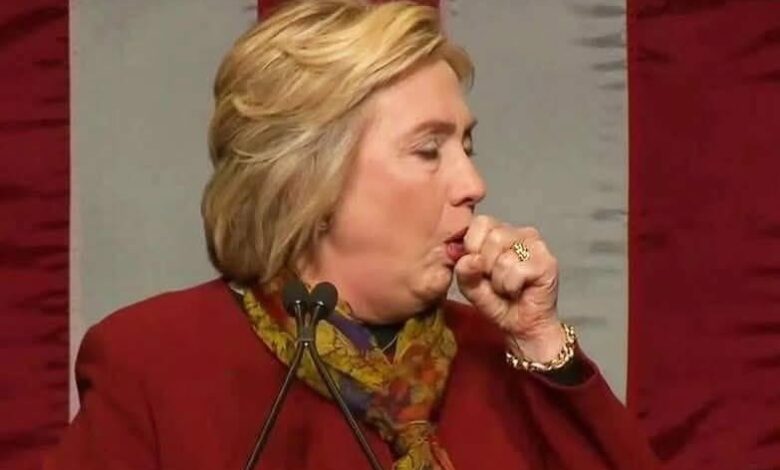
A tense silence has settled over countless homes as people repeatedly check news alerts, hoping the next update brings clarity instead of deeper concern. In moments like these, politics briefly gives way to something more universal: the unsettling reminder that no amount of influence, experience, or public stature can place anyone beyond the reach of serious illness. Until verified information emerges, uncertainty fills the space where answers should be.
For many supporters, the concern reaches far beyond political loyalty. They see someone whose career has stretched across decades of public service, historic campaigns, diplomatic challenges, relentless scrutiny, and remarkable resilience. Through victories and defeats alike, she has remained a familiar figure in American public life, making the possibility of a sudden health crisis feel deeply personal to those who have followed her journey for generations.
Even longtime critics often find themselves setting political disagreements aside.
Moments involving serious health have a way of stripping away partisan identity and revealing something far more fundamental: our shared vulnerability. Ideological divisions may shape public debate, but they do little to diminish the reality that every person, regardless of office or reputation, can face unexpected medical challenges.
As speculation spreads online, many people are searching for facts while trying to avoid the flood of rumors that inevitably accompanies high-profile news. Social media fills rapidly with claims, opinions, and unverified reports, making it increasingly difficult to separate reliable information from conjecture. In situations like this, patience becomes just as important as curiosity.
Meanwhile, public officials, colleagues, and longtime acquaintances are expected to express concern and offer messages of support as more information becomes available. Such moments often transcend political affiliation, reflecting the understanding that compassion need not depend upon agreement.
Beyond Washington, the uncertainty resonates in quieter ways.
Families who have watched decades of American political history unfold together now find themselves discussing current events around dinner tables and living rooms. Parents answer questions from children who recognize a familiar public figure without fully understanding why the news has captured so much national attention. Older generations recall earlier chapters of her public life, reflecting on how closely one individual’s story has become intertwined with the country’s modern political history.
The waiting itself becomes part of the experience.
Each passing hour without definitive information encourages both concern and speculation, while the desire for credible updates grows stronger. In an age of instant communication, silence can sometimes feel louder than constant headlines.
Whatever personal opinions people may hold, serious health concerns have a way of reminding us of our common humanity. Public service, political rivalry, electoral victories, and ideological differences all become secondary when confronted with the possibility of personal suffering.
For now, certainty remains elusive.
Until verified medical information is released, the country watches, waits, and hopes for clarity. Amid a landscape so often defined by disagreement, this shared uncertainty has created a rare pause—one in which concern briefly outweighs division and many people, regardless of perspective, find themselves united by the simple hope for good news.