My Husband Announced Our Divorce at My Retirement Party – But Before I Could Leave, My Boss Took the Microphone and Made Him Regret Every Word

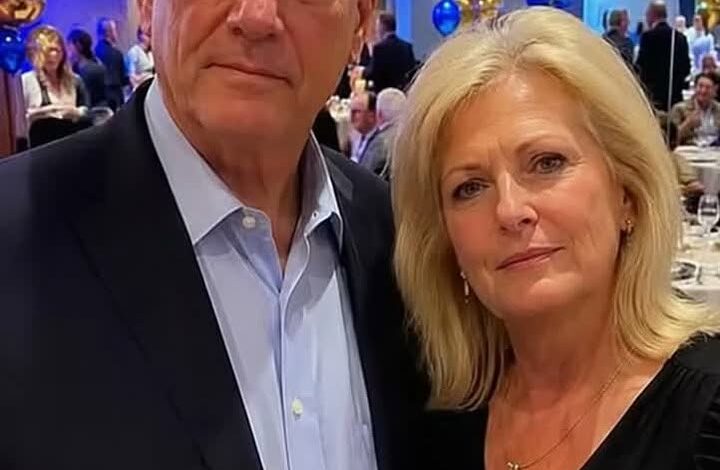
For thirty-five years, I imagined exactly how my retirement celebration would unfold.
There would be laughter.
A few heartfelt speeches.
Perhaps a slideshow of old photographs that would make everyone groan at the hairstyles we once thought looked fashionable.
I pictured hugs from coworkers who had become lifelong friends, a slice of cake, and one final walk out of the office feeling grateful for a career well lived.
It was supposed to be the kind of evening people remember with warmth.
Instead, it became the night my entire life split into two parts.
Before.
And after.
The restaurant had been beautifully decorated. White tablecloths covered every table, candles flickered softly, and bouquets of fresh flowers sat beside framed photographs from different stages of my career. Around me were people I had worked alongside for decades—coworkers, supervisors, former clients, community leaders, and friends who had watched me grow from a nervous young employee into one of the most experienced members of the organization.
For the first hour, everything unfolded exactly as I had imagined.
People laughed over old stories.
Someone joked about my legendary filing system.
Another teased me about always arriving fifteen minutes early to every meeting.
I felt loved.
Appreciated.
Seen.
Then my husband stood.
At first, I smiled, assuming he wanted to congratulate me.
After all, we had been married for nearly thirty-eight years. Whatever struggles existed between us, surely this wasn’t the night to discuss them.
He lifted his wineglass.
The room gradually quieted.
“I’d like to say a few words,” he began.
His voice was calm.
Too calm.
“I’ve watched Margaret dedicate herself to her career for thirty-five years.”
He paused.
“And now that this chapter is over, I think it’s only fair that I begin mine.”
Confused murmurs drifted through the room.
Then he looked directly at me.
“I’ve decided I want a divorce.”
The words seemed to suspend themselves in the air before crashing into every person in the room.
Silence followed.
Not polite silence.
Shock.
Forks froze halfway to mouths.
Servers stopped walking.
Someone dropped a spoon.
I could actually hear it hit the floor.
Heat rushed into my face so quickly I thought I might faint.
My heartbeat pounded in my ears.
Every instinct told me to disappear.
I wanted the floor to open beneath me.
I wanted to wake up.
I wanted this to be anyone else’s life.
He continued speaking.
He talked about growing apart.
About wanting freedom.
About starting over while there was still time.
Each sentence felt less like honesty and more like a performance carefully rehearsed for maximum effect.
This wasn’t a private conversation that had reached an unfortunate ending.
It was a public declaration.
An audience had been invited.
Except I hadn’t realized I was the entertainment.
When he finally sat down, no one moved.
The silence became unbearable.
Then, from the far side of the room, someone slowly stood.
It was Daniel.
He had joined the company fresh out of college almost twenty years earlier.
I had trained him during his first week.
He looked at me—not my husband.
“I wasn’t planning to speak tonight,” he said quietly.
“But I don’t think this evening should end with the last thing we just heard.”
He turned toward everyone else.
“When I started here, I knew absolutely nothing. I was terrified.”
Several people nodded knowingly.
“Margaret never laughed at my mistakes. She never made me feel stupid. She stayed late almost every evening that first month because she refused to let me believe I couldn’t do the job.”
He smiled.
“I still use things she taught me every single day.”
Before I could fully absorb his words, another chair scraped across the floor.
Susan stood.
“I wouldn’t own my business today without Margaret.”
I blinked.
Susan had once been a client nearly fifteen years earlier.
“I came into her office convinced everything I’d built was about to collapse.”
She laughed softly.
“I remember crying before I’d even finished explaining the problem.”
Several people looked surprised.
“I don’t remember most of the legal paperwork she helped me complete.”
Susan looked directly at me.
“But I’ll never forget that she looked at me and said, ‘We’ll solve one problem at a time.'”
Her voice caught.
“Nobody had spoken to me with that kind of patience in weeks.”
She paused.
“She didn’t just save paperwork.”
“She saved my confidence.”
Someone else stood.
Then another.
Within minutes, people across the room were taking turns speaking.
Not because anyone had organized it.
Because they wanted to.
A retired firefighter described how I’d helped his wife navigate complicated paperwork after he was injured.
A widow recalled sitting across from me only days after losing her husband.
“I couldn’t understand anything people were asking me to sign,” she said.
“Margaret pushed every document aside.”
Then she smiled through tears.
“She made me tea first.”
The room laughed gently.
“Only after I stopped crying did she explain everything.”
Another former client admitted he’d arrived furious after spending weeks being transferred from office to office.
“I walked in ready for a fight.”
He shook his head.
“Instead she listened.”
“No interruption.”
“No judgment.”
“I left wondering why every office couldn’t have someone like her.”
Story after story filled the room.
Many described moments I had completely forgotten.
Small conversations.
Quick phone calls.
Tiny decisions made during ordinary workdays.
I had never considered any of them remarkable.
Yet these people remembered them years later.
As I listened, something inside me began shifting.
For decades, my husband had quietly minimized everything I accomplished.
He never openly insulted my work.
He simply dismissed it.
“You sit behind a desk.”
“It’s just paperwork.”
“Anyone could do what you do.”
Whenever someone complimented me, he found a way to shrink it.
“They’re just being polite.”
“Don’t make too much of it.”
“It wasn’t brain surgery.”
Over time, I had unconsciously adopted his perspective.
Whenever someone praised me, I immediately downplayed it myself.
Whenever I succeeded, I told myself it wasn’t particularly important.
It became easier to believe I was ordinary than to argue.
Standing in that room, I realized something painful.
The people whose lives I had touched had never viewed my work as ordinary.
Only I had.
Or rather…
Only the version of me shaped by years of hearing my accomplishments quietly diminished.
Then my former department director stepped forward.
“There is something else,” she said.
She smiled at me warmly.
“For nearly a year, our leadership team has been discussing how impossible it will be to replace Margaret.”
I laughed awkwardly.
“You will,” I said automatically.
She shook her head.
“No.”
“We’ll replace the position.”
“We can’t replace the person.”
She held up a folder.
“For months we’ve studied client feedback, employee evaluations, mentorship reports, and training records.”
Every eye in the room turned toward her.
“One pattern kept appearing.”
She looked directly at me.
“Whenever people described their best experience with this company…”
“They described you.”
I felt my throat tighten.
“They didn’t mention policies.”
“They didn’t mention procedures.”
“They mentioned how you made them feel.”
She opened the folder.
“Beginning next year, every new employee will complete a mentorship program built around the communication methods, problem-solving approach, and client care standards Margaret developed over thirty-five years.”
She paused.
“It will officially be known as the Margaret Ellis Client Care Initiative.”
The room erupted into applause.
I couldn’t move.
I couldn’t speak.
I had spent years believing my work disappeared the moment each day ended.
Instead, it had quietly shaped an entire culture.
Then, through the applause, I looked across the room.
My husband sat perfectly still.
For the first time all evening, he looked uncertain.
Almost confused.
As though the room had begun telling a story he had never heard before.
Or perhaps one he had refused to hear.
In that moment, something became painfully clear.
He had announced our divorce believing he would define the evening.
He thought he understood who I was.
A woman with an ordinary office job.
Someone whose retirement marked the end of an unremarkable career.
Instead, hundreds of people revealed a truth he had never bothered to notice.
The work I did mattered.
The kindness I offered mattered.
The patience I gave people mattered.
Most of all…
I mattered.
Driving home later that night, the silence inside the car felt completely different from the silence after his announcement.
It no longer felt humiliating.
It felt honest.
For years, I had believed our marriage required me to become smaller.
Quieter.
Less visible.
I had mistaken humility for disappearance.
Support for self-erasure.
Love for permission to be overlooked.
That evening shattered those illusions.
The applause itself didn’t change me.
Neither did the speeches.
What changed me was hearing my life described by people whose only reason for speaking was gratitude.
They had no reason to exaggerate.
Nothing to gain.
They simply told the truth.
A few weeks later, I signed the divorce papers.
Not because of the embarrassment at the party.
Not because I wanted revenge.
Not because strangers had applauded me.
I signed them because I finally understood the difference between being appreciated publicly and being diminished privately.
One was built on respect.
The other on habit.
Retirement turned out not to be the ending I expected.
It became a beginning.
I started volunteering with nonprofit organizations, mentoring young professionals, and occasionally speaking to new employees enrolled in the training program that now carried my name.
Each time I walked into those sessions, I remembered the woman who had almost believed her life had amounted to nothing more than routine paperwork.
She had been wrong.
And she had spent far too many years believing someone else’s version of her story.
That retirement party didn’t end my career.
It restored my voice.
My husband believed his announcement would become the defining memory of that evening.
Instead, it became the moment everyone else reminded me who I had been all along.
Not invisible.
Not ordinary.
Not someone whose worth depended on another person’s opinion.
Just a woman who had quietly changed lives for decades—until, finally, someone insisted she hear the truth about herself.
The greatest gift I received that night wasn’t the cake, the speeches, or even the standing ovation.
It was permission to see myself through the eyes of people whose lives I had helped.
And once I saw that woman clearly…
I could never agree to disappear again.