The boy had to get 38 stitches because the refrigerator suddenly ᴇxᴘʟᴏᴅᴇᴅ: W.a.r.n.i.n.g: Do not put these things in the freezer

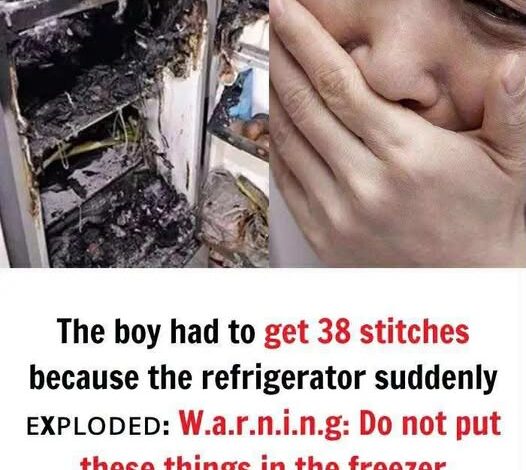
What began as an ordinary trip to the kitchen ended in a life-changing injury that no family could have anticipated. A child simply wanted a colder drink and reached into the freezer for a can that had been left there to chill a little faster. Moments later, that routine decision turned into a terrifying emergency. The can had become dangerously overpressurized, and when it was opened, it exploded with tremendous force, sending sharp fragments of metal into the boy’s face. By the time the ordeal was over, he had undergone emergency treatment, received 38 stitches, and was left with a permanent scar that would forever remind him of an accident that lasted only seconds.
The incident serves as a sobering reminder that everyday household items can become hazardous under the wrong conditions. Most people think of freezers as places of safety—used to preserve food and keep drinks cold—not as environments where hidden pressure can build unnoticed. Yet certain items react very differently when exposed to freezing temperatures, creating risks that are easy to overlook.
Carbonated beverages are among the most common examples. Inside every sealed can or bottle is dissolved carbon dioxide, which gives the drink its familiar fizz. As the liquid inside freezes, it expands, increasing the pressure within the sealed container. The metal or plastic is designed to withstand normal storage conditions, but it has limits. Once those limits are exceeded, the container can rupture unexpectedly. Even if it doesn’t burst while freezing, opening it afterward may release the built-up pressure with surprising force.
In the reported incident, that appears to be exactly what happened. What seemed like a harmless shortcut to cool a drink quickly had quietly transformed the can into a dangerous projectile. Instead of enjoying a cold beverage, the child was suddenly facing severe facial injuries that required immediate medical attention. The physical wounds eventually healed, but the emotional impact on both the child and the family is something that can linger far longer than the stitches themselves.
Medical professionals have warned that this type of accident is not as rare as many people assume. Emergency departments have treated injuries involving exploding frozen cans, bottles, and other sealed containers, particularly when they contain carbonated liquids. While many cases result only in a messy cleanup, others can lead to cuts, eye injuries, or facial trauma serious enough to require surgery or extensive medical care.
Carbonated drinks are not the only items that deserve caution. Sealed containers of alcohol can present similar risks if left in the freezer for extended periods, depending on their alcohol content and the amount of liquid inside. Some beverages freeze more readily than others, allowing pressure to build within the container. Likewise, dry ice requires careful handling because it continuously releases carbon dioxide gas as it changes from a solid directly into a gas. When stored inside a tightly sealed container, that gas has nowhere to escape, causing pressure to increase rapidly and potentially leading to an explosion.
The encouraging news is that these accidents are largely preventable with a few simple habits.
Instead of placing cans or bottles in the freezer to cool them quickly, allow beverages to chill naturally in the refrigerator whenever possible. If you need them cold in a shorter amount of time, placing them in an ice bucket filled with ice and water is generally a safer alternative. This method cools drinks efficiently without exposing sealed containers to the freezing conditions that can create dangerous pressure.
It’s also wise to avoid leaving drinks unattended in the freezer. Many people intend to retrieve a beverage after only a few minutes but become distracted and forget about it until much later. Setting a timer or choosing another cooling method can help prevent an innocent oversight from becoming a costly or dangerous mistake.
Families should also take time to explain these risks to children. Young people are naturally curious and may not recognize that an ordinary soda can or bottle can become hazardous after freezing. Teaching them never to open frozen carbonated beverages—or to place sealed containers in the freezer without an adult’s guidance—can reduce the likelihood of accidents. A brief conversation today may prevent a painful injury tomorrow.
When handling dry ice, always follow recommended safety practices by storing it in containers that allow gas to vent rather than in airtight vessels. Proper ventilation helps prevent pressure from building to dangerous levels and reduces the risk of unexpected explosions.
Ultimately, this heartbreaking incident is a powerful reminder that many household accidents arise not from reckless behavior but from ordinary routines carried out without realizing the hidden dangers involved. A can left in the freezer for “just a little while” may seem insignificant, yet under the right conditions it can become something far more hazardous than most people imagine.
Fortunately, preventing these injuries requires no expensive equipment or complicated precautions—only awareness, patience, and a few safer habits. Cooling beverages in the refrigerator, using ice when speed is important, handling dry ice correctly, and helping children understand these simple safety rules can dramatically reduce the risk. Sometimes the smallest choices make the greatest difference, and a single moment of caution can spare a family from an accident whose consequences last a lifetime.