Some mysteries fade as evidence accumulates. Others become more haunting with time because every answer seems to create another question.
The death of Joshua Maddux belongs to the second kind.
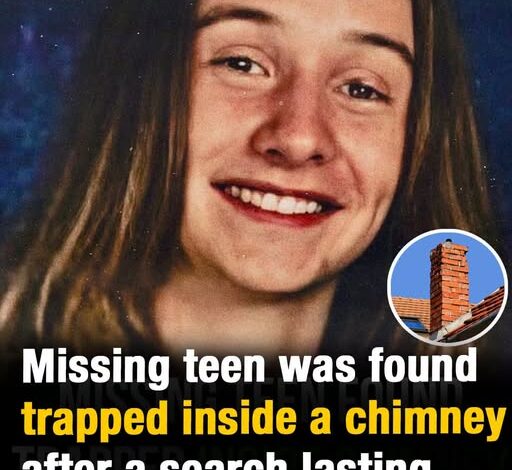
Joshua was an 18-year-old from Woodland Park, Colorado, remembered by family and friends as a thoughtful young man with a love of music, writing, and exploring the forests near his home. He disappeared in May 2008, leaving behind worried relatives and few clues about where he had gone or what might have happened to him.
For years, there were no answers.
Then, in 2015, workers preparing to demolish an abandoned cabin made a discovery that stunned the entire community.
Joshua’s mummified remains were found inside the cabin’s chimney.
The location alone seemed almost impossible to explain.
The narrow chimney was only about a mile from his home, yet his body had remained hidden there for years. Instead of bringing closure, the discovery opened a new chapter filled with difficult questions and competing theories that continue to be debated today.
The circumstances surrounding the scene were unusual.
Joshua’s body was found lodged within the chimney, and reports indicated that some of his clothing had been discovered elsewhere inside the cabin. Accounts also described a heavy object or barrier positioned across the fireplace opening, a detail that fueled further speculation about how he became trapped and whether anyone else had been involved.
Despite extensive examination, investigators found no clear evidence of major trauma such as broken bones that would immediately point to a violent assault. Toxicology testing was limited because of the condition of the remains, and no definitive physical evidence established exactly what happened during Joshua’s final hours.
That uncertainty gave rise to several competing explanations.
One theory suggested a tragic accident.
According to this possibility, Joshua may have entered the abandoned cabin through the roof and attempted to climb down the chimney, perhaps after discovering that the doors or windows were inaccessible. If he became wedged inside, he could have been unable to free himself, eventually dying from exposure or positional asphyxia.
Supporters of this theory point to the fact that abandoned buildings sometimes attract curious explorers, especially young people. They argue that a fatal miscalculation, while rare, is not impossible.
Others strongly question that explanation.
The cabin’s owner reportedly stated that the chimney design made entry from the top extremely difficult or impossible, raising doubts about whether Joshua could have descended into it as suggested. Members of Joshua’s family also struggled to accept the accident theory, saying it did not fit what they knew about him or the physical circumstances surrounding the discovery.
These concerns led to another possibility.
Some observers have wondered whether Joshua may have been the victim of foul play and that his body was deliberately concealed inside the chimney. Questions about the position of his clothing, the reported obstruction near the fireplace, and other unusual details have fueled speculation that another person—or perhaps more than one—could have been involved.
However, investigators have never publicly identified sufficient evidence to support a homicide charge.
As a result, the case has remained surrounded by uncertainty.
That uncertainty has proven especially painful for Joshua’s family.
When a loved one disappears, hope and fear often exist side by side. Even after remains are found, families usually expect that answers will finally replace the unknown. In Joshua’s case, the discovery brought confirmation of his death but left the central question untouched.
Why?
How did an intelligent, creative teenager end up trapped inside a chimney so close to home?
What happened during those final moments?
Those questions continue to linger because no investigation has been able to provide a definitive explanation that accounts for every known detail.
Over the years, the case has attracted widespread public attention through documentaries, podcasts, online discussions, and news reports. Many people continue to examine photographs, investigative summaries, and witness statements, hoping to identify something that may have been overlooked.
Yet speculation should not be mistaken for established fact.
While numerous theories have circulated online, many remain unsupported by conclusive evidence. The unusual nature of the scene has naturally invited debate, but the available public information has not produced a universally accepted explanation for Joshua’s death.
In the end, what makes this case so enduring is not simply where Joshua was found.
It is the absence of certainty.
His story is remembered not because investigators solved an extraordinary mystery, but because they could not fully explain one. The unanswered questions have become inseparable from his memory, leaving both investigators and those who loved him confronting possibilities instead of conclusions.
For his family, the tragedy has never been about internet theories or public fascination.
It has always been about the loss of a son, a brother, and a young man whose future ended far too soon.
Years later, the abandoned cabin is gone, but the questions remain.
Somewhere between accident and intention, between explanation and uncertainty, lies a truth that has never been fully uncovered. Until compelling new evidence emerges, Joshua Maddux’s final moments remain one of Colorado’s most puzzling unsolved mysteries—a heartbreaking reminder that discovering where someone died does not always reveal how, or why, they were lost.