Trump reveals he has left instructions to ‘wipe Iran off the face of this earth’ if they assassinate him

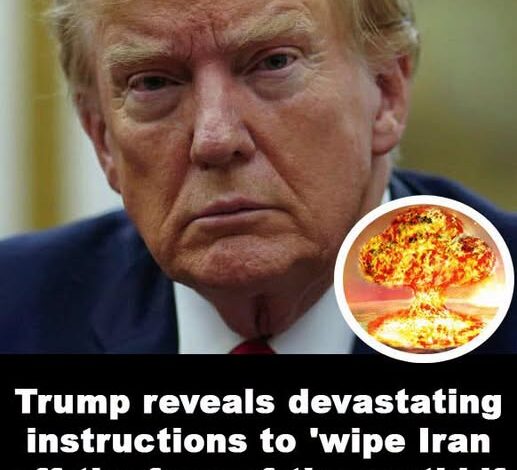
President Trump’s warning that Iran would face overwhelming retaliation if it were responsible for his death has intensified an already volatile confrontation, shifting the focus from conventional deterrence to deeply personal rhetoric. Coming amid renewed military tensions and escalating exchanges between Washington and Tehran, the statement underscores just how fragile the current situation has become, with the actions of governments increasingly intertwined with the words of their leaders.
At the same time, reports of U.S. military strikes targeting Iranian infrastructure and Revolutionary Guard assets have further strained an already precarious landscape. Each new military action carries consequences that extend well beyond strategic objectives, affecting civilians who have little influence over the decisions driving the conflict. As violence escalates, the human cost continues to grow, reinforcing fears that both sides are moving deeper into a cycle of retaliation.
Trump has also expressed profound skepticism about future negotiations, accusing Iran’s leadership of acting in bad faith and arguing that meaningful diplomacy is no longer realistic under the current circumstances. Such remarks deepen the divide between the two countries at a moment when diplomatic channels are already under extraordinary pressure. With trust eroding on both sides, opportunities for dialogue become increasingly difficult to sustain.
Security experts have long cautioned that crises of this nature can become especially dangerous when political commitments leave little room for compromise. Public declarations, hardline positions, and promises of overwhelming retaliation may strengthen resolve domestically, but they can also reduce the flexibility leaders need to de-escalate during rapidly changing events. History has repeatedly shown that conflicts can expand not only because of military actions themselves, but because rhetoric narrows the options available once tensions reach a critical point.
As both nations continue to exchange warnings and demonstrate military resolve, the stakes extend far beyond the immediate dispute. Every statement, every strike, and every response carries the potential to reshape regional stability and influence international security. Whether the coming weeks lead toward renewed diplomacy or further confrontation may depend on whether leaders can create space for dialogue before the momentum of escalation overtakes the possibility of restraint.