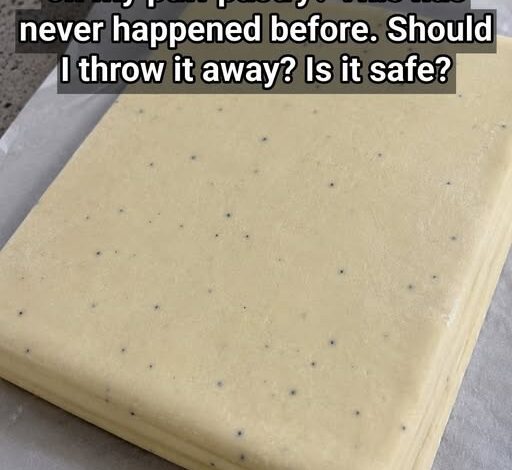
Finding tiny black specks in puff pastry can be surprising, especially if you were expecting a perfectly smooth, golden crust. Your first thought might be that something has gone bad or that the pastry is no longer safe to eat. Fortunately, that isn’t usually the case.
In many situations, those dark flecks are completely harmless and can even be a sign that the pastry was made with more natural, minimally processed ingredients.
One of the most common causes is the flour itself. Small pieces of bran or naturally occurring grain particles can remain after milling, leaving tiny dark specks scattered throughout the dough. These flecks are perfectly normal and often indicate that the flour has retained more of its natural components rather than being heavily refined.
Real butter can also contribute to these markings. During mixing and baking, milk solids in butter may brown slightly, creating small dark spots that become more noticeable once the pastry puffs and turns golden. These spots are flat, dry, and firmly embedded in the crust. They won’t spread, smear when touched, or develop a fuzzy texture. Instead, they simply bake along with the pastry, becoming part of its natural appearance.
In these situations, the black specks are nothing more than a cosmetic difference. They don’t affect the flavor, texture, or safety of the pastry, even if they catch you off guard the first time you notice them.
However, not every unusual mark should be ignored.
If the pastry develops patches that look irregular, damp, or fuzzy, it’s important to take a closer look. Mold often appears raised rather than flat and may show up in shades of green, blue, white, pink, or even black. Unlike harmless baking spots, mold can spread across the surface and is frequently accompanied by an unpleasant sour, musty, or stale odor.
Changes in smell are often one of the clearest warning signs that something is wrong. Fresh puff pastry should have a clean, buttery aroma. If it smells fermented, sour, or otherwise unusual, it’s best not to take any chances.
Significant discoloration can also signal that the pastry has deteriorated through poor storage or oxidation. When combined with an off smell or visible mold growth, these changes indicate that the product should be discarded rather than eaten.
When you’re uncertain, it’s always safer to throw questionable pastry away than to risk consuming spoiled food.
Fortunately, preventing these concerns is relatively simple.
Store puff pastry exactly as recommended on the package, keeping it tightly sealed to protect it from moisture and air. If it belongs in the freezer, make sure it remains fully frozen until you’re ready to use it. Proper storage helps preserve both quality and freshness while reducing the risk of spoilage.
It’s also worth paying attention to your baking equipment. Residue left behind on baking trays can sometimes burn and leave unexpected marks on fresh pastry, making harmless spots appear more suspicious than they really are. Using clean baking sheets or a fresh piece of parchment paper each time you bake can help prevent this confusion.
In the end, a few tiny black specks are usually nothing to worry about. Flat, dry flecks caused by natural flour particles or browned butter solids are a normal part of many puff pastries and pose no safety concern. The signs that truly deserve attention are fuzzy growth, unusual colors, unpleasant odors, or widespread patches of discoloration.
Knowing the difference allows you to enjoy your pastry with confidence while recognizing the warning signs that genuinely indicate it’s time to throw it away.