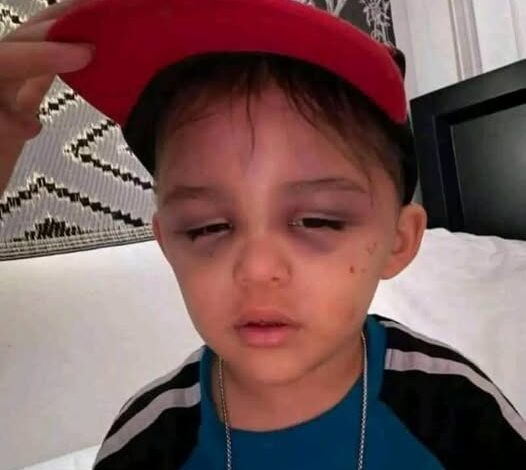
The little boy’s injuries told a story long before anyone found the courage to speak it aloud. When doctors completed their examination, they saw far more than the aftermath of a simple childhood accident. There was trauma to his head, significant injuries to his chest, and bruises in various stages of healing scattered across his legs and body. To experienced medical professionals, the pattern was unmistakable. These were not the random scrapes and bumps that come from climbing trees, falling off bicycles, or roughhousing on a playground. They reflected repeated episodes of violence inflicted over time.
Despite the overwhelming medical evidence, the explanation offered by the adults responsible for him never changed. His mother insisted he had simply fallen. It was an answer that grew weaker with every medical finding, because no single fall could account for the extent, severity, and repetition of the injuries covering such a small body.
Doctors understand that children fall. They know bruises happen. But they also know the difference between ordinary childhood mishaps and injuries that suggest intentional harm. The distribution of wounds, the seriousness of the trauma, and the signs of repeated abuse raised immediate alarm. Each mark became another piece of a heartbreaking picture—one that suggested this child had been living in fear long before he ever arrived at the hospital.
The person who ultimately refused to accept the explanations was the child’s grandmother. Whether it was something she noticed during a visit, changes in his behavior, or the injuries themselves, she reached a point where remaining silent no longer felt possible. Acting on her concerns, she contacted authorities, hoping someone would step in before the situation became even more dangerous.
Her decision may have been the only meaningful act of protection the little boy ever received.
Tragically, it came too late.
The abuse had already taken a devastating toll on his body. Despite medical efforts, the injuries proved fatal, ending a young life that had barely begun. Instead of growing up surrounded by safety, encouragement, and affection, the child spent his final days enduring pain that no child should ever experience.
Following the investigation, authorities arrested the boy’s stepfather, who now faces charges related to domestic violence and the abuse that allegedly led to the child’s death. Investigators continue examining the circumstances surrounding the case, including how the abuse remained hidden for so long and whether warning signs had been overlooked before the fatal injuries occurred.
While criminal charges are an essential step toward accountability, no courtroom verdict can restore what has been lost. A conviction cannot erase the fear the child experienced, nor can it return the future that was stolen from him. Justice, important as it is, arrives only after an irreversible tragedy has already unfolded.
Cases like this force communities to confront deeply uncomfortable questions. How many opportunities were missed to recognize that something was wrong? Were there warning signs that neighbors, relatives, teachers, healthcare providers, or others noticed but hesitated to report? Did fear, uncertainty, or the hope that someone else would intervene allow the abuse to continue unchecked?
Child abuse often thrives in secrecy. Those responsible may hide injuries behind carefully crafted explanations, isolate victims from supportive adults, or rely on the assumption that others will avoid asking difficult questions. Bruises are dismissed as accidents. Behavioral changes are mistaken for ordinary childhood struggles. Silence becomes a shield that protects the abuser while leaving the child increasingly vulnerable.
That is why professionals consistently emphasize that unexplained injuries deserve careful attention rather than easy assumptions. A single bruise may have an innocent explanation, but repeated injuries, conflicting stories, or patterns that do not match the circumstances should never be ignored. Reporting a concern does not require certainty that abuse has occurred. It requires recognizing that a child’s safety is more important than the discomfort of asking difficult questions.
Family members, teachers, coaches, neighbors, doctors, and childcare providers all play an important role in protecting children who cannot protect themselves. Sometimes the difference between continued suffering and lifesaving intervention is one person choosing to speak up instead of remaining silent.
This heartbreaking case is ultimately about more than criminal charges or court proceedings. It is about a child whose suffering remained hidden behind excuses until his body could no longer survive the violence inflicted upon him. It is a painful reminder that abuse rarely begins with the final injury. It often develops gradually, concealed by fear, manipulation, and repeated attempts to explain away what should never have happened in the first place.
No child should have to rely on chance for someone to notice their pain. Every unexplained bruise, every suspicious injury, and every fearful behavior deserves thoughtful attention. Asking questions, seeking medical evaluation, and reporting reasonable concerns are not acts of interference—they are acts of protection.
For this little boy, help came too late.
For another child living in similar circumstances, one concerned voice, one careful observation, or one timely report could become the moment that changes everything—and saves a life before another tragedy unfolds.