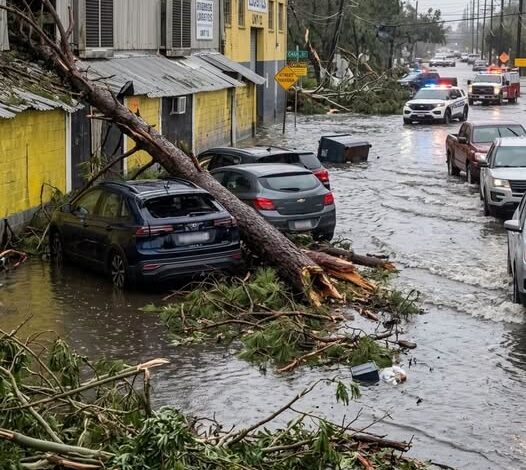
The first violent gusts arrive without hesitation, turning a distant forecast into an immediate reality. Windows shudder in their frames. Tree branches bend under the force of the wind. The sky flickers with bursts of lightning that illuminate neighborhoods for an instant before plunging them back into darkness. Streets that only moments ago carried the usual rhythm of traffic fall strangely quiet as people hurry indoors, aware that the weather has become something far more serious than a line on a radar map.
Inside homes and apartment buildings, routines change almost instinctively. Phones are plugged in one last time before the electricity becomes uncertain. Flashlights are placed on kitchen counters. Bottled water, batteries, medications, and important documents are gathered where they can be reached quickly if conditions worsen. Families check weather alerts, listen to emergency broadcasts, and keep a close eye on the changing forecast, knowing that severe storms can strengthen or shift direction with little warning.
Outside, emergency responders prepare for the hours ahead. Utility crews position equipment near areas most vulnerable to power outages. Firefighters, police officers, and medical teams monitor weather updates while dispatch centers brace for an increase in calls. Meteorologists watch radar images as bands of intense rain and thunderstorms expand across the region, understanding that just one fallen power line, flooded roadway, or wind-damaged building can create life-threatening situations within minutes.
Yet amid the uncertainty, quieter moments of humanity often emerge. Neighbors knock on doors to check on older residents, people with disabilities, or families living alone. Friends exchange messages to confirm everyone is safe. Some help bring outdoor furniture inside before the winds arrive, while others offer spare generators, extra batteries, or a warm place to stay if the power fails. In the face of an unpredictable storm, small acts of kindness become reminders that preparation is not only about supplies but also about looking after one another.
Even when the strongest winds eventually weaken and the rain begins to ease, the storm’s effects rarely disappear with the clouds. Uprooted trees may block roads. Broken branches and shattered windows leave behind difficult cleanup. Power outages can last for hours or even days, disrupting daily routines long after the skies begin to clear. For many families, the emotional impact lingers as well, serving as a reminder of how quickly ordinary life can be interrupted by forces beyond anyone’s control.
Severe weather is a part of life in many regions, but its consequences are often shaped by the decisions people make before it arrives. Paying attention to official forecasts, avoiding flooded roads, staying away from downed power lines, and following emergency guidance can significantly reduce the risk of injury. Preparation cannot prevent every loss, but it can make an enormous difference when conditions change rapidly.
Storms eventually move on, as they always do. The clouds break apart, the winds settle, and communities begin the work of cleaning up and rebuilding. What remains afterward is more than scattered debris or damaged property. It is a renewed appreciation for preparation, for resilient neighbors, and for the fragile balance of everyday life—a balance that can be tested in a matter of minutes when nature reminds us of its extraordinary power.