My daughter woke up with this huge spot on her foot I don’t know what it could be. She’s been in pain and can’t move her foot what is this.. Explain this

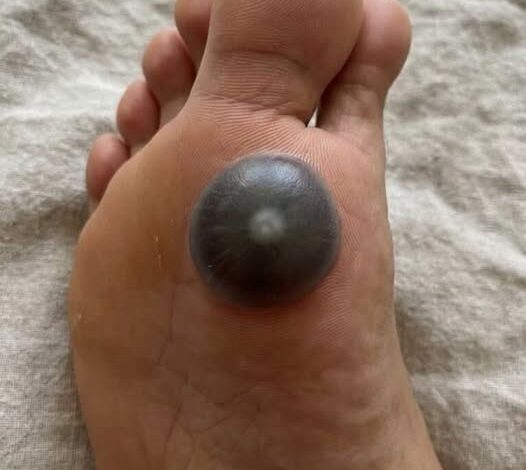
A painful swelling on a child’s foot can be alarming, especially when it appears suddenly or grows larger over a short period of time. While a photo and description may suggest one possibility, it is impossible to determine the exact cause without an in-person medical examination. What may look like a simple blister could also represent an infection, a reaction to an insect bite, a collection of blood beneath the skin, or another condition that requires prompt treatment. Because children may not always remember stepping on something or injuring themselves, even a seemingly unexplained swelling deserves careful attention.
One possibility is a blood blister.
Blood blisters often develop after repeated pressure, friction, or a minor injury that damages small blood vessels beneath the skin. Unlike ordinary blisters filled with clear fluid, they usually appear dark red, purple, or almost black because they contain blood. They can become surprisingly painful, especially if they form on weight-bearing areas such as the sole of the foot or the heel. A child may not even realize what caused it, particularly if they spent time running barefoot, wearing tight shoes, or playing outdoors.
However, a blood blister is only one possible explanation.
Pain, swelling, discoloration, and tenderness may also occur with bacterial skin infections, infected insect bites, abscesses, puncture wounds, or other inflammatory conditions. Some of these problems can worsen quickly if they are not evaluated and treated appropriately. Because several different conditions can look similar in photographs, appearance alone is not enough to make a reliable diagnosis.
For that reason, it is important not to try treating the swelling by popping, cutting, or draining it at home.
Although it may seem like releasing the fluid would provide relief, opening the skin without proper medical evaluation can introduce bacteria, increase the risk of infection, delay healing, and make the area even more painful. If there is an underlying infection or a deeper injury, home drainage may also make it more difficult for a healthcare professional to assess the problem accurately.
Instead, take a closer look at the area without squeezing it.
Notice whether it feels soft and fluid-filled or whether it is firm, unusually warm, and extremely painful even with very gentle pressure. Pay attention to whether the swelling appears stable or continues to enlarge over the course of several hours. Also observe whether the surrounding skin is becoming increasingly red or whether the redness is spreading outward.
Your child’s overall condition is just as important as the appearance of the foot.
If your child develops a fever, becomes unusually sleepy, refuses to walk or bear weight on the affected foot, complains of severe pain, or the swelling rapidly increases in size, those are signs that the problem should be evaluated urgently. Likewise, red streaks extending away from the area, pus draining from the swelling, or significant warmth around the lesion may suggest an infection that requires immediate medical attention.
In those situations, it is best not to wait.
An urgent care clinic, pediatrician, or emergency department can examine the foot, determine the underlying cause, and decide whether treatment such as drainage, antibiotics, wound care, imaging, or additional testing is necessary.
Even if the swelling appears softer and resembles a blister rather than an infection, it is still a good idea to contact your child’s pediatrician or visit an urgent care center the same day if the blister is unusually large, very painful, or located where walking is difficult. Healthcare professionals can determine whether it should be left intact, safely drained under sterile conditions, or treated in another way depending on the diagnosis.
While waiting to be seen, there are a few simple measures that may help keep your child comfortable.
Try to limit unnecessary walking if putting weight on the foot causes significant pain. Keep the area clean and avoid rubbing it against tight shoes or rough surfaces. If possible, have your child wear loose-fitting footwear or sandals that do not place pressure directly on the swollen area, provided it is safe to do so. Keeping the foot elevated when resting may also help reduce swelling and discomfort.
It is equally important to resist the temptation to experiment with home remedies that involve cutting, puncturing, or applying harsh substances to the skin. Products intended for warts, calluses, or other skin conditions should not be used unless a healthcare professional has confirmed the diagnosis.
Although many foot blisters and minor injuries heal without lasting problems, severe pain or a large swelling should never be ignored simply because it “looks like a blister.” Children can sometimes develop infections rapidly, and prompt treatment often leads to quicker healing, less pain, and a lower risk of complications.
When it comes to your child’s health, it is always better to have a concerning lesion evaluated than to assume it will improve on its own. A timely examination can provide reassurance if the problem is minor—or allow treatment to begin early if something more serious is developing. Either way, obtaining an accurate diagnosis is the safest path toward relieving your child’s pain and helping them get back on their feet as quickly as possible.