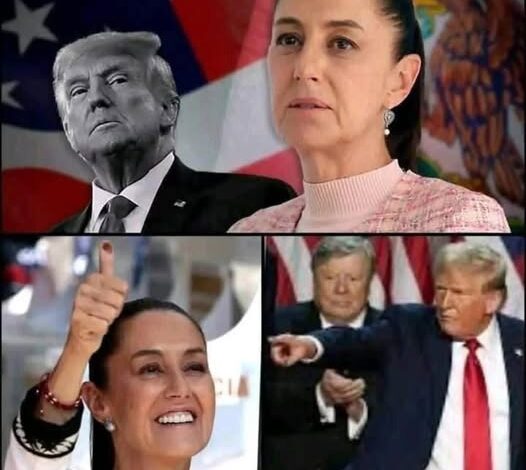
Donald Trump’s announcement of a “very successful attack” on Iranian nuclear facilities landed not like a routine military update, but like the opening sentence of a chapter the world has spent decades fearing.
For years, the confrontation between Iran, Israel, and the United States has existed inside a tense architecture of deterrence:
threats,
sanctions,
covert operations,
proxy conflicts,
cyberattacks,
assassinations,
and negotiations repeatedly collapsing and restarting.
The underlying assumption holding that structure together was fragile but powerful:
everyone understood how catastrophic direct escalation could become.
That is why the reaction from Tehran mattered immediately.
Iranian Foreign Minister Abbas Araghchi’s condemnation was not emotionally explosive in tone. It was colder than that — legalistic, deliberate, almost restrained in a way many diplomats recognize as especially dangerous. Calling the strike “outrageous” and “criminal” framed it not merely as an attack, but as a violation of international order itself.
And then came the phrase every foreign ministry in the world immediately focused on:
“Iran reserves all options.”
Diplomatic language often sounds sterile to ordinary audiences, but inside international politics those words carry enormous weight. “All options” does not specify retaliation.
That ambiguity is the point.
It signals capability without commitment.
Threat without timetable.
Possibility without limit.
And because Iran possesses multiple avenues for asymmetric response — regional militias, cyber capabilities, missile programs, maritime disruption, and allied armed networks across the Middle East — the statement was heard globally less as rhetoric and more as warning.
Not necessarily of immediate war.
But of uncertainty.
And uncertainty is often what frightens governments most.
In Israel and among some American supporters of the strike, the mood reportedly resembled vindication. For years, Israeli leadership has framed Iran’s nuclear ambitions as an existential threat requiring decisive action before weaponization could become irreversible. Many who supported the attack viewed it through that lens:
not escalation,
but prevention.
To them, the strike represented long-delayed resolve against a regime repeatedly accused of destabilizing the region through proxy warfare, ballistic missile development, and nuclear advancement.
Within that worldview, hesitation itself becomes dangerous.
Allowing Iran to move closer to nuclear capability appears riskier than confrontation. Supporters therefore interpreted the operation not as reckless aggression, but as strategic necessity — a moment where military force restored deterrence before diplomacy failed completely.
But elsewhere, especially across Europe, the reaction reportedly carried a very different emotional tone:
dread.
European diplomacy since the Iraq War has often operated through deep skepticism toward sudden military escalation in the Middle East. Many officials there view regional stability as precarious enough already:
wars in Gaza,
proxy conflicts in Lebanon and Syria,
shipping threats in the Red Sea,
global energy vulnerabilities,
and rising geopolitical fragmentation involving Russia and China.
Against that backdrop, a direct strike on Iranian nuclear facilities feels less like isolated action and more like potential ignition.
Diplomats reportedly spoke in terms suggesting historical regression:
treaties collapsing,
arms-control frameworks disintegrating,
carefully negotiated restraints turning irrelevant overnight.
That fear is not abstract.
The international nuclear order depends heavily on fragile norms:
inspection agreements,
nonproliferation treaties,
backchannel communication,
mutual restraint built through distrust rather than friendship.
When military strikes replace negotiation, even temporarily, countries watching closely may draw dangerous conclusions:
that agreements cannot protect them,
that deterrence matters more than diplomacy,
or that nuclear capability itself becomes the only true guarantee of sovereignty.
Those implications extend far beyond Iran alone.
At the United Nations, the atmosphere described in your passage feels especially believable because diplomacy during moments like this becomes intensely linguistic. Ambassadors weigh every phrase carefully because wording itself can alter escalation dynamics. One careless accusation,
one premature threat,
one public humiliation,
can narrow off-ramps rapidly.
Modern crises often unfold not only through military movement, but through narrative competition:
Who struck first?
Who violated international law?
Who acted defensively?
Who escalated recklessly?
Each side attempts to establish moral legitimacy before the world while simultaneously preparing strategically for what may come next.
And beneath all the official language sits a deeper psychological reality:
fear of miscalculation.
History shows that large conflicts rarely begin because all parties consciously desire catastrophe. More often, escalation grows through layered reactions:
retaliation triggering counter-retaliation,
leaders fearing weakness,
public pressure narrowing flexibility,
communications breaking down,
and assumptions hardening into irreversible momentum.
That is why phrases like “the world waited to see who would move next” carry so much emotional weight.
Because geopolitical crises are often experienced globally as suspended anticipation.
Markets fluctuate.
Embassies issue warnings.
Military assets reposition quietly.
Families in vulnerable regions watch news feeds obsessively.
Governments prepare contingency plans behind closed doors.
Meanwhile ordinary civilians everywhere continue daily life under the shadow of decisions they cannot influence directly.
One of the most unsettling aspects of modern international conflict is precisely this imbalance:
a handful of leaders and military actors can alter global emotional atmosphere within minutes.
A single announcement.
A missile launch.
A retaliatory strike.
And suddenly entire populations begin recalculating risk.
The phrase “illusion of stability” captures something important too.
The Middle East has long existed in a state that appears stable largely because escalation thresholds remained partially respected despite constant tension. Proxy conflicts operated below certain limits. Rivals threatened one another continuously without crossing into direct sustained war.
But moments like this expose how conditional that stability always was.
The architecture holding conflict in check depends on restraint surviving provocation repeatedly over time. Once major thresholds are crossed openly, unpredictability expands quickly.
And perhaps that is why international reactions diverged so sharply.
Some saw decisive strength.
Others saw dangerous precedent.
Some felt safer.
Others felt the edge of catastrophe moving closer.
Both responses emerge from fundamentally different understandings of security itself.
One side believes security comes through overwhelming force and deterrence.
The other believes security survives only through maintaining fragile diplomatic structures before violence spirals beyond control.
The tragedy is that history offers evidence supporting both fears simultaneously.
Unchecked nuclear ambition can destabilize entire regions.
But military escalation around nuclear infrastructure can also unleash consequences impossible to contain neatly afterward.
So the world waits again:
watching statements,
tracking troop movements,
studying oil markets,
listening for retaliatory signals hidden inside diplomatic language.
And somewhere beneath all the speeches, sanctions, and strategic calculations remains the same terrifying question that shadows every major geopolitical confrontation:
whether the people making decisions still fully control the forces they have set into motion.