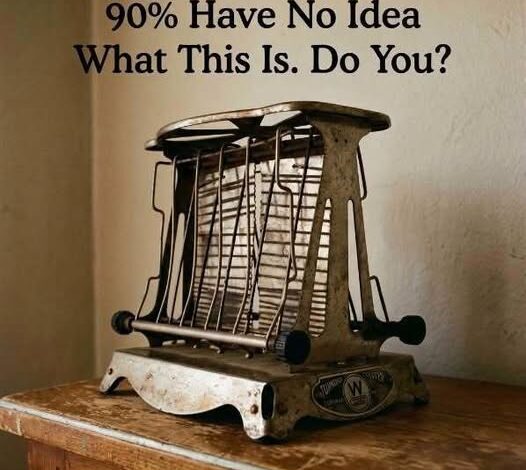
The object in the photo is a vintage toaster.
At first glance, this unusual metal gadget might look like something pulled from an old workshop, attic, or forgotten storage box. But decades ago, it held a practical place in many kitchens.
Long before today’s automatic pop-up toasters became common household appliances, many families relied on simple metal devices like this to brown slices of bread. The bread was placed between metal racks and exposed directly to heat, requiring careful attention throughout the process.
Unlike modern toasters that automatically stop when the toast is ready, these early models demanded patience and involvement. In many cases, the bread had to be turned by hand so both sides could brown evenly. There were no timers, sensors, or convenient pop-up mechanisms—just heat, observation, and experience.
That meant breakfast required a little more effort.
A distracted cook could easily end up with burnt toast.
Yet for households of the time, these devices represented progress. They offered a more convenient alternative to toasting bread over a stove, fireplace, or open flame. What seems primitive by modern standards was once considered a useful innovation that helped simplify daily life.
Looking at a vintage toaster today offers a small glimpse into how dramatically household technology has evolved. Tasks that now take only seconds and require almost no thought once demanded attention, timing, and hands-on participation.
These older appliances remind us that convenience is often something we only appreciate after it becomes ordinary.
What was once modern eventually becomes nostalgic.
And what once felt innovative eventually becomes a curiosity from another era.
Did you recognize it right away, or did it have you guessing?
Share your answer in the comments and see if your friends can identify this classic kitchen relic from the past. Sometimes the simplest objects tell the most interesting stories about how people once lived.