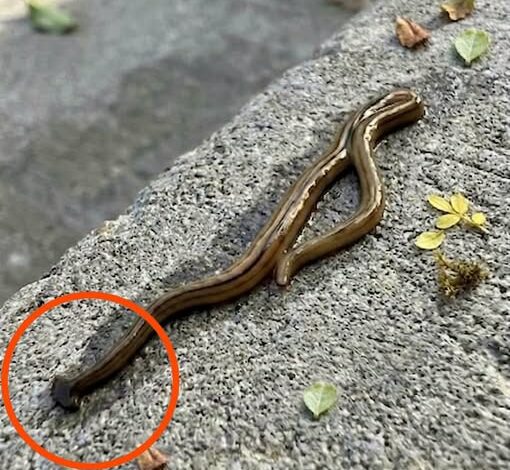
At first glance, it looked like something that didn’t belong in my yard at all. Its long, ribbon-like body glided silently across the damp ground with an almost unnatural smoothness, making it easy to mistake for an oversized worm. But the closer I looked, the stranger it became. A quick search revealed that it wasn’t a worm at all—it was a hammerhead worm, a terrestrial flatworm known as a land planarian and considered an invasive species in many parts of the world.
Unlike earthworms, which help enrich and aerate the soil, hammerhead worms are predators. Their preferred prey is often the very earthworms that healthy gardens and ecosystems depend on. By feeding on these beneficial creatures, they can gradually disrupt the delicate balance beneath the surface, altering soil health in ways that most people never notice until the effects begin to accumulate.
Part of what makes these flatworms so fascinating is the way they move. Rather than inching along like an earthworm, they glide effortlessly across the ground using countless microscopic hair-like structures called cilia. These tiny hairs work together with a layer of mucus secreted by the worm, allowing it to slide over soil, leaves, rocks, and pavement with surprising grace. Watching one move can feel almost surreal, as though it’s floating rather than crawling.
Their unusual appearance is matched by equally unusual biology. Hammerhead worms are remarkably resilient and can produce toxins that help subdue their prey. Experts generally advise against handling them with bare hands, both because of these toxins and because skin contact is unnecessary when safer methods are available. Another surprising characteristic is their extraordinary ability to regenerate. In many species, simply cutting or crushing the worm may not eliminate it, as surviving fragments can sometimes regenerate into new individuals. For that reason, local agricultural or environmental authorities often recommend specific disposal methods where these worms are considered invasive.
Perhaps the most remarkable aspect of encountering a hammerhead worm is the reminder it provides about the hidden world that exists just beyond our notice. Beneath every lawn, flower bed, and patch of forest soil, countless organisms are competing, hunting, decomposing, and sustaining the ecosystems that support life above ground. Most of these interactions happen quietly, far from human attention, yet they influence the health of gardens, farms, and natural habitats every day.
Standing there that morning, watching the strange flatworm disappear into the damp earth, I couldn’t help but reflect on how much remains unseen in the natural world. Just a few feet from our front doors, entire ecosystems are constantly changing, filled with creatures most of us never realize are there. Moments like this remind us that nature is often far more complex—and far more surprising—than it first appears, rewarding those who pause long enough to take a closer look.