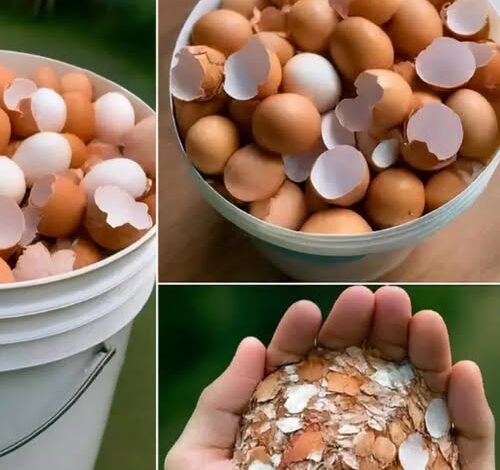
The appeal of the eggshell story is understandable.
People want simple answers.
They want to believe that something as ordinary as a leftover shell from breakfast might hold a hidden solution to complicated health problems. The idea feels comforting because it suggests that wellness can be found in familiar places, without expense, effort, or uncertainty.
But health rarely works that way.
The body is complex. Nutrition is complex. And while natural foods can absolutely play an important role in supporting health, no single ingredient deserves the kind of miracle status that often spreads through social media, word-of-mouth advice, or generations of well-meaning family traditions.
That does not mean eggshells are worthless.
Far from it.
An eggshell is primarily made of calcium carbonate, the same compound found in many calcium supplements. Researchers have studied eggshell powder as a potential source of dietary calcium, and some evidence suggests it can contribute calcium when properly cleaned, sterilized, and finely ground. However, the amount, safety, and suitability depend on individual circumstances, dietary needs, and medical guidance.
This is where context matters.
Calcium is important for maintaining healthy bones and teeth, supporting muscle function, and helping nerves communicate properly throughout the body. But calcium works as part of a larger nutritional picture. Vitamin D, physical activity, overall diet, age, medications, and underlying health conditions all influence how the body uses it.
Simply consuming more calcium does not automatically produce stronger bones.
And consuming too much can sometimes create problems of its own.
The same principle applies to many popular home remedies. A natural source of nutrients may be beneficial, but benefits do not become magical simply because the source is natural.
Nature provides valuable resources.
Science helps us understand how to use them wisely.
When those two ideas work together, people make better decisions.
The gardening example offers a useful lesson.
Instead of treating eggshells as a miracle cure, many gardeners appreciate them for what they actually are: a source of minerals that can be returned to the soil. Crushed shells may contribute calcium as they break down, helping support healthy plant growth over time. They will not instantly transform a struggling garden, but they can become part of a thoughtful approach to reducing waste and improving soil quality.
There is something satisfying about that.
Not because it is extraordinary.
Because it is practical.
In a world filled with exaggerated promises, practical solutions often deserve more attention.
The real value of boiling eggshells may not be found in dramatic health claims or sensational headlines. It may be found in the mindset behind the practice: noticing resources that would otherwise be thrown away, learning how they can be used responsibly, and choosing curiosity over assumption.
That lesson extends far beyond eggshells.
It applies to nutrition.
It applies to health.
It applies to the information we consume every day.
Before accepting a claim, ask questions.
Before sharing a miracle cure, look for evidence.
Before dismissing something entirely, explore what it can genuinely offer.
Sometimes the truth is less exciting than the myth.
But it is usually more useful.
The boiled eggshell will not transform your life overnight.
It will not cleanse your organs, reverse aging, or cure chronic illness.
What it can do is remind us that value often exists in ordinary places, provided we are willing to look at them honestly.
Not through the lens of wishful thinking.
Not through the promise of miracles.
But through the quieter and more reliable combination of knowledge, observation, and common sense.
In the end, that may be the most nourishing lesson of all.