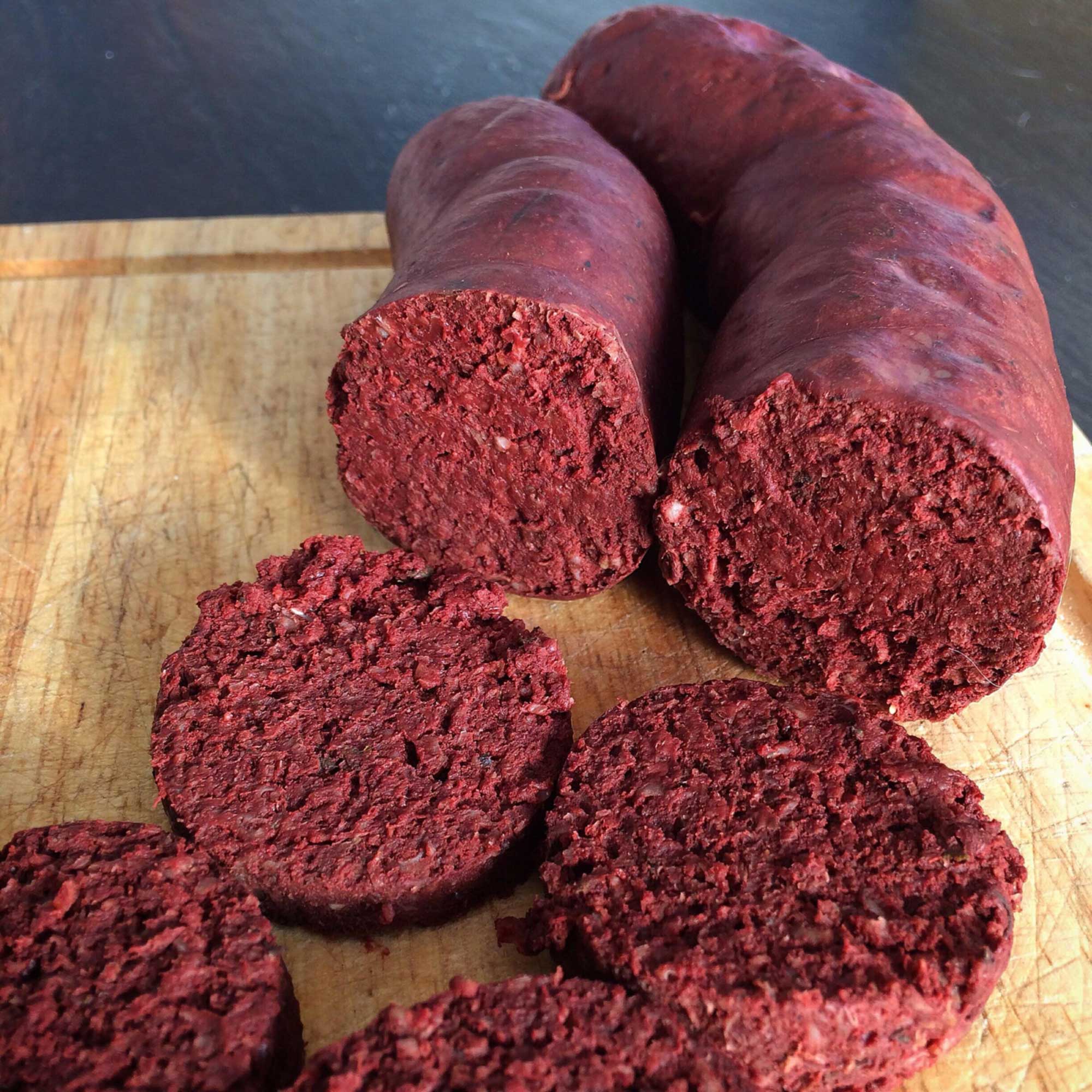
Few breakfast foods divide opinion quite like black pudding.
To some people, it’s an essential part of a traditional full English or full Irish breakfast. To others, it’s the one item on the plate that prompts an immediate question: What exactly is that? Its dark color and unusual reputation have made it one of the world’s most misunderstood foods, yet its history stretches back thousands of years and spans cultures across Europe.
What Is Black Pudding Made Of?
The simplest answer is also the one that surprises most people: black pudding is a type of blood sausage.
Traditionally, it’s made from animal blood—most commonly pork blood, though some regional recipes use cattle blood—combined with pork fat and a grain such as oatmeal or barley. The blood gives the sausage its distinctive dark color, while the grain creates a firm, crumbly texture and the fat provides richness.
Modern commercial recipes often use dried blood rather than fresh blood, which helps improve consistency and food safety during production.
Although the ingredients may sound unusual to those unfamiliar with it, black pudding is built on the same basic principles as many other sausages: protein, fat, seasoning, and a casing that holds everything together.
The Flavor Comes From the Seasoning
Without herbs and spices, black pudding would taste remarkably plain.
Traditional recipes typically include seasonings such as black pepper, nutmeg, cloves, marjoram, and other regional spice blends. Every producer has their own recipe, meaning one black pudding may taste mild and peppery while another is richer, warmer, or more aromatic.
Those spices balance the richness of the blood and fat, creating the savory flavor that has made black pudding a breakfast staple for generations.
Served alongside eggs, bacon, mushrooms, tomatoes, and toast, it adds a distinctive depth that many fans consider essential to a classic breakfast.
Why Is It Stuffed Into Casings?
One detail often surprises people even more than the ingredients.
Traditionally, black pudding is stuffed into natural sausage casings, which are typically made from cleaned animal intestines. While this may sound unusual, it has been the standard method of sausage making for centuries.
Natural casings are durable enough to hold the filling while remaining flexible during cooking. They’re also used for countless other sausages, including bratwurst, chorizo, and many Italian sausages.
Today, some manufacturers also use edible collagen or synthetic casings, but the traditional method remains common.
A Dish Rooted in History
Black pudding isn’t a modern curiosity.
It’s one of humanity’s oldest prepared foods.
For thousands of years, communities that raised livestock believed in using every edible part of the animal. Blood was highly nutritious and far too valuable to waste. By combining it with grains and spices, people created a filling, long-lasting food that helped feed families efficiently.
That same idea developed independently across many cultures.
In Spain, blood sausage is known as morcilla.
France has boudin noir.
Germany produces blutwurst.
Many countries throughout Europe, Asia, Africa, and Latin America have their own traditional versions, each reflecting local ingredients and culinary traditions.
Black pudding is simply the British and Irish expression of a much older, global practice.
From Farm Kitchens to Fine Dining
Although black pudding remains closely associated with traditional breakfasts, modern chefs have given it a much broader role.
Today it appears crumbled over seafood, folded into mashed potatoes, paired with apples, baked into savory pies, or served as part of refined tasting menus. Its rich, earthy flavor works surprisingly well with both rustic and elegant dishes, making it a favorite ingredient in many contemporary restaurants.
This transformation has helped introduce black pudding to diners who may never have considered trying it as part of a traditional breakfast.
Why It Still Divides Opinion
For many people, the idea of eating blood is simply unfamiliar.
That’s understandable.
Food preferences are shaped by culture, family traditions, and personal experience. An ingredient that is completely ordinary in one country may seem unusual somewhere else.
Yet for those who grew up eating it, black pudding isn’t shocking at all.
It’s comfort food.
It’s tradition.
It’s Sunday breakfast with family.
More Than a Curiosity
Black pudding has endured not because it relies on novelty, but because generations of people genuinely enjoy its flavor.
Its combination of savory richness, warming spices, and hearty texture has kept it on breakfast tables for centuries. More importantly, it reflects an older philosophy of cooking—one rooted in respect for ingredients and the belief that every usable part of an animal should be valued rather than wasted.
So the next time you spot black pudding on a breakfast menu, you’ll know there’s far more to it than its reputation.
Behind that dark slice is a dish with centuries of history, countless regional variations, and a place in culinary traditions around the world. Whether you decide to try it or simply appreciate its story, black pudding remains one of the most fascinating examples of how history, necessity, and flavor can come together on a single plate.