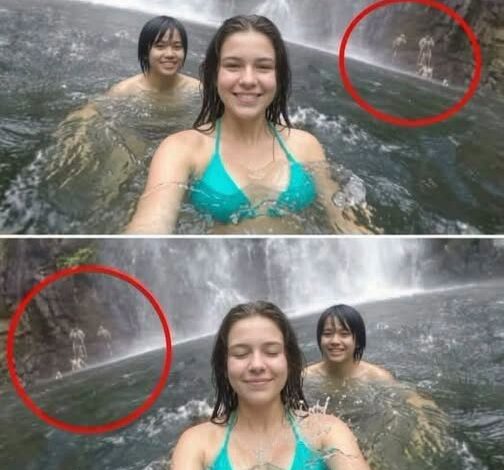
Most of us move through life believing that seeing is automatic.
Open your eyes.
Look around.
Understand what is there.
Move on.
But that confidence is misleading.
The brain does not absorb every detail in front of us with perfect accuracy. It filters. It compresses. It decides what matters and what can be safely ignored. Instead of presenting us with the world exactly as it is, it gives us a simplified version—fast enough to navigate, efficient enough to keep us moving, and incomplete enough that we rarely notice what has been left out.
That is where inattentional blindness begins.
It is not a failure of intelligence.
It is not laziness.
It is the price of efficiency.
Walk into a familiar room and your brain labels it almost instantly.
Kitchen.
Office.
Bedroom.
Classroom.
Once that label is established, attention relaxes. Your mind assumes it already understands the scene. The table is where the table should be. The lamp is where it has always been. The picture on the wall becomes background rather than information.
You stop examining.
You start recognizing.
There is a difference.
Recognition is fast.
Observation is slow.
And most of daily life rewards speed.
We glance at faces instead of studying them.
We skim rooms instead of exploring them.
We assume we understand photographs after a single look.
Our minds are constantly making tiny bargains with reality: show me enough to function, but don’t overwhelm me with everything.
Most of the time, that bargain works beautifully.
Then someone points out what you missed.
A figure standing in the far corner of a photograph.
A reflection that does not quite match the room.
A hand where no hand should be.
A familiar object placed somewhere impossible.
You look again.
And suddenly, the image changes.
Nothing has physically moved.
The photograph is exactly the same as it was five seconds earlier.
But your perception has been rewritten.
“Wait,” you say.
“How did I not see that?”
That moment is strangely powerful.
Once the hidden detail appears, it often becomes impossible to ignore. Your attention reorganizes the entire scene around it. What had once been invisible now seems glaringly obvious, and you find yourself wondering how your brain managed to erase something that was sitting in plain sight.
The answer is simple.
It wasn’t important yet.
Your mind had already decided what the picture was about, so everything outside that expectation became easier to miss.
That is why hidden-object puzzles and visual illusions feel so satisfying. They temporarily expose the machinery behind perception. They show us that seeing is not passive. It is an active negotiation between the world in front of us and the expectations we bring to it.
And that lesson extends far beyond pictures.
We do the same thing with people.
We label someone as confident, difficult, quiet, successful, awkward, kind.
Once that label settles in, we begin noticing evidence that supports it while overlooking details that complicate it.
We do it with places.
“This neighborhood is boring.”
“This job is exhausting.”
“This house is ordinary.”
“This person never changes.”
Then something shifts.
We slow down.
We pay attention differently.
And suddenly the familiar becomes unfamiliar again.
The coworker we assumed was distant turns out to be carrying something heavy.
The parent whose routines seemed predictable reveals a memory we never knew existed.
The street we have driven down hundreds of times contains an old stone carving we somehow never noticed.
The photograph we thought we understood contains an entire second story hiding at the edge.
That is the quiet gift of learning to look again.
Not because we should distrust everything we see, but because our first impression is rarely the whole picture.
Slowing down creates room for complexity.
Instead of glancing at the center of an image, scan the edges.
Instead of accepting the first pattern your brain offers, ask what else might be present.
Instead of immediately deciding what someone meant, pause long enough to consider another interpretation.
Observation becomes richer when certainty loosens its grip.
This does not mean living suspiciously.
It means living curiously.
Curiosity keeps perception open.
It allows ordinary places to surprise us.
It turns routine into discovery.
A familiar living room can suddenly reveal details of the people who inhabit it.
A face we have known for years can show fatigue, joy, hesitation, or hope that we might have missed while moving too quickly.
Even photographs become less like flat records and more like layered stories.
Who is standing at the edge?
What is reflected in the window?
Why is one object out of place?
What happened just before the shutter clicked?
What happened immediately afterward?
The longer we look, the more the scene begins to speak.
Perhaps that is why these moments feel almost magical.
The hidden thing was never actually hidden.
It was visible the entire time.
We simply had not given it enough attention to exist in our awareness.
There is something humbling about that.
It reminds us that reality is always larger than our first interpretation of it.
The world contains more detail than any mind can process at once.
Every room.
Every face.
Every conversation.
Every memory.
There are layers we miss because attention is finite.
That limitation is not something to fear.
It is an invitation.
Look again.
Stay a little longer.
Ask one more question.
Notice the corner everyone else skipped.
The extraordinary parts of life are not always dramatic.
Sometimes they are already sitting quietly inside the ordinary, waiting for attention.
A strange reflection.
A nearly invisible expression.
An unexpected object.
A detail that changes the meaning of everything around it.
And perhaps the real lesson of inattentional blindness is not simply that we miss things.
It is that the world can become new again the moment we choose to look with more patience.
What seems familiar may still contain mystery.
What seems obvious may still hold surprise.
And what appears empty may simply be waiting for us to finally notice what has been there all along.