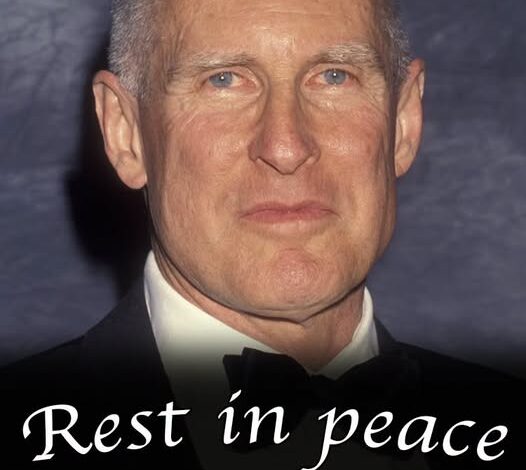
Jon Cypher spent a lifetime proving that true presence doesn’t require constant attention. Across decades on stage and screen, he became one of those rare performers whose work lingered long after the credits rolled—not because he sought the spotlight, but because he brought authenticity, intelligence, and quiet authority to every role he accepted. In the end, the way he chose to leave the world reflected the same understated grace that had defined his remarkable career.
His journey as a performer began long before millions came to recognize his face on television. One of his earliest defining moments arrived in 1957 when he portrayed Prince Charming opposite Julie Andrews in the live television production of Cinderella. It was an opportunity that introduced audiences to a gifted young actor whose classical training, commanding voice, and natural stage presence hinted at the career that lay ahead.
Over the years, Cypher built an impressive body of work that stretched across theater, television, film, and music. Rather than chasing celebrity, he earned the respect of audiences and fellow performers through consistency and craftsmanship. Whether appearing in dramatic productions or lighter fare, he approached each character with the same dedication, creating performances that felt grounded, believable, and memorable.
For many viewers, he became especially familiar through his portrayal of Chief Fletcher Daniels on Hill Street Blues. The role demanded authority, discipline, and emotional restraint, qualities Cypher delivered with remarkable precision. His character could command a room with little more than a glance, demonstrating that genuine strength often comes from subtlety rather than spectacle. Even in scenes filled with larger personalities, his calm presence anchored the story.
Yet those who knew him away from the camera often described someone quite different from the stern figures he sometimes portrayed on screen.
Friends and colleagues remembered a man whose quick wit could dissolve tension in an instant. They spoke of his love for music and the way he would unexpectedly burst into song during rehearsals or conversations, filling ordinary moments with laughter. Beneath his commanding professional presence was a warmth that made people feel welcome, a generosity of spirit that remained with those fortunate enough to work beside him.
His appreciation for opera, theater, literature, and the arts reflected a lifelong curiosity that extended well beyond acting itself. He approached both his work and his personal life with quiet thoughtfulness, valuing perseverance over recognition and substance over applause. Throughout the inevitable highs and lows of a career in the performing arts, he maintained a grounded perspective, often speaking with humility about the challenges artists face while continuing to pursue the work they love.
That same philosophy appeared to guide one final, deeply personal decision.
Rather than choosing an elaborate memorial or traditional burial, Cypher requested a conservation burial in a peaceful Oregon meadow. There, beneath towering trees and open skies, he would return to the earth wrapped only in a biodegradable shroud. The choice reflected a profound simplicity—one that emphasized connection to nature rather than permanence in stone.
There would be no grand mausoleum.
No imposing monument.
No elaborate display designed to outlast the generations.
Instead, there would be grass, soil, wind through the trees, and the quiet rhythms of the natural world he admired.
For many who admired his work, that decision feels remarkably fitting. Throughout his career, Cypher never seemed interested in drawing attention for its own sake. He allowed the quality of his performances to speak louder than self-promotion, trusting that meaningful work would endure without unnecessary fanfare. His final wishes carried that same quiet confidence.
There is something deeply poetic about an actor whose life revolved around stories choosing such an understated final scene. After decades spent bringing fictional lives vividly to the stage and screen, he embraced an ending that required no audience and no applause. It was a farewell written not in marble or ceremony, but in the language of nature itself.
Those who remember Jon Cypher will undoubtedly recall many different roles, unforgettable performances, and cherished moments from a career that spanned generations. Others will remember the colleague whose humor brightened long workdays, the opera enthusiast whose love of music was infectious, or the thoughtful man whose reflections on perseverance revealed quiet wisdom earned through experience.
His legacy lives not only in the characters he portrayed but also in the example he set: that a meaningful life is measured less by fame than by dedication, kindness, and authenticity. The performances remain. The stories continue. And somewhere beneath the shelter of Oregon’s trees, the man who spent a lifetime bringing others’ stories to life has become part of a different one—returning gently to the landscape with the same dignity and quiet strength that shaped every chapter of his extraordinary journey.
In the end, his final act may have been his simplest, yet it spoke volumes. No grand farewell, no dramatic flourish—only a peaceful return to the earth, as though the curtain had fallen not with thunderous applause, but with the gentle rustle of leaves in the wind. It was a fitting conclusion to a life lived with grace, purpose, and the quiet confidence of someone who never needed to raise his voice to leave a lasting impression.