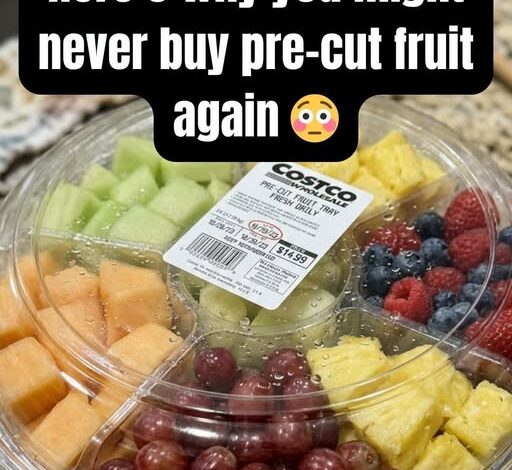
At first glance, those neatly packaged trays of pre-cut fruit seem almost impossible to resist. Bright strawberries, perfectly cubed melon, juicy pineapple chunks, and rows of colorful grapes are carefully arranged beneath clear plastic lids, promising freshness without the work. They offer a simple message: you’re busy, so let someone else do the chopping.
It’s an appealing idea.
When time is limited, grabbing a ready-to-serve fruit tray feels like an easy solution. There’s no peeling, slicing, or cleanup—just open the container and enjoy. Whether you’re preparing for a gathering, packing lunches, or looking for a quick snack, the convenience can be hard to ignore.
But convenience often comes at a price that isn’t immediately obvious.
A closer look at the cost per pound frequently reveals a surprising difference. Compared with buying whole fruit, pre-cut varieties are often significantly more expensive. The higher price usually reflects the labor involved in washing, cutting, packaging, refrigerating, and transporting the fruit—not necessarily a higher-quality product.
In other words, you’re paying for the preparation as much as the fruit itself.
Quality can also vary.
Once fruit is cut, it immediately begins to change. Exposure to air gradually affects texture, flavor, and freshness. While proper refrigeration helps slow that process, sliced fruit generally has a much shorter shelf life than fruit left whole. By the time it reaches your shopping cart, it may already have lost some of the crispness, sweetness, or vibrant aroma it had when it was first prepared.
Anyone who has compared freshly cut melon with pieces that have spent several days in a refrigerated container has likely noticed the difference. The freshly sliced fruit often tastes brighter, feels firmer, and retains more of the natural texture that makes it enjoyable.
The same is true for pineapple, grapes, watermelon, and many other fruits.
Preparing fruit at home also gives you greater control over quality.
You can select ripe produce at its peak, wash it thoroughly, and cut it shortly before serving. Instead of relying on fruit that may have been prepared days earlier, you decide exactly when it’s ready to enjoy. That extra freshness can make a noticeable difference in both flavor and appearance.
There are financial advantages as well.
Buying whole fruit is often more economical, especially for larger households or gatherings. The savings can add up quickly, allowing you to enjoy more fruit for the same budget while reducing the premium associated with pre-packaged convenience.
Home preparation may also help reduce unnecessary packaging.
Many pre-cut fruit containers are made from single-use plastic that serves an important food-safety purpose but still contributes to household waste. Preparing fruit yourself allows you to store it in reusable containers, reducing the amount of disposable packaging used over time.
Of course, that doesn’t mean pre-cut fruit has no place.
For people with limited time, mobility challenges, busy schedules, or situations where convenience is essential, pre-prepared fruit can be a practical and worthwhile option. It may also encourage healthier snacking by making fresh fruit more accessible when life gets hectic.
The key is choosing it intentionally rather than automatically.
If you’re hosting a party the next day, spending just a few minutes preparing fruit at home can often produce a fresher and more flavorful result. Crisp grapes, fragrant melon, juicy watermelon, and pineapple with its natural bite are difficult to match when they’ve been freshly cut shortly before serving.
That small amount of preparation can deliver better taste, greater freshness, lower cost, and less packaging—all while giving you confidence in exactly what you’re serving.
Ultimately, neither choice is inherently right or wrong.
Pre-cut fruit offers convenience when time is your most valuable resource. Whole fruit rewards a little extra effort with greater freshness, more control over quality, and often better value for your money.
By making the choice based on your needs rather than clever marketing alone, you take control of the decision. Sometimes convenience will be worth the extra cost. Other times, a few quiet minutes with a cutting board and a knife will provide the better reward.
And in those everyday moments, preparing your own fruit isn’t just about saving money—it’s about enjoying food at its freshest while making a choice that works best for you.