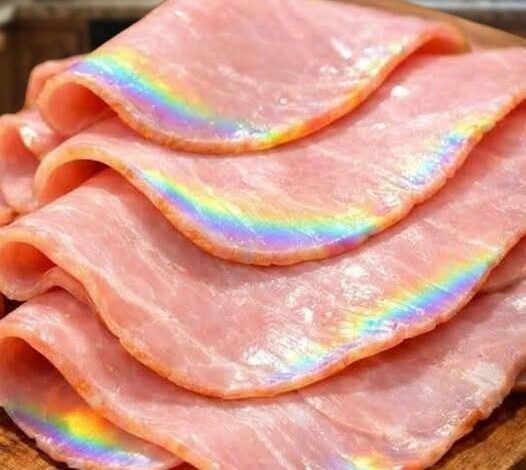
It catches many people off guard the first time they see it. You open a freshly purchased package of deli ham, expecting the familiar soft pink slices, only to notice flashes of green, purple, or even blue shimmering across the surface. The colors can appear almost metallic, making it seem as though something artificial has been added or that the meat has begun to spoil.
At first glance, it’s easy to assume the worst.
Fortunately, that colorful sheen is usually a completely natural optical effect rather than a sign that the ham is unsafe to eat.
The explanation lies in the structure of the meat itself.
Ham is made up of thousands of tiny muscle fibers arranged in tightly packed layers. When those fibers are sliced extremely thin—especially by commercial deli slicers—they create a smooth, uniform surface that interacts with light in a unique way. Instead of reflecting light evenly, the microscopic structure scatters different wavelengths in different directions.
The result is an effect known as iridescence.
It’s the same basic phenomenon that creates the shifting colors seen on soap bubbles, peacock feathers, butterfly wings, compact discs, or a thin film of oil floating on water. As the angle of light changes, the colors seem to appear and disappear, even though nothing about the meat itself is changing.
Several factors can make this shimmering effect even more noticeable.
The curing process alters the texture and chemistry of the meat, while its natural moisture creates a smooth reflective surface. Thin, machine-sliced ham is especially prone to showing iridescence because the polished cut exposes muscle fibers in a very consistent pattern. That’s why the rainbow effect is often most visible in pre-packaged deli meats rather than thicker slices carved at home.
Although the appearance may seem unusual, the colors themselves are not considered a reliable indication of spoilage.
To determine whether deli ham is still safe to eat, it’s far more important to pay attention to changes that affect its smell, texture, and overall appearance.
Fresh ham should have a mild, slightly salty aroma without any sour or unpleasant odors. The surface should feel moist but not sticky or slimy, and the meat should maintain its normal pink color apart from any harmless rainbow reflections.
If you notice a sour smell, a sticky or slippery texture, or patches of discoloration that appear dull gray, green, or otherwise abnormal rather than simply iridescent, those are much stronger signs that the product may have spoiled. In those situations, it’s safest to discard the meat rather than take unnecessary risks.
Proper storage also plays an important role in maintaining both quality and safety.
Once opened, deli ham should be wrapped tightly or transferred to an airtight container to reduce exposure to air and moisture. It should be kept refrigerated at a consistently cold temperature, as fluctuations can encourage bacterial growth and shorten its shelf life.
Most food safety recommendations advise using opened deli ham within three to five days, even when it has been stored properly in the refrigerator. Following these guidelines helps reduce the risk of foodborne illness while preserving the best flavor and texture.
Understanding the difference between harmless iridescence and genuine spoilage can prevent unnecessary concern and reduce food waste. A rainbow-like shine is usually nothing more than an interaction between light and the meat’s natural muscle fibers, not evidence that something is wrong.
By relying on your senses—checking the smell, texture, storage time, and overall condition of the ham—you can make a much more accurate judgment about freshness.
In the end, that unexpected shimmer is often just a fascinating reminder that everyday foods can display surprising effects of science. Knowing why it happens allows you to enjoy your deli ham with greater confidence, recognizing the difference between a harmless play of light and the signs that truly indicate it’s time to throw it away.