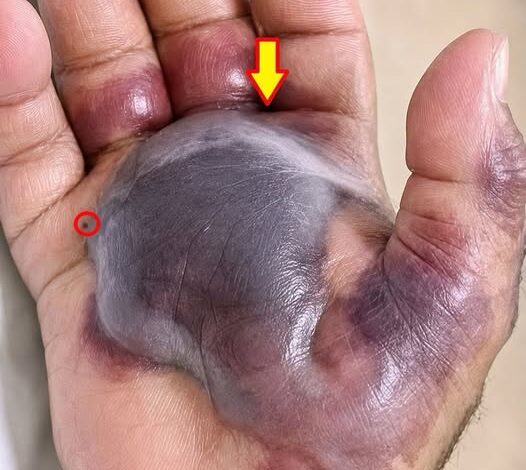
It took nothing more than a tiny scratch in the garden to remind me how remarkably delicate the human body can be. At first, it seemed too insignificant to deserve a second glance—a faint mark that barely broke the skin. Like so many people, I assumed it would heal on its own within a few days. I had no reason to believe that such a minor injury could become the beginning of a serious medical problem. Yet that almost invisible wound exposed an unsettling truth: sometimes the smallest opening is all harmful bacteria need.
Our skin performs an extraordinary job every moment of every day. It shields us from countless microorganisms that exist all around us, forming a protective barrier we rarely think about until it is compromised. We tend to take that protection for granted because it works so quietly and so reliably. But when even a tiny break occurs—a scratch from a branch, a nick while gardening, or a scrape from everyday activity—that natural defense is temporarily weakened.
Most minor cuts heal without incident.
However, when bacteria enter through damaged skin, an infection can develop. In some cases, that infection becomes cellulitis, a condition in which bacteria spread into the deeper layers of the skin and surrounding tissues. What may begin as a small area of irritation can progress surprisingly quickly, transforming from mild discomfort into a medical problem that requires prompt treatment.
That was the reality my small scratch unexpectedly revealed.
What initially seemed like ordinary irritation gradually became something impossible to ignore. The redness spread beyond the original wound instead of fading. The area became increasingly warm and tender to the touch. Swelling developed, and the pain grew out of proportion to what such a tiny injury should have caused. It became clear that my body was sending urgent signals that something was no longer healing normally.
The experience was both surprising and humbling.
It is easy to believe serious infections happen only after major injuries or dramatic accidents. In truth, bacteria do not measure the size of a wound before taking advantage of it. Sometimes the smallest break in the skin is enough to allow an infection to gain a foothold, particularly if circumstances favor bacterial growth. Without appropriate treatment, cellulitis can continue spreading through nearby tissues and, in severe cases, lead to serious complications requiring hospitalization.
Fortunately, early recognition can make an enormous difference.
One of the most important lessons I learned was that our bodies often provide warning signs long before an infection becomes overwhelming. Redness that continues expanding instead of improving deserves attention. Increasing warmth, swelling, tenderness, or pain that worsens rather than subsides may indicate that healing is not progressing as expected. Additional symptoms such as fever, chills, red streaks extending from the wound, or drainage of pus are especially important and should prompt immediate medical evaluation.
These signs should never be dismissed simply because the original injury appeared minor.
Prompt treatment with appropriate antibiotics is often highly effective when cellulitis is recognized early. Delaying care, however, allows the infection more time to spread, increasing the likelihood of more serious illness and more intensive treatment. Acting quickly can often mean the difference between managing the infection with outpatient care and facing complications that require hospitalization.
Prevention remains equally important.
Cleaning even small cuts and scratches with clean water and mild soap helps reduce the number of bacteria that may enter the wound. Applying a clean bandage when appropriate and keeping the area protected while it heals can further reduce the risk of infection. People with conditions such as diabetes, poor circulation, or weakened immune systems should be especially attentive, as they may face a higher risk of developing skin infections and may need to seek medical advice sooner if concerning symptoms appear.
Perhaps the greatest lesson is not one of fear but of awareness.
Minor injuries are an ordinary part of life, and the vast majority heal without difficulty. There is no need to become anxious over every scrape or scratch. Instead, the goal is to recognize that even small wounds deserve basic care and thoughtful observation. Paying attention to changes during the healing process allows problems to be identified before they become much more serious.
The human body is remarkably resilient, but it also depends on us to notice when something is changing. Respecting those quiet signals is one of the simplest and most effective ways to protect our health.
In the end, that nearly invisible garden scratch became a powerful reminder that our skin is far more than a surface—it is one of the body’s most important defenses. Caring for it, cleaning even the smallest injuries, and responding promptly when warning signs appear are not acts of fear; they are acts of wisdom. Sometimes seeking medical attention just one day earlier can prevent weeks of treatment and far more serious consequences. A tiny wound may seem insignificant, but paying attention to it could make all the difference.