Most of us treat public restrooms as places to visit as quickly as possible. We walk in, wash our hands, and head right back out without giving much thought to the fixtures around us. Yet there is one detail found in countless public bathrooms that many people have noticed without ever questioning: the toilet seat.
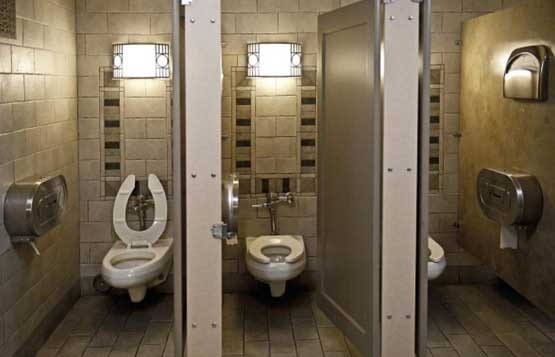
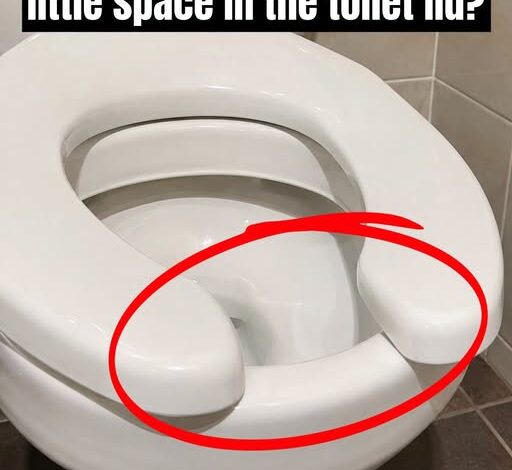
Unlike the fully enclosed oval seats found in most homes, public toilets often have a distinctive U-shaped opening at the front. Once you notice the difference, it’s hard not to wonder why it exists.
As it turns out, the design is far from accidental.
The U-shaped toilet seat was created for several practical reasons, with hygiene being one of the most important. According to Mental Floss and plumbing industry standards, the open-front design reduces the chance of a person’s body coming into direct contact with the front portion of the seat. By minimizing contact, the seat can help reduce the spread of germs and make the fixture more hygienic for the large number of people who use public restrooms every day.
It also offers another practical benefit.
The open front provides additional space, making it easier for users to wipe or clean themselves without touching the seat. This can improve comfort and reduce accidental contact in shared facilities, where cleanliness is especially important.
The design also makes maintenance easier.
Public restrooms in airports, restaurants, shopping centers, schools, and office buildings often serve hundreds—or even thousands—of people each day. Cleaning crews need fixtures that can be sanitized quickly and efficiently. The open-front shape leaves fewer surfaces where moisture and debris can collect, allowing staff to clean and disinfect the seat more easily between routine maintenance.
Cost is another factor that quietly influences the design.
Because an open-front toilet seat uses slightly less material than a fully enclosed one, it costs a bit less to manufacture. While the savings on a single seat may be modest, they become significant when multiplied across hundreds or thousands of restrooms in large facilities. For organizations responsible for maintaining extensive public buildings, even small reductions in manufacturing and replacement costs can make a noticeable difference over time.
There is also an unexpected advantage that many people never consider.
Believe it or not, toilet seats are occasionally stolen.
It may sound surprising, but facilities managers have long dealt with the occasional disappearance of restroom fixtures. Roger Barry, managing director of Healthmatic, a United Kingdom company specializing in public restroom design and management, has explained that open-front toilet seats are generally less appealing to thieves because they are designed primarily for commercial toilets and often do not fit standard residential fixtures.
In other words, a stolen public toilet seat is much less useful at home.
That simple incompatibility helps discourage theft and reduces replacement costs for businesses and public facilities.
The widespread use of U-shaped seats is also supported by plumbing standards in many parts of the world. In the United States, for example, the American National Standards Institute (ANSI) and the International Association of Plumbing and Mechanical Officials (IAPMO) have long recognized open-front seats as the preferred design for many public restroom installations because of their hygienic and practical advantages.
What seems like an insignificant design choice is actually the result of careful planning.
Every aspect of a public restroom must balance hygiene, durability, maintenance, accessibility, cost, and user comfort. The shape of the toilet seat may appear unusual compared with the one in your home, but it reflects decades of practical experience in designing facilities used by large numbers of people every day.
Most visitors never stop to notice.
They’re focused on washing their hands, checking their phones, or getting back to whatever they were doing before stepping inside. Yet hidden within something as ordinary as a toilet seat is an example of thoughtful engineering solving several problems at once.
The next time you find yourself in a public restroom, you’ll probably notice that familiar U-shaped seat a little differently. What once seemed like a strange design choice is actually a combination of hygiene, practicality, cost efficiency, and even theft prevention—all quietly working together in one of the most overlooked features of everyday public spaces.