At 38 Weeks Pregnant, I Was Alone in a Quiet Hospital Ward at 3 AM — Then My Golden Retriever Reacted Suddenly

The maternity wing at St. Jude’s Medical Center had fallen into the strange kind of silence that only exists during major storms.
Outside, Chicago disappeared beneath sheets of snow driven sideways by violent winter winds. Ambulance sirens echoed faintly through streets nearly buried under ice while emergency crews across the city struggled to move through blocked intersections and abandoned vehicles stranded along highways.
Inside the hospital, however, the world narrowed into fluorescent lights, hurried footsteps, and controlled urgency.
Doctors moved quickly between units.
Phones rang constantly at nursing stations.
Stretchers rolled through corridors carrying weather-related injuries arriving one after another as the storm worsened by the hour.
Yet despite the pressure building across the hospital, one hallway inside the maternity unit remained unusually quiet.
Sarah sat alone there wrapped in a gray blanket, one trembling hand resting protectively over her stomach.
At thirty-eight weeks pregnant, she had already spent months living beneath fear.
This pregnancy was considered high-risk from the beginning due to complications surrounding a previous pregnancy loss that neither she nor her husband David had emotionally recovered from completely. Every appointment carried tension. Every unusual symptom felt terrifying. Every milestone reached brought relief quickly followed by fresh anxiety about what could still go wrong.
The grief of losing a pregnancy changes future pregnancies profoundly.
Joy becomes cautious.
Hope becomes guarded.
Fear never fully leaves the room.
Sarah had arrived at the hospital earlier that evening after experiencing discomfort severe enough to concern her obstetrician. But the blizzard had overwhelmed emergency services throughout the city, delaying admissions and stretching hospital staff dangerously thin.
There were simply too many emergencies at once.
So Sarah waited.
Alone.
Or almost alone.
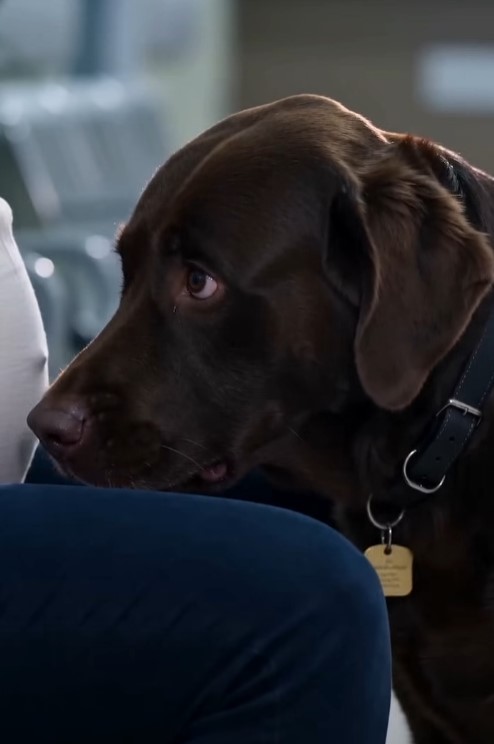
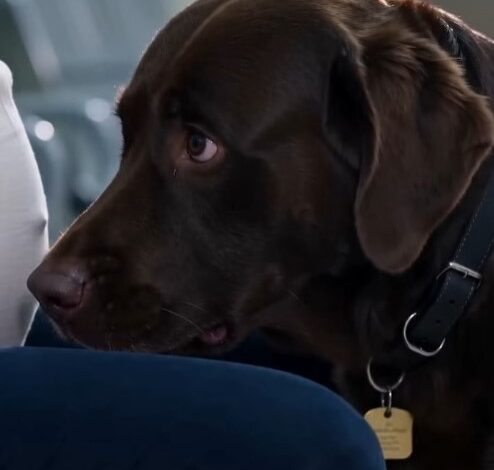
Curled quietly beside her chair rested Cooper, her three-year-old Golden Retriever service dog.
To strangers, Cooper looked gentle enough to belong in a children’s book:
soft golden fur,
calm brown eyes,
patient posture.
But Cooper was not simply a pet.
He had been professionally trained as a medical alert dog after Sarah developed severe anxiety and cardiovascular instability following her earlier pregnancy loss. Over time, Cooper learned to recognize subtle physiological changes in her body:
elevated heart rate,
panic responses,
shifts in breathing,
stress-related episodes.
During pregnancy, his role became even more important.
He slept beside her bed every night.
Alerted her during episodes of dizziness.
Grounded her emotionally during panic spirals that sometimes struck without warning.
David often joked that Cooper monitored Sarah more carefully than any medical device ever could.
And that night, inside the maternity corridor, Cooper became the first to realize something was terribly wrong.
At first, Sarah tried convincing herself the pain was normal.
Late pregnancy discomfort came with constant uncertainty:
pressure,
cramping,
back pain,
fatigue.
But slowly, the sensations shifted into something sharper.
More focused.
More dangerous.
An ache spread through her abdomen unlike anything she had felt before, and beneath the pain another terrifying realization settled over her gradually:
the baby had stopped moving.
At first she waited calmly.
Babies slept.
Movement fluctuated.
But minutes stretched longer.
Nothing.
She adjusted position carefully, hoping to trigger movement.
Still nothing.
Fear began crawling upward through her chest.
Beside her chair, Cooper lifted his head immediately.
The transformation in him happened almost instantly.
Usually calm and relaxed inside hospitals, he now stood rigidly alert, ears forward, eyes fixed directly on Sarah. Then he moved deliberately between her and the hallway, body tense in a way she had never seen before.
“Cooper…” she whispered weakly.
The dog would not settle.
Instead, he began pacing tightly beside her chair, breathing harder than usual while watching the corridor intensely as though waiting for someone to arrive faster.
At that same moment, two exhausted nurses hurried through the hallway responding to another emergency farther inside the maternity wing.
As they approached, Cooper suddenly barked sharply.
Once.
Then again.
The sound startled everyone nearby.
One nurse instinctively stepped backward.
Because according to hospital staff earlier that evening, Cooper had been remarkably well-behaved and calm throughout Sarah’s stay. Seeing him suddenly block the corridor and bark aggressively felt completely out of character.
Initially, they assumed anxiety had triggered the reaction.
Storms.
Stress.
Protectiveness.
But before anyone could fully respond, Sarah attempted to stand from the chair.
Then froze.
Warmth spread suddenly beneath her.
She looked down.
Blood.
A horrifying amount of blood.
The nurses reacted immediately.
Everything changed in seconds.
One nurse grabbed Sarah before she collapsed while the other called emergency obstetric response overhead. Cooper continued barking sharply beside them until medical staff flooded the corridor running toward the scene.
Only then did he finally back away.
Not fearful.
Watching.
Almost as if he understood the danger had finally been recognized.
Sarah barely remembers the next several minutes clearly.
Bright ceiling lights moving rapidly overhead.
Voices speaking too fast.
Hands pressing against her abdomen.
Machines wheeled beside her as nurses rushed her toward surgery.
Inside the emergency treatment room, doctors quickly confirmed the diagnosis:
severe placental abruption.
One of the most dangerous obstetric emergencies possible.
The placenta had begun detaching prematurely from the uterus, threatening catastrophic blood loss for Sarah while simultaneously cutting oxygen supply to the baby. Without immediate intervention, both lives were at extreme risk.
The atmosphere inside the operating suite shifted into controlled chaos instantly.
Surgical staff prepared emergency cesarean equipment.
Blood transfusions were initiated.
Specialists coordinated simultaneously around maternal stabilization and neonatal resuscitation plans.
Meanwhile outside the hospital, David still fought desperately to reach them.
As a firefighter, he understood emergencies intimately.
He had spent years arriving at scenes where seconds determined survival.
But nothing prepared him for the helplessness of being trapped away from his own family during their worst crisis.
Road closures caused by the blizzard forced him through side streets buried under ice while emergency radio traffic filled his truck with reports of accidents and stalled rescue vehicles throughout the city.
By the time he finally reached St. Jude’s, snow covered his boots nearly to the knees.
A nurse intercepted him immediately near the surgical wing.
And one look at her face told him everything before she spoke.
His wife was crashing.
The baby was in distress.
Doctors were already operating.
David later described those minutes outside the operating room as the longest of his life.
Firefighters are trained to act.
To move.
To solve problems.
But standing powerless in a hospital corridor while strangers fought to save his family nearly broke him emotionally.
Inside surgery, Sarah’s condition deteriorated rapidly.
Blood loss intensified.
Monitors alarmed repeatedly.
Then suddenly, her heart stopped.
The room transformed instantly.
Resuscitation began immediately.
Voices sharpened.
Chest compressions.
Medications.
Orders repeated rapidly between specialists.
At the exact same time, surgeons continued working to deliver the baby before oxygen deprivation caused irreversible damage.
Two simultaneous lives balancing on the edge of disappearance.
Then finally:
the baby was delivered.
A little boy.
But the room remained terrifyingly silent.
No cry.
No movement.
The neonatal team rushed him immediately toward resuscitation equipment positioned nearby while surgeons continued attempting to stabilize Sarah.
For several unbearable minutes, neither mother nor child showed reassuring signs.
Doctors worked continuously.
Relentlessly.
Then suddenly a monitor changed.
A faint heartbeat.
Small.
Weak.
But there.
Moments later, another sound finally cut through the operating room:
crying.
Thin at first.
Then louder.
The emotional release among staff was immediate and overwhelming.
Some nurses cried openly behind masks while continuing treatment.
The baby — later named Leo — was transferred to the neonatal intensive care unit while doctors finally succeeded in restoring Sarah’s heartbeat and stabilizing her condition enough for recovery care.
When David was finally allowed brief access afterward, he stood beside two separate hospital rooms unable to process fully that both his wife and son had survived.
Only hours earlier, he truly believed he might lose them both.
Sarah regained consciousness much later beneath dim recovery room lights.
Weak.
Confused.
Disoriented.
David held her hand carefully and whispered the words she had been too afraid to hope for:
“He’s alive.”
She cried immediately.
Not graceful tears.
Relief tearing straight through trauma.
Then she asked the next question instantly:
“Where’s Cooper?”
That answer surprised everyone.
Because hospital administrators — despite strict animal restrictions — approved a brief visit for him later that day after hearing what happened.
When Cooper entered the recovery room, his behavior changed completely from the frantic urgency displayed earlier in the corridor.
Now he moved slowly.
Carefully.
He approached Sarah’s bedside, rested his head gently beside her arm, and exhaled deeply like someone finally certain the danger had passed.
Several nurses later admitted the moment affected them profoundly.
Because despite all the technology, training, and emergency medicine involved that night, everyone understood something important:
Cooper recognized the crisis before anyone else did.
Had his behavior not forced attention toward Sarah when it did, critical delays could have become fatal.
Days later, after the storm finally cleared, Sarah and Leo were discharged home together.
The city outside looked transformed:
quiet streets,
snowbanks glittering beneath pale winter sunlight,
the chaos of the blizzard already fading into aftermath.
But inside their home, everything felt newly fragile and precious.
When Leo entered the nursery for the first time, Cooper followed quietly beside the bassinet. He sniffed gently, then settled himself protectively near the crib without instruction.
And from that point forward, he rarely left far.
Visitors often found him lying beside the baby sleeping peacefully.
Watching during feedings.
Responding calmly whenever Leo cried unexpectedly.
Not anxious.
Attentive.
As though he considered the child part of his responsibility now too.
In the months that followed, Sarah and David replayed that night endlessly in conversation.
The storm.
The blood.
The silence in the operating room.
The first cry.
But again and again, their thoughts returned to the same moment:
a golden retriever refusing to stay quiet in a hospital hallway while everyone else still believed there was time.
For them, Cooper became more than a service animal after that night.
He became part of the reason their son survived at all.
And perhaps that is what affected the hospital staff so deeply too.
Because medicine saved Sarah and Leo through skill, speed, and relentless effort.
But instinct — loyal, trained, animal instinct — may have been what ensured help arrived quickly enough for any of it to matter.
In the end, the family never forgot the lesson carried out of that blizzard alongside their newborn son:
sometimes survival depends not only on advanced medicine or human expertise, but on paying attention when something — or someone — senses danger before words can explain it. :::