Before the fame, before the red carpets, before the world knew her name, Jada Pinkett Smith was a young girl in Baltimore trying to survive a childhood that rarely felt steady.
She was born in September 1971 into a family already under pressure. Her mother was only seventeen, still barely beyond childhood herself, and her father was facing responsibilities he was not prepared to carry. From the beginning, Jada’s life was shaped by difficult choices made by adults who were struggling with their own wounds.
Her grandmother, worried about what the future might hold, gave Jada’s father three options: marry her mother, allow the baby to be adopted, or end the pregnancy. He chose marriage. But the decision did not bring peace. Soon after, the relationship turned painful and unstable. Her father became physically abusive, and her mother eventually filed for divorce, leaving Jada to grow up with the emotional weight of a family that had broken almost as soon as it began.
For Jada, the deepest pain was not just the separation. It was the feeling that she had not truly been chosen by either parent. In later years, she would write openly about that sense of neglect, describing how the absence of emotional security shaped her understanding of love, trust, and self-worth.
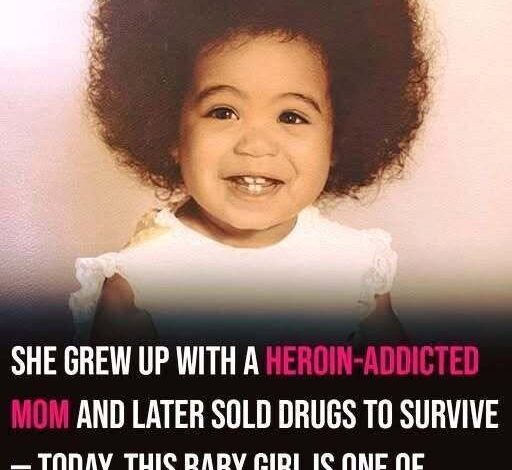
Both of her parents struggled with addiction, and that reality cast a long shadow over her childhood. Her mother, who later became a successful nurse, battled heroin addiction. As a teenager, Jada began to understand the signs she had noticed for years: her mother falling asleep unexpectedly, missing appointments, disappearing emotionally even when she was physically present.
Her father was also blunt about his failures. He admitted he was addicted to drugs and involved in crime, telling Jada he could not give her the stability she needed. Those words were painful, but they were also honest. And in a childhood full of uncertainty, honesty mattered.
The person who became Jada’s anchor was her grandmother.
A Jamaican-born social worker, classically trained pianist, and strong, disciplined woman, her grandmother offered the structure Jada desperately needed. She recognized something bright and powerful in her granddaughter and encouraged her to explore music, dance, and performance. In a home touched by addiction and instability, art became more than entertainment. It became possibility.
Still, survival often came before dreams.
Growing up around poverty, violence, and addiction forced Jada to understand danger early. She learned how quickly people could be pulled off course. As a teenager, she made dangerous choices herself, including becoming involved in drug dealing. At one point, she imagined a future as a “queenpin,” a path she would later recognize as risky, frightening, and deeply tied to the environment she was trying to escape.
Yet even during those difficult years, something inside her kept reaching toward performance.
Acting gave her a way to imagine another life. Dance gave her discipline. Music gave her release. Creativity became the thread pulling her forward when everything else felt unstable.
By twelve, Jada was already working legitimate jobs, including telemarketing and retail work at The Gap. She wanted independence. She wanted control over her own life. Most of all, she wanted options.
Her enrollment at the Baltimore School for the Arts changed everything.
There, Jada found a place where her talent could be sharpened rather than simply survived. She studied acting, music, and dance, discovering not only her passion but her direction. It was also there that she formed a deep friendship with Tupac Shakur. Their bond was emotional, creative, and lasting, built between two young artists who understood struggle and ambition in a way few others could.
Eventually, Jada left Baltimore for Los Angeles, carrying both her talent and her scars with her.
Hollywood did not welcome her easily. She faced rejection, financial pressure, and the harsh reality of trying to break into an industry where talent alone was rarely enough. But Baltimore had given her a kind of fearlessness. She knew how to read rooms. She knew how to survive uncertainty. She knew how to keep moving when doors closed.
She accepted small roles wherever she could find them. Each part became practice. Each opportunity helped her build confidence, skill, and recognition. Then came her breakthrough on A Different World, where her charisma and emotional depth quickly made her stand out.
That role opened the door to more opportunities in film, television, music, and business. But success did not erase the wounds of her past. Jada has spoken openly about depression, insecurity, addiction recovery, and the long process of healing from childhood trauma. Her honesty became part of her power.
She refused to present herself as perfect.
Instead, she became known for complexity.
Her career expanded in unexpected directions. She acted, produced, hosted, built businesses, and explored music. Her love of hard rock and heavy metal eventually led her to form the band Wicked Wisdom, a bold move that challenged public expectations and showed another side of her creative identity.
Throughout her life, Jada has continued to reinvent herself. She has built a family, endured public criticism, faced personal losses, and lived through intense media scrutiny. Through it all, she has emphasized growth over image, truth over perfection, and healing over pretending.
Her story is not simply about becoming famous.
It is about surviving what could have broken her.
It is about a girl who grew up feeling unwanted and became a woman determined to define herself. It is about turning pain into discipline, instability into strength, and vulnerability into connection.
Today, Jada Pinkett Smith is recognized not only as an actress and entertainer, but as a voice for resilience, mental health, self-discovery, and emotional honesty. Her influence reaches beyond Hollywood because her journey speaks to something deeply human: the desire to rise beyond the circumstances that shaped us.
From Baltimore streets to international stages, her life has been marked by struggle, reinvention, and courage.
Her legacy is not built only on roles, awards, or public attention. It is built on the willingness to confront pain openly, to keep evolving, and to show that even the most difficult beginnings do not have to decide the ending.
Jada’s story remains powerful because it is not polished into perfection.
It is real.
And that is what makes it unforgettable.