My family called me an ugly high school grad and erased me from their lives. Eleven years later, I walked into my sister’s wedding—and her groom asked the one question that made everyone freeze……….

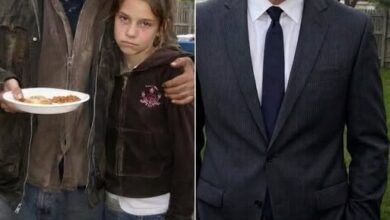
My family called me the ugly high school graduate before the cake at my graduation party had even been cut.
I was eighteen years old, standing in my parents’ backyard in Ohio wearing a blue dress from a clearance rack and holding a scholarship letter so tightly the edges bent beneath my fingers. I had paid for the dress myself with babysitting money collected over two summers — crumpled twenties folded carefully into an envelope hidden inside my desk drawer.
My name was Hannah Whitaker.
And that afternoon, I truly believed my family might finally be proud of me.
Not because I was beautiful.
Not because I was charming.
Not because I knew how to make people comfortable the way my younger sister always could.
But because I had done something no one else in our family had ever done.
A full college scholarship.
Pre-med.
A future larger than the county lines we had all grown up inside.
I thought achievement might finally outweigh disappointment in their eyes.
Instead, my mother looked me over slowly while guests gathered around folding tables in the yard and sighed:
“At least she’s smart. God knows beauty skipped her.”
My father laughed into his beer.
Sloane tilted her head and smirked.
“You look like somebody’s substitute teacher.”
Everyone laughed.
Cousins.
Neighbors.
Aunts balancing paper plates loaded with barbecue and potato salad.
People smiled while watching me disappear in real time.
I remember asking quietly,
“Why would you say that?”
And I remember my mother’s expression changing instantly — not guilty, but irritated.
“Don’t be dramatic, Hannah. We’re joking.”
That sentence followed me through most of my childhood.
We’re joking.
As though cruelty becomes harmless once wrapped in laughter.
But children know the difference between teasing and humiliation instinctively. The body understands long before language catches up. You feel it in your stomach first:
the tightening,
the heat behind your eyes,
the sudden awareness that everyone else belongs comfortably inside the room while you are being displayed inside it.
Two weeks later, I left for college carrying two suitcases and three hundred twelve dollars.
No one drove me.
My father said gas was expensive.
My mother said she was busy helping Sloane prepare for homecoming season.
Sloane barely looked up from painting her nails when I carried my bags to the bus station.
“Have fun becoming a doctor,” she called sarcastically.
By Thanksgiving, my bedroom had become her “beauty room.”
By Christmas, my name disappeared from the family card.
By the following summer, relatives spoke about me like I had moved overseas instead of three states away.
“She’s doing her own thing now.”
“Hannah thinks she’s too good for everybody.”
“You know how sensitive she is.”
Eventually, I stopped trying to explain myself.
That is the strange thing about emotional exile:
at first you scream against it internally.
Then one day exhaustion settles over grief quietly enough that silence starts feeling safer than hope.
So I built a life elsewhere.
Not dramatically.
Slowly.
Scholarships.
Library shifts.
Cold apartments with thin walls.
Medical school nights fueled by vending machine coffee and sheer stubbornness.
I learned quickly that hospitals contain every version of human vanity and suffering imaginable. Burn victims asking whether anyone would ever kiss them again. Teenagers crying over scars invisible to everyone except themselves. Men who survived explosions only to fear mirrors afterward more than death itself.
And somewhere during those years, I stopped seeing beauty the way my family taught me to.
Beauty was never symmetry.
Never effortless perfection.
Beauty was resilience.
Dignity.
The courage required to let someone rebuild what pain tried to destroy.
By thirty, I was Dr. Hannah Whitaker, reconstructive surgeon specializing in facial trauma and burn recovery.
People trusted my hands with the worst moments of their lives.
And still, occasionally, I caught my reflection unexpectedly and heard my mother’s voice:
At least she’s smart.
Funny how childhood survives inside people long after they leave home.
Then the wedding invitation arrived.
Ivory cardstock.
Elegant lettering.
No personal note.
Sloane Whitaker and Nathan Reed request the honor of your presence…
Honor.
I stared at the invitation for nearly ten minutes.
Eleven years of silence.
And suddenly my name printed neatly like I had never been erased at all.
At first, I laughed.
Then I nearly threw it away.
But some instinct — curiosity, maybe, or unfinished grief — stopped me.
So I went.
The vineyard outside Columbus looked exactly like the kind of place Sloane would choose:
expensive enough to feel aspirational,
soft lighting designed for photographs,
white roses everywhere.
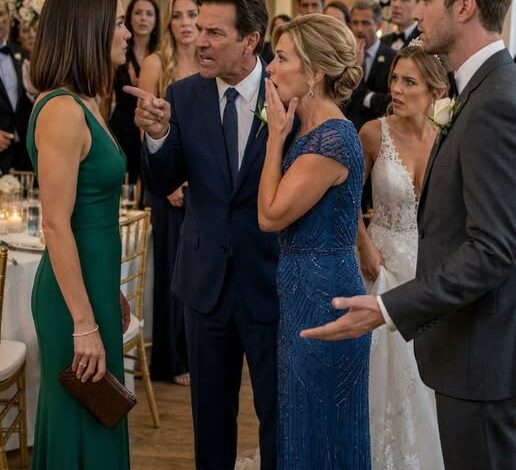
When I entered the reception hall wearing an emerald gown tailored sharply enough to make me feel visible instead of apologetic, conversation shifted subtly around me.
Not because they recognized me immediately.
Because confidence unsettles people who remember your insecurity.
My mother froze first.
Then my father.
Then Sloane.
For one breathtaking second, I watched my entire family struggle to reconcile the woman entering the room with the lonely girl they discarded years earlier.
And then Nathan Reed turned around.
Everything changed.
He stared at me openly.
“Hannah?” he asked softly.
The room went silent.
“Why didn’t you tell me Sloane was your sister?”
At first nobody understood the danger inside that question.
Then Nathan explained.
His younger brother Evan.
The factory explosion.
The surgeries.
And memory returned immediately.
I remembered blood on the hospital floor.
Nathan sitting rigid outside the operating room.
Evan whispering through bandages:
“Will people stare at me forever?”
I remembered answering carefully:
“Not forever.”
Six surgeries.
Four performed by me.
Months spent reconstructing not only a face, but someone’s willingness to exist publicly inside it again.
Nathan stepped toward me now looking genuinely stunned.
“My family talks about you like you’re a miracle,” he said quietly.
My mother made a choking sound.
Sloane laughed nervously.
“Hannah never mentioned knowing you.”
“I haven’t spoken to Hannah in eleven years,” my father snapped immediately, as though distance itself proved something shameful about me rather than them.
Nathan looked confused.
“Why?”
Such a simple question.
And suddenly nobody knew how to answer honestly.
Because abuse hidden inside family systems depends partly on vagueness:
misunderstanding,
drifting apart,
different personalities.
Precise language threatens everything.
My mother recovered first.
“Families grow distant sometimes.”
I smiled faintly.
“Is that what we’re calling it?”
Sloane’s expression sharpened instantly.
“Don’t start drama at my wedding.”
“I didn’t start anything,” I said calmly. “Nathan asked a question.”
Nathan looked between us carefully.
“You told me Hannah cut everyone off because she was jealous of you.”
There it was.
The rewritten version of me.
The unstable daughter.
The bitter older sister.
The difficult woman who abandoned her family because she could not handle someone else being prettier, happier, more loved.
Families do this often after scapegoating someone long enough:
they rewrite survival as aggression.
My mother stepped forward quickly.
“This isn’t the time.”
But Nathan had already started noticing patterns.
And once people notice patterns, performances collapse fast.
“What exactly did she do?” he asked.
Sloane crossed her arms tightly.
“She always acted superior.”
Superior.
I almost laughed.
Because while I stretched cafeteria leftovers across entire weekends and cried privately in dorm stairwells wondering why my family could not love me kindly, they somehow convinced themselves I was the privileged one.
My mother nodded sharply.
“She never knew how to take a joke.”
Nathan looked directly at me.
“What joke?”
The room held its breath.
I could have stayed quiet.
Silence once protected me emotionally. Silence let me leave without reopening wounds for people eager to call me dramatic again.
But I was not eighteen anymore.
So I answered.
“At my graduation party,” I said evenly, “my mother announced that beauty skipped me. My father laughed. Sloane called me ugly in front of everyone. After I left for college, they erased me from the family and told people I abandoned them.”
No tears.
No trembling voice.
Just truth finally spoken aloud inside the room where appearances mattered most.
Nobody moved.
Then Marianne Reed stood slowly from her chair near the front.
Elegant.
Silver-haired.
Sharp-eyed in the way women become after surviving enough life to recognize cruelty immediately.
“You told us Hannah refused family events because she thought she was above everyone,” she said quietly to Sloane.
And Sloane answered with the sentence that destroyed everything:
“I didn’t know Nathan knew her.”
Not:
that isn’t true.
Not:
you’re misunderstanding.
Only panic at being exposed.
Nathan stepped backward from her slowly.
“I need to know who I’m marrying.”
The room shifted then in a way impossible to reverse.
Because once someone refuses the family narrative publicly, everyone else must decide whether they are witnessing misunderstanding or cruelty.
My father slammed his hand against the table.
“This is ridiculous.”
Marianne Reed turned sharply toward him.
“Do not speak to my son that way.”
Authority changes rooms instantly.
The wedding dissolved after that.
Not dramatically all at once.
Gradually.
Guests whispering.
Bridesmaids crying quietly in corners.
Half-cut cake abandoned beneath dimming lights.
Sloane sobbed inside the bridal suite while my mother blamed me for “ruining everything.”
But I had not ruined anything.
I had simply walked into a room where their lies stood too close to the truth.
Nathan found me near the vineyard entrance before I left.
“I’m sorry,” he said quietly.
“For what?”
“For asking that in front of everyone.”
I looked back toward the glowing reception hall where my family scrambled desperately to preserve dignity after spending years stripping mine away.
“You asked the first honest question anyone in that family has asked in eleven years.”
Nathan eventually ended the engagement.
Not because of me specifically.
Because once he started noticing Sloane’s dishonesty, he could not stop seeing it. Stories changed depending on audience. Tears arrived strategically. Apologies appeared only after consequences became unavoidable.
Truth rearranges relationships permanently once it enters them.
Months later, Evan Reed mailed me a graduation photograph.
He stood smiling broadly, scars softened but visible, confidence rebuilt carefully over years.
Underneath the photo he wrote:
You helped me face the world again. I hope someone helped you do the same.
I cried reading that.
Not because I wanted my family back.
But because I finally understood something with complete clarity:
I had never been the ugly thing inside that house.
The ugly thing was what they taught a child to believe about herself so they would never have to examine themselves honestly.
A year later, I legally changed my last name to Hale — my grandmother’s maiden name.
Not out of bitterness.
Out of recognition.
Some names carry inheritance.
Others carry survival.
I kept rebuilding faces after that.
Kept helping strangers look into mirrors without flinching.
Kept learning that shame often begins long before scars do.
And whenever patients asked how I understood humiliation so intimately, I told them the truth gently:
“Because I once survived a family that confused cruelty with honesty.”
Then I helped them heal.
The same way, quietly and slowly, I had finally learned to heal myself.