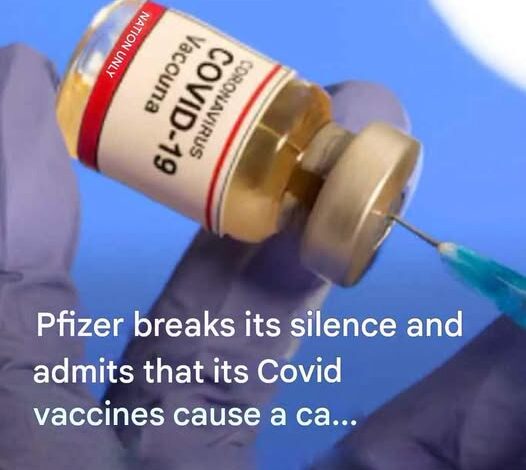
Behind the headlines, one of the largest vaccine safety studies ever conducted set out to answer a difficult but essential question:
When millions of people receive the same vaccines, which health events are truly linked to vaccination, and which are simply coincidental?
To investigate that question, researchers working through the Global Vaccine Data Network (GVDN) analyzed health records from 99 million vaccinated individuals across multiple countries. By examining such an enormous population, they were able to study extremely rare medical events that smaller clinical trials are often too limited to detect with precision.
The findings added important detail to what scientists and public health officials had been building through years of vaccine safety monitoring.
The study identified very rare increases in the risk of certain adverse events following specific COVID-19 vaccines. These included some neurological, cardiovascular, and blood-related conditions that had already been investigated through national safety surveillance systems. The researchers emphasized that these events were uncommon, and that the observed risks varied depending on the vaccine platform and the specific condition being studied.
Importantly, the study was observational. It estimated associations between vaccination and rare health events but did not, by itself, prove that every observed event was directly caused by vaccination. Establishing causation requires considering multiple lines of evidence, including biological mechanisms, consistency across studies, timing, and other epidemiological research.
The results also need to be viewed alongside another well-established reality.
COVID-19 infection itself has been associated with substantially increased risks of many of the same serious complications—including myocarditis, blood clots, stroke, and neurological disorders—as well as hospitalization, long-term illness, and death. Numerous studies have concluded that, for the populations studied during the pandemic, the benefits of COVID-19 vaccination in preventing severe disease generally outweighed the rare risks of serious adverse events, although that balance can vary depending on factors such as age, underlying health conditions, and the circulating virus.
Recognizing those benefits does not diminish the experiences of people who suffered serious vaccine-related complications.
For the individuals and families affected, even an extremely rare event is profoundly significant. Careful safety monitoring exists precisely because no medical intervention is entirely without risk. Identifying uncommon adverse events allows healthcare providers to improve guidance, refine recommendations for specific populations, and ensure that people receive appropriate evaluation and care if complications occur.
That ongoing surveillance is one of the strengths of modern public health.
Rather than assuming a vaccine is either perfectly safe or dangerously unsafe, scientists continue collecting data long after approval, comparing outcomes across millions of people and updating recommendations when new evidence emerges. Transparency about both benefits and risks is essential for maintaining public trust.
The broader lesson from studies like this is not that science has failed, but that it continues to evolve.
Large-scale research helps transform uncertainty into evidence, enabling clinicians, policymakers, and patients to make more informed decisions. It also reinforces the importance of listening to patients who experience unexpected medical events, investigating those reports carefully, and improving healthcare systems as new knowledge becomes available.
In the end, the study highlights a reality that medicine often confronts: highly effective interventions can still carry rare risks. Acknowledging those risks openly while placing them in their full clinical context is not a contradiction—it is a necessary part of evidence-based healthcare. The goal is not to choose between recognizing benefits or recognizing harms, but to understand both as accurately as possible so that future decisions are guided by the best available science and accompanied by continued compassion for everyone affected.