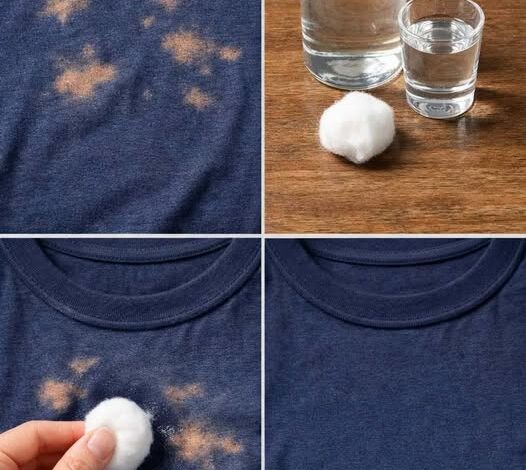
Bleach Stains on Clothes? Don’t Throw Them Away Yet
Few laundry accidents cause more panic than discovering a bleach stain on your favorite shirt, dress, or pair of pants. Unlike ordinary stains that sit on top of the fabric, bleach actually removes color from the material itself, making the damage seem permanent.
While no method can truly restore fabric that has been stripped of its original dye, there are ways to reduce the appearance of bleach marks and, in many cases, save a garment from the donation pile.
Before You Begin: Safety First
If the bleach stain is fresh, your first priority is removing any remaining bleach from the fabric.
Step 1: Rinse Thoroughly
Hold the stained area under cool or lukewarm running water for at least 2 minutes.
While rinsing:
- Gently massage the fabric between your fingers.
- Avoid scrubbing aggressively.
- Squeeze out excess water without twisting or wringing the garment.
This step is essential because any remaining bleach can continue damaging the fabric.
Step 2: Prepare a Safe Work Area
- Work in a well-ventilated room.
- Open a window if possible.
- Lay the garment flat on a clean towel.
- Keep bleach and alcohol containers separate.
Using Alcohol to Help Blend the Discoloration
On some dark-colored fabrics, rubbing alcohol may help redistribute surrounding dye slightly, making the bleach spot less noticeable.
What You’ll Need
- Clear rubbing alcohol
- Cotton ball or makeup-removal pad
- Small container
Recommended Amount
Pour approximately 5 ml (about one teaspoon) of alcohol into a small container.
Do not exceed a total of 10 ml per garment.
Application
- Dampen the cotton ball with 2–3 ml of alcohol.
- The cotton should be moist, not dripping.
- Gently dab the affected area for 30–60 seconds.
- Do not rub aggressively.
Wait and Rinse
- Allow the alcohol to sit for about 2 minutes.
- Rinse the area thoroughly with clean water for 1 minute.
Repeat Only If Needed
If you notice some improvement but the stain remains obvious, you may repeat the process once using another 2–3 ml of alcohol.
Wash Immediately
Once finished:
- Wash the garment according to the care label.
- Use your regular detergent.
- Allow the garment to air dry before evaluating the results.
Important Warnings
Never use this method on:
- Wool
- Silk
- Viscose
- Delicate or specialty fabrics
And most importantly:
Never mix bleach and alcohol directly.
Always rinse the garment thoroughly before applying alcohol. Combining bleach and alcohol can create dangerous chemical reactions and harmful fumes.
Also remember that this technique does not “remove” a bleach stain. At best, it may reduce the contrast and make the discoloration less noticeable.
When the Stain Won’t Improve
If the bleach mark is severe, consider alternative solutions.
Fabric Dye
For solid-colored garments, fabric dye can restore a more uniform appearance and often provides the best overall result.
Textile Markers
Fabric markers are useful for small, localized spots and quick touch-ups.
Patches and Embroidery
Sometimes the easiest solution is to turn the mistake into a design feature.
Options include:
- Decorative patches
- Embroidery
- Fabric appliqués
- Custom prints
Tie-Dye or Creative Redesign
A bleach stain can become the starting point for an entirely new look. Many people intentionally use dyeing techniques to transform damaged clothing into something unique.
How to Prevent Bleach Accidents
A few simple habits can dramatically reduce the risk of future stains:
- Remove clothing before handling bleach.
- Dilute bleach according to product directions.
- Avoid splashing during use.
- Store bleach away from laundry products that could spill.
- Consider gentler cleaning alternatives when possible.
The Bottom Line
A bleach stain does not automatically mean a garment is ruined. While the lost color cannot usually be restored completely, careful treatment, fabric dyes, textile markers, or creative redesigns can often give clothing a second life.
Sometimes the best laundry rescue isn’t erasing the mistake—it’s finding a smart way to work with it.