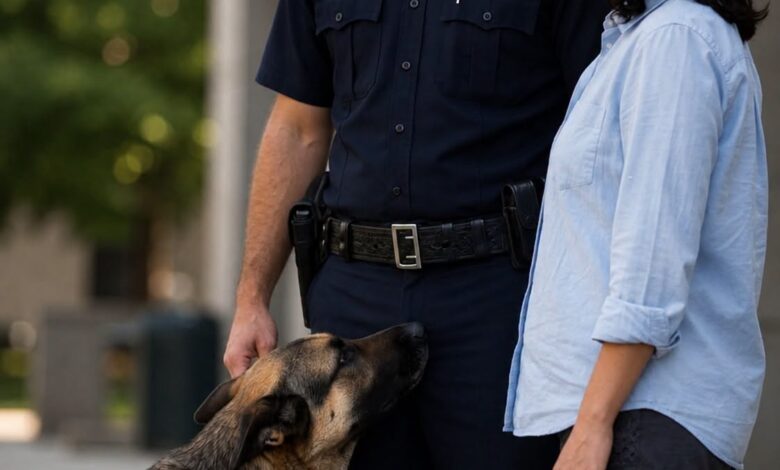
Few moments are more awkward than introducing your dog to someone new—only to watch them march straight toward the person’s crotch with unwavering determination.
While it may leave you apologizing and your guest blushing, your dog isn’t trying to embarrass anyone.
They’re simply using the sense they trust most.
Dogs experience the world primarily through smell. Their noses contain hundreds of millions of scent receptors—far more than humans—and they can detect odors at extraordinarily low concentrations. What seems like an ordinary greeting to us is, for a dog, an opportunity to gather an incredible amount of information.
The groin area happens to be especially informative.
Like the armpits, it contains apocrine sweat glands, which produce scent compounds that carry a wealth of chemical information. To a dog’s nose, these odors can reveal clues about a person’s age, biological sex, emotional state, hormonal changes, and even certain aspects of their health.
In other words, your dog isn’t being rude.
They’re reading what, to them, is the most detailed introduction available.
That’s also why dogs may seem especially interested in some people more than others.
Pregnancy, recent exercise, changes in hormones, strong emotions such as fear or stress, or simply a different personal scent profile can all make one person particularly interesting to an inquisitive canine nose.
Of course, understanding the behavior doesn’t mean you have to let it happen.
Good manners matter—for both dogs and humans.
Fortunately, there’s no need to punish a dog for following a completely natural instinct. Training works best when you redirect the behavior toward something more appropriate instead of trying to suppress curiosity altogether.
One popular technique is teaching a simple “touch” cue.
Hold out a closed fist at your dog’s nose level and encourage them to gently touch it with their nose. As soon as they do, reward them with praise, a treat, or another favorite reward. Over time, your dog learns that greeting a person’s hand earns positive attention, making it more rewarding than investigating more personal areas.
Consistency is the key.
Ask guests to offer their hand first when greeting your dog, and reward calm, polite interactions every time. With practice, many dogs begin choosing the trained greeting automatically because it’s the behavior that consistently leads to praise.
If your dog becomes overly enthusiastic around visitors, keeping them on a leash for initial introductions or asking them to sit before greeting can also help create calmer interactions.
Remember that your dog isn’t trying to invade anyone’s privacy.
They’re simply following millions of years of evolution that taught them scent is one of the most reliable ways to understand the world around them.
By redirecting rather than scolding, you’re respecting that instinct while teaching your dog how to behave politely in human social situations.
It’s a solution that benefits everyone.
Your guests feel more comfortable.
Your dog still gets to satisfy their curiosity in an appropriate way.
And you avoid those awkward moments of apologizing while trying to gently pull an enthusiastic nose away.
Sometimes the best training doesn’t fight nature—it works with it. By understanding why dogs sniff the way they do and giving them a more appropriate way to say hello, you transform an embarrassing encounter into an opportunity for communication, trust, and better manners on both ends of the leash.