Bo Derek (66) forgot how old she was and showed her naked body in nothing but a tiny bikini! The fans of the actress even had to double-check the actress’s age! New photos in comments

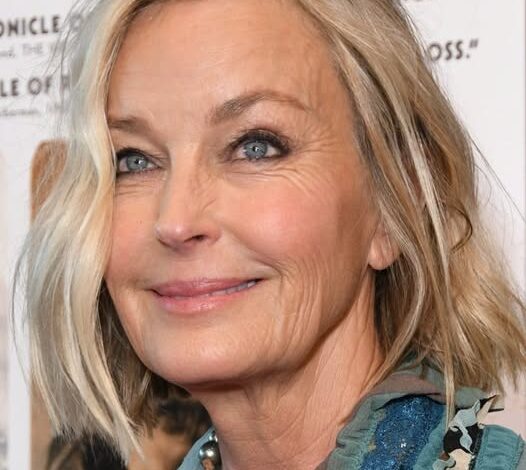
Long before the world knew her as Bo Derek, she was simply Mary Cathleen Collins — a California girl happiest when she smelled like hay instead of perfume.
Before cameras.
Before magazine covers.
Before the braids and the beach and the impossible cultural mythology wrapped around the number 10.
There were horses.
That was the first real love.
Not Hollywood.
Not fame.
Not attention.
Animals offered something the entertainment industry never fully could:
quiet honesty.
A horse does not care whether you are beautiful.
A horse does not care whether critics approve of you.
A horse does not turn affection into currency.
Young Mary understood that instinctively long before she could explain it.
She grew up drawn toward stables more naturally than soundstages, preferring dirt beneath her fingernails to the polished artificiality that would later define her public image. But Hollywood has always possessed a strange gravitational pull around beauty, especially beauty that photographs powerfully.
And Bo Derek photographed like fantasy itself.
Her life changed permanently when she met director John Derek while still very young. Their relationship immediately became controversial because of the significant age difference and the circumstances surrounding it. Public fascination arrived wrapped tightly together with judgment. By the time they eventually married, the media had already transformed Bo into something larger and less human than an ordinary woman.
An icon.
A controversy.
A projection screen for cultural obsession.
Then came 10.
Few films capture and imprison a public image simultaneously the way that movie did. One slow-motion run across a beach transformed Bo Derek into a global symbol almost overnight. The cornrows, the golden skin, the effortless sensuality — all of it fused into one of the most recognizable images of late-1970s celebrity culture.
Audiences saw fantasy.
But fantasy is often a lonely role to inhabit permanently.
Because once Hollywood decides what you represent symbolically, it becomes extraordinarily difficult to evolve beyond it. Bo Derek stopped being treated like a developing actress and became instead an idea men projected onto screens and magazine covers:
desire,
youth,
perfection,
sexual freedom wrapped in California sunlight.
The industry rewarded the image while quietly flattening the person underneath it.
Film after film leaned into the same carefully packaged sensuality. Interviews circled endlessly around appearance rather than interior life. Public conversations about her rarely focused on craft or complexity because culture had already assigned her a simpler role:
the fantasy woman.
That kind of visibility creates strange isolation.
People recognize your face everywhere while understanding almost nothing about you.
And behind the glare stood John Derek — husband, director, protector, architect of much of her public image. Their relationship confused and fascinated outsiders for decades. Some viewed it romantically, others critically. But by nearly every account, Bo loved him deeply and built much of her emotional world around that partnership.
So when John died in 1998, the loss shattered her completely.
Widowhood after years of intense partnership creates a peculiar silence. The person who once structured your routines, your private language, your emotional geography suddenly disappears, and the world expects you to continue moving as though identity itself has not fractured.
For Bo, grief collided with aging publicly inside an industry notoriously unforgiving toward women once youth fades from center stage.
Hollywood had celebrated her body enthusiastically.
It showed far less interest in her sorrow.
And perhaps that was the moment she quietly stopped chasing the machine entirely.
Not dramatically.
Not bitterly.
She simply stepped away.
Many celebrities cling desperately to relevance after fame shifts elsewhere. Bo Derek did something rarer:
she allowed herself to become private again.
And in that privacy, her earliest self slowly resurfaced.
The girl who loved horses never disappeared completely.
She returned through ranch life,
through equine welfare work,
through advocacy for animals needing protection rather than performance.
Friends began describing a different rhythm around her life then — calmer, less performative, rooted more deeply in genuine passion than public expectation. She involved herself in animal welfare causes not merely by attaching her name to events, but through consistent work and attention.
Animals restored something fame had distorted.
Simplicity.
Presence.
Directness.
Over time, another layer of purpose emerged too: support for veterans and military families. Bo increasingly devoted time and visibility toward organizations helping wounded service members and honoring veterans’ experiences. The work felt notably different from celebrity branding exercises because she approached it with humility rather than spectacle.
Less image.
More service.
That shift mattered.
It suggested a woman gradually reclaiming authorship over her own life after decades spent existing inside narratives created largely by others.
Then, unexpectedly, love returned.
Not through scandal.
Not through glamorous Hollywood mythology.
Through friendship.
Actor John Corbett entered her life slowly, naturally, almost refreshingly ordinary compared to the intensity surrounding her earlier fame. They built a relationship outside the machinery of public obsession — no tabloid frenzy dominating every appearance, no carefully staged romance designed for headlines.
Just companionship.
Years passed quietly.
Then decades.
Their relationship endured partly because neither seemed interested in performing celebrity for the public anymore. They lived together privately, comfortably, allowing affection to mature away from cameras rather than beneath them.
After more than twenty years together, they finally married in a small ceremony so understated it almost felt radical by Hollywood standards.
No giant spectacle.
No exclusive magazine reveal.
No paparazzi circus.
Just two people deciding, after years of already sharing life, to formalize what they had built quietly together.
There is something deeply moving about that kind of late love.
Not frantic.
Not youthful fantasy.
Earned.
A relationship formed after grief, disappointment, reinvention, and survival have already reshaped both people into fuller versions of themselves.
Today, Bo Derek lives far from the relentless glare that once defined her existence. Ranch life suits her in ways Hollywood never entirely did. Horses again. Dogs. Open land. The slow practical rhythms of caring for living things rather than maintaining public image.
And perhaps that is the most fascinating part of her story ultimately.
Not the beach scene.
Not the fame.
Not even the beauty mythology culture attached to her.
It is the quiet transformation afterward.
The woman once marketed as fantasy eventually choosing reality instead:
animals over applause,
privacy over spectacle,
purpose over visibility,
companionship over performance.
For decades, millions projected desire onto Bo Derek without asking what kind of life she herself might actually want.
Now the answer seems beautifully simple.
A ranch.
A partner she trusts.
Creatures she loves.
Enough distance from Hollywood to finally hear her own thoughts again.
The world once treated her as an image designed for public consumption.
But somewhere between grief, reinvention, and open sky, Bo Derek became something far more difficult and meaningful:
herself.