Bo Derek (66) forgot how old she was and showed her naked body in nothing but a tiny bikini! The fans of the actress even had to double-check the actress’s age! New photos in comments

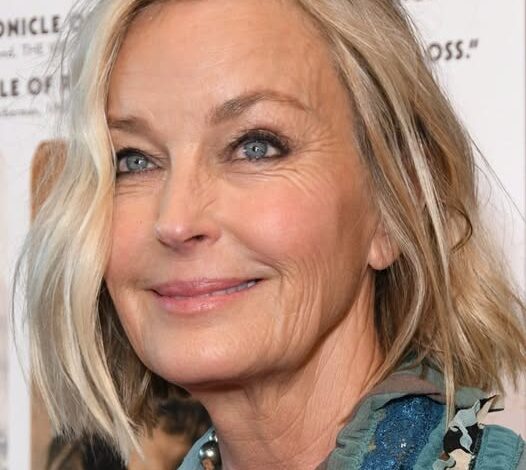
Long before the world called her a perfect “10,” she was simply Mary Cathleen Collins — a sunburned California girl happiest with dirt on her boots and hay clinging to her jeans.
The future icon known as Bo Derek did not grow up dreaming about Hollywood.
She dreamed about horses.
About wide-open land, early mornings at the stable, and the quiet trust that exists between animals and people long before fame complicates everything. While other girls taped movie-star posters to their bedroom walls, Mary preferred riding trails beneath open sky, more comfortable around animals than cameras.
But Hollywood has always possessed a particular hunger for beauty.
And eventually, it found her.
She was still a teenager when director John Derek first noticed her. He was sophisticated, famous, decades older, and already deeply embedded inside the glamorous machinery of film. Their relationship ignited immediate controversy — not just because of the age gap, but because the public could not decide whether Mary was being discovered, transformed, or consumed.
By the late 1970s, she had become Bo Derek.
The name sounded brighter.
Sharper.
More cinematic.
And then came 10.
One film.
One hairstyle.
One slow-motion run across a beach.
That was all it took.
Overnight, Bo Derek stopped being a person in the public imagination and became a symbol — a fantasy projected onto magazine covers, television interviews, posters, and endless headlines. Her braided blonde hair became iconic. Her body became cultural shorthand. Men admired her openly; women were told they should look like her.
Hollywood reduced her into a number.
A “10.”
The label made her famous enough to become unforgettable.
It also trapped her inside an image that left very little room for humanity.
For years, Bo existed beneath relentless attention. Interviewers obsessed over her appearance instead of her thoughts. Studios pushed sensual roles because they sold tickets. Critics often dismissed her performances before films even premiered, as though beauty itself disqualified seriousness.
People rarely asked what fame felt like from inside.
Lonely, sometimes.
Exhausting.
Artificial.
John Derek remained both husband and creative partner through much of it. He directed several of her films, shaped her public image carefully, and stood beside her while media fascination intensified into something almost mythic.
To outsiders, their marriage looked glamorous.
Private jets.
Red carpets.
Photographers.
Luxury homes.
But glamour has a strange habit of disguising ordinary emotional dependence.
When John Derek died in 1998 after years of declining health, Bo’s world collapsed quietly behind the headlines.
She was devastated.
Not performatively.
Not publicly.
Deeply.
Friends later described her grief as consuming. The man who had guided nearly every chapter of her adult life was suddenly gone, and the woman long portrayed as untouchably beautiful found herself alone inside a silence fame could not soften.
For awhile, she disappeared almost entirely from Hollywood.
No dramatic farewell.
No scandal.
No announcement.
She simply stopped participating in the machine.
There was something quietly radical about that choice.
Many former sex symbols spend years chasing relevance, surgeries, headlines, or nostalgic reinventions designed to preserve public desire. Bo Derek moved the opposite direction. She stepped away from the roles no longer fitting her life and returned toward the person she had been before Hollywood built an identity around her image.
Mary Collins returned to horses.
To ranches.
To animals.
To open space.
Far from cameras, she poured herself into equine welfare and animal advocacy work with the same intensity she once gave film sets. Friends noticed she seemed calmer around barns than premieres, more genuine in muddy boots than evening gowns.
Animals never asked her to remain frozen in youth.
They simply responded to care.
Over time, her advocacy expanded beyond animal welfare into support for military veterans and wounded service members. She visited bases, participated in fundraising efforts, and lent not just her celebrity but her attention — something often far more valuable.
People who met her during those years frequently described surprise.
Not because she was beautiful.
That much they expected.
Because she seemed grounded.
Warm.
Funny.
Uninterested in performing fame.
Perhaps suffering strips away the need for illusion eventually.
For years after John Derek’s death, Bo insisted she would never marry again. The loss cut too deeply. The idea of rebuilding intimacy after grief felt impossible.
Then came John Corbett.
Not through dramatic romance.
Not through Hollywood spectacle.
Through friendship.
The two met quietly in the early 2000s after being introduced by mutual connections. Corbett — known for his easy warmth and unpretentious charm — approached her without the strange hunger fame often attracts. They spent time together casually at first:
dinners,
conversations,
ordinary companionship.
No whirlwind headlines.
No tabloid circus.
Just two adults discovering peace in each other’s company.
That simplicity mattered.
Corbett later joked publicly that one of the secrets to their relationship was living away from Hollywood’s chaos whenever possible. Together they built a quieter life rooted less in industry expectations and more in genuine routine:
cooking,
traveling,
caring for animals,
disappearing onto ranch property beneath open sky.
Years passed.
Then decades.
Without spectacle, their relationship endured.
After more than twenty years together, they married privately in 2020 during the uncertainty of the pandemic — no elaborate celebrity wedding, no magazine exclusives, no choreographed public reveal.
Just commitment.
Quiet and real.
In many ways, the intimacy of that choice reflected the life Bo Derek spent decades slowly reclaiming from the version of herself the world once consumed.
Today, she lives largely outside the machinery of celebrity culture.
On ranch land surrounded by horses, dogs, and enormous western skies, she appears less like a former fantasy figure and more like someone who finally circled back to her original self after surviving fame’s distortions.
Time changed her publicly, as it changes everyone.
But perhaps the more meaningful transformation happened privately.
The woman once packaged as perfection no longer seems interested in perfection at all.
She speaks more openly now about aging, grief, purpose, and the emptiness that can accompany being valued primarily for appearance. There is a quiet steadiness in her later interviews — not bitterness exactly, but perspective earned through surviving both idolization and loss.
Because fame, especially for women, often demands impossible things:
remain beautiful,
remain young,
remain desirable,
remain unchanged.
Bo Derek eventually stepped outside those demands altogether.
And in doing so, she may have accomplished something far more difficult than staying famous.
She became whole again.
The image most people remember remains frozen permanently in cultural memory:
golden hair,
ocean waves,
the beach scene from 10.
But that version was only one chapter.
The fuller story belongs to the woman who survived afterward —
the widow rebuilding herself in silence,
the advocate standing beside wounded veterans,
the ranch owner feeding horses at sunrise,
the partner laughing quietly beside John Corbett far from red carpets and flashing cameras.
A woman who spent years being everyone else’s fantasy before finally allowing herself a life that felt unmistakably, peacefully her own.