By now, the facts of the case almost feel secondary to the emotional war surrounding them.
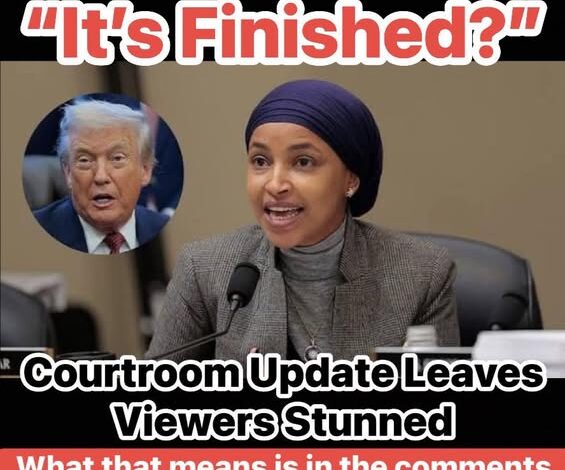
What began as a legal dispute involving Tim Mynett’s consulting business, financial accusations, and political relationships has expanded into something far larger and far less rational: a symbolic battlefield where Americans project everything they already believe about Ilhan Omar onto every new headline, court filing, and accusation. The details matter, yes — contracts, testimony, money, timelines — but beneath the paperwork sits a deeper cultural struggle that has very little to do with accounting and everything to do with identity, power, and suspicion.
For Omar’s critics, the controversy confirms a story they feel they recognized long ago.
To them, every legal complication surrounding Mynett reinforces the belief that Omar’s public image — progressive reformer, moral critic of corruption, outspoken advocate for marginalized communities — conceals the same opportunism she condemns in others. They see hypocrisy where supporters see nuance. Every deposition becomes evidence not merely of financial misconduct, but of character itself. The accusations feed into a larger narrative critics have constructed for years: that Omar speaks the language of justice publicly while benefiting privately from political influence, insider networks, and blurred ethical boundaries.
But the intensity of the reaction cannot be separated from who Omar is.
She is not simply another politician facing scrutiny.
She is a Muslim woman.
A refugee.
A Black immigrant.
One of the first visibly hijab-wearing members of Congress in American history.
And for many Americans, consciously or not, those identities carry emotional and political symbolism far beyond policy debates. Omar became controversial long before legal disputes entered the picture because her very presence disrupted assumptions about who traditionally occupies power in America. To supporters, attacks against her often feel less like ordinary political criticism and more like attempts to delegitimize someone whose existence unsettles people already uncomfortable with demographic and cultural change.
That tension shapes every interpretation surrounding the case now.
Critics insist the backlash is about ethics.
Supporters argue the outrage is selectively amplified because of who she is.
And both sides, in their own way, partially believe they are defending something larger than one politician.
For Omar’s defenders, the spectacle surrounding Tim Mynett increasingly resembles a familiar American ritual: the public dissection of controversial women, especially women of color, whose personal lives become inseparable from political attacks. They point to how often Omar’s marriage, faith, appearance, and family relationships have been treated not as private matters, but as ideological weapons. In that context, every lawsuit and allegation feels amplified by cultural hostility already surrounding her long before any legal filings existed.
And yet, dismissing all criticism as prejudice oversimplifies things too.
Because public officials do not exist outside accountability simply because some attacks against them may be rooted in bias. Questions involving money, influence, business relationships, and ethical boundaries remain legitimate areas of scrutiny regardless of identity. That is part of the discomfort surrounding the entire controversy: separating reasonable investigation from ideological obsession becomes increasingly difficult once political tribalism takes over.
The internet only intensifies that collapse.
Online, nuance dies quickly.
People rarely wait for evidence anymore.
They wait for confirmation.
Confirmation that their instincts about a public figure were right all along.
So when legal documents emerge involving Mynett, critics interpret them as proof of corruption hidden beneath progressive rhetoric. Meanwhile supporters often interpret the same developments through an entirely different emotional lens — as another chapter in a years-long campaign to scandalize, isolate, and discredit Omar publicly no matter the facts.
That divide explains why the same case can produce completely opposite emotional reactions depending on who is reading about it.
One side sees accountability.
The other sees persecution.
One side sees hypocrisy exposed.
The other sees bias disguised as moral concern.
And once those narratives harden, evidence itself stops functioning normally. Every new development simply becomes additional material people use to reinforce beliefs they already held before the story even began.
Omar’s own response reflects that impossible terrain.
Her defense — that her husband’s business dealings are separate from her congressional responsibilities, that her votes remain independent, and that her faith should not be treated as political theater — sounds reasonable to supporters because it insists on boundaries many Americans claim to value theoretically. Public figures are not automatically responsible for every action taken by spouses or relatives.
But critics remain unconvinced because trust itself has already eroded.
And once trust disappears from political life, explanations rarely matter anymore.
People stop evaluating whether statements are plausible.
They evaluate whether the speaker deserves belief at all.
That may be the most revealing part of the entire controversy.
Not the lawsuits.
Not the filings.
Not even the accusations themselves.
The speed with which millions of people instinctively chose their version of the story before courts reached conclusions.
Some Americans were immediately prepared to believe the worst because Omar already symbolized something threatening to them politically or culturally. Others were immediately prepared to dismiss accusations because they viewed the attacks themselves as part of a larger pattern targeting outspoken minority women in power.
Very few people approached the situation neutrally.
And perhaps true neutrality was never realistic once the story became attached to such emotionally loaded identities and political divisions.
Eventually, the legal system will do what it always does.
Cases will close.
Settlements may happen.
Damages will be calculated.
Documents archived.
Headlines replaced by newer scandals.
But the cultural questions exposed by the controversy will linger much longer.
Because beneath the arguments about ethics and politics lies something more unsettling about modern America itself: we increasingly interpret public figures less through evidence than through emotional archetypes. Heroes. Villains. Threats. Victims. Symbols.
Once someone becomes symbolic, objectivity becomes almost impossible.
Ilhan Omar stopped being “just” a politician years ago.
To supporters, she represents resilience, representation, and resistance against exclusionary politics.
To critics, she represents perceived hypocrisy, radicalism, or cultural transformation they distrust.
The legal controversy surrounding Tim Mynett simply poured fuel onto narratives already burning intensely on both sides.
And somewhere inside all that noise sits the hardest question of all:
why were people so emotionally ready to believe exactly what they believed?
Why did some instantly assume corruption?
Why did others instantly assume persecution?
Why are Americans increasingly incapable of separating scrutiny from hatred… or defense from denial?
Those questions matter more than any individual filing eventually will.
Because they reveal how deeply distrust now shapes public life in America.
Distrust of institutions.
Distrust of media.
Distrust of politicians.
Distrust of each other’s motives.
In that environment, every controversy becomes larger than itself almost immediately. Facts compete not against misinformation alone, but against emotional investment. And emotional investment is incredibly difficult to undo once identity attaches itself to belief.
So while courts may eventually settle the legal dispute, the deeper cultural argument surrounding Ilhan Omar will continue long afterward.
Not because Americans necessarily care about contracts or consulting firms in isolation.
But because stories like this become containers for larger anxieties about power, fairness, identity, morality, and who gets trusted in public life at all.
And once a controversy becomes symbolic…
the truth alone is rarely enough to end it.