‘Bravest little boy in America’: 8-year-old killed while trying to save his mom from violent attack

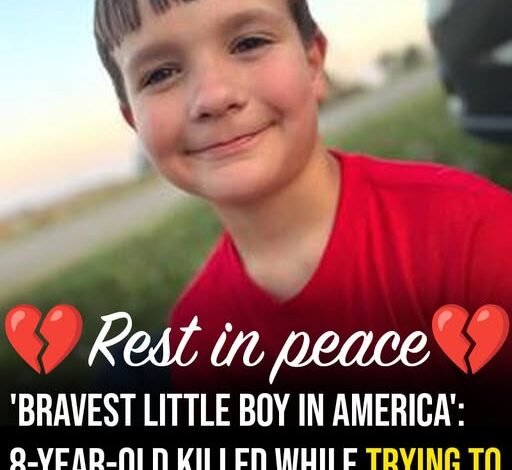
They Remember Him by His Smile
Before they talk about the tragedy, before they speak about the headlines, before they describe the nightmare that shattered their family forever, they talk about his smile.
That is how every story begins.
Not with violence.
Not with loss.
Not with grief.
With a smile.
The kind that arrived before he entered a room.
The kind that made people smile back without realizing they were doing it.
The kind that seemed too big for a child his age.
Leland “Lee” Arnett carried that smile everywhere.
Family members say it was impossible to miss.
It lived on his face so naturally that people often remember it before they remember anything else.
Teachers noticed it.
Neighbors noticed it.
Friends noticed it.
Even strangers noticed it.
There was something about Lee that made people feel comfortable almost immediately.
Something warm.
Something genuine.
Something rare.
The world often expects kindness from adults.
When it appears in a child, it feels different.
More powerful somehow.
Because children have not yet learned how difficult kindness can be.
They give it freely.
Instinctively.
Without calculation.
Without expectation.
That was Lee.
And now, as those who loved him struggle to understand a future without him, they find themselves returning to the same memories again and again.
Not because remembering hurts less.
Because remembering keeps him close.
The Boy Who Ran Toward People
Some children are shy.
Some are cautious.
Some hesitate before embracing the world around them.
Lee was not one of those children.
According to those who knew him best, his first instinct was always connection.
If someone he loved arrived at the house, he ran to greet them.
Not walked.
Ran.
Full speed.
Arms open.
Smile already waiting.
There was never any doubt about how he felt.
He loved loudly.
Openly.
Completely.
The kind of affection many people spend their entire lives trying to find.
His relatives laugh through tears when they tell stories about those moments.
The way he would launch himself into hugs.
The way he remembered details about people’s lives.
The way he checked on family members when they seemed upset.
The way he could somehow sense when someone needed comfort.
Adults often assume they are the protectors.
The caretakers.
The steady presence children depend upon.
Yet many people in Lee’s life describe the opposite experience.
They felt protected by him.
Not physically.
Emotionally.
His presence had a calming effect.
A reassuring effect.
The effect of someone whose first concern was always the wellbeing of others.
Looking back now, many say they should have recognized what those instincts revealed about his character.
Because even as a child, Lee possessed something extraordinary.
He cared deeply.
Perhaps more deeply than most people ever knew.
A Protector by Nature
Every family develops stories about who people are.
The responsible one.
The funny one.
The stubborn one.
The dreamer.
The peacemaker.
The protector.
Within Lee’s family, that role belonged to him.
Again and again, relatives describe moments when he instinctively placed himself between others and harm.
Not because anyone taught him to.
Because it seemed woven into who he was.
If a younger sibling felt scared, Lee stepped forward.
If someone felt left out, Lee noticed.
If conflict emerged, he tried to calm it.
If someone was hurting, he moved toward them rather than away.
These qualities rarely make headlines.
The world often celebrates achievement.
Talent.
Success.
Recognition.
But character develops quietly.
It reveals itself in ordinary moments.
Small decisions.
Instinctive reactions.
The choices people make when nobody is watching.
Those who loved Lee say his life was filled with those moments.
Small acts of care.
Small acts of courage.
Small acts of protection.
None of them seemed extraordinary at the time.
Now they feel like pieces of a larger picture.
Evidence of the person he was becoming.
Evidence of the man he might have become.
The Day Everything Changed
On May 13, the ordinary rhythm of family life ended.
The details investigators later shared painted a devastating picture.
Authorities allege that violence erupted inside the family’s home in De Soto, Illinois.
The place that should have been safest.
The place filled with memories.
The place where birthdays had been celebrated.
Where holidays had been shared.
Where photographs had been taken.
Where ordinary life unfolded.
According to officials, when danger appeared, Lee responded the same way he always had.
By protecting someone else.
Specifically, his mother.
It is difficult to imagine the courage required in moments like that.
Difficult to imagine the fear.
The confusion.
The split-second decisions.
Yet those who know Lee best say the choice itself does not surprise them.
Heartbreaks them.
Yes.
But surprises them?
No.
Because protecting people was what he did.
It was who he was.
The instinct that defined so much of his life ultimately defined its final moments as well.
And while that truth brings unbearable pain, it also brings a measure of understanding.
His last act was consistent with every act that came before it.
An expression of love.
An expression of courage.
An expression of the person everyone remembers.
Deborah’s Fight
While the family mourns Lee, another battle continues.
His mother, Deborah, remains hospitalized.
The injuries she sustained were severe.
Life-threatening.
The kind that transform ordinary days into medical emergencies.
The kind that leave families waiting beside hospital beds.
Watching monitors.
Listening for updates.
Praying through exhaustion.
Loved ones describe a woman fighting not only physical pain but unimaginable emotional devastation.
A mother healing from injuries while grieving the child who tried to save her.
There are no words large enough for that kind of heartbreak.
No explanation capable of making sense of it.
No timeline for recovery.
The physical wounds will require time.
The emotional wounds may require much longer.
Yet those closest to Deborah speak about her determination.
Her resilience.
Her refusal to give up.
The same strength that helped shape the family she built continues carrying her forward now.
One difficult hour at a time.
The Hidden Burden of Tragedy
When public tragedies occur, attention often focuses on the immediate loss.
The headlines.
The investigation.
The emotional impact.
Less visible are the practical realities families suddenly face.
Funeral expenses.
Medical costs.
Travel arrangements.
Housing concerns.
Childcare responsibilities.
Endless paperwork.
Endless phone calls.
Endless decisions made while grief clouds every thought.
Lee’s family now confronts all of those challenges simultaneously.
Loved ones are working to arrange transportation for Deborah to Nebraska.
They are planning services.
Supporting siblings.
Managing logistics.
Navigating systems that continue operating even when lives have stopped making sense.
Grief itself is exhausting.
Administrative grief can feel overwhelming.
Yet communities often reveal their best qualities during these moments.
Friends step forward.
Neighbors help.
Strangers offer support.
People contribute what they can.
Not because it fixes anything.
Because it reminds grieving families they are not carrying the burden alone.
Remembering the Boy, Not the Tragedy
Perhaps the most remarkable thing about conversations with those who loved Lee is what they emphasize.
Again and again, they resist defining him through the way he died.
Not because what happened is unimportant.
Because his life was larger than its ending.
He loved sports.
He loved family gatherings.
He loved making people laugh.
He loved helping.
He loved being included.
He loved making others feel included.
The tragedy occupies a single day.
His life occupied countless others.
Those who knew him want people to remember that distinction.
To remember the child before the headline.
The smile before the sorrow.
The joy before the grief.
The life before the loss.
Because reducing someone to the worst thing that happened to them is another kind of disappearance.
And Lee deserves better than that.
A Hero Defined by Love
The word hero is often used casually.
Sometimes too casually.
Applied to athletes.
Celebrities.
Public figures.
Moments of achievement.
Moments of fame.
Yet occasionally the word returns to its original meaning.
Courage in service of others.
Sacrifice rooted in love.
Action taken without concern for personal safety.
In those moments, the word feels appropriate again.
Family members describe Lee as a hero.
Not because they need a comforting narrative.
Because they believe it reflects the truth.
They believe his final actions emerged from the same qualities that shaped his entire life.
Compassion.
Protection.
Loyalty.
Love.
The instincts that defined him in ordinary moments remained present during extraordinary ones.
And that continuity matters.
Because heroism rarely appears from nowhere.
It usually grows from character.
From habits.
From values.
From countless small choices made long before anyone is watching.
The Legacy He Leaves Behind
The future Lee deserved was stolen.
There is no way around that reality.
Birthdays remain uncelebrated.
Dreams remain unfinished.
Possibilities remain unrealized.
The loss feels enormous because it is.
Yet even now, those who loved him speak about what remains.
His example.
His kindness.
His courage.
His ability to make people feel safe.
His habit of running toward people rather than away from them.
His instinct to protect.
His refusal to let fear determine his actions.
Those qualities continue influencing the people he leaves behind.
They continue shaping conversations.
Decisions.
Memories.
Lives.
In that sense, his story does not end with tragedy.
It continues through those who carry it forward.
Through siblings who remember him.
Through relatives who tell stories about him.
Through friends who refuse to forget him.
Through a mother who continues fighting to heal.
And through every person whose life became better because Lee existed.
The Smile They Cannot Forget
Years from now, details will fade.
Dates may blur.
Headlines will disappear.
Investigations will conclude.
News cycles will move on.
But some things remain.
His family already knows what those things are.
The way he laughed.
The way he hugged.
The way he protected people.
The way he made others feel important.
And most of all, the smile.
The smile that greeted loved ones at the door.
The smile that made difficult days easier.
The smile people still see when they close their eyes.
For those who loved Leland “Lee” Arnett, that smile remains stronger than the tragedy.
Stronger than the grief.
Stronger than the headlines.
Because while violence ended his life, it did not define it.
Love did.
And according to everyone who knew him, love was exactly what Lee gave away most freely.