Just after 7 a.m., the parking lot outside Corewell Health Beaumont Troy Hospital looked exactly the way hospital parking lots always do at shift change:
cars pulling in too fast,
night staff dragging themselves toward home,
day workers balancing coffee cups and exhaustion,
small conversations beginning before automatic doors swallowed people back into fluorescent hallways.
Hospitals live by routine.
Even in places built around crisis, routine creates emotional stability. Nurses trade tired smiles beside parked cars. Doctors scroll through charts while walking briskly toward entrances. Security guards nod at familiar faces. People preparing to spend the day saving lives move through practiced rhythms so ordinary they become almost invisible.
Then the gunshots shattered all of it.
Five rapid cracks split through the morning air, violent enough that many employees initially struggled to understand what they were hearing. Fireworks? Construction noise? A car backfiring?
Then someone screamed.
A 25-year-old hospital employee collapsed onto the pavement after being shot twice in the arm. Nearby workers scattered instantly, coffee cups hitting concrete, bags dropped mid-stride as survival instinct overtook confusion. One bullet slammed into a parked vehicle nearby, sending glass and panic outward together.
Inside the hospital, fear spread faster than verified information ever could.
That is what happens during active violence: the mind fills silence with worst-case possibilities immediately. Staff members who spend careers responding calmly to emergencies suddenly became frightened civilians themselves. Some barricaded doors. Others hid beneath desks or inside supply rooms while phones exploded with frantic messages:
Shooter outside.
Stay away from the parking lot.
Lock the entrances.
Is there more than one?
Hospitals understand trauma medically.
Experiencing it personally feels entirely different.
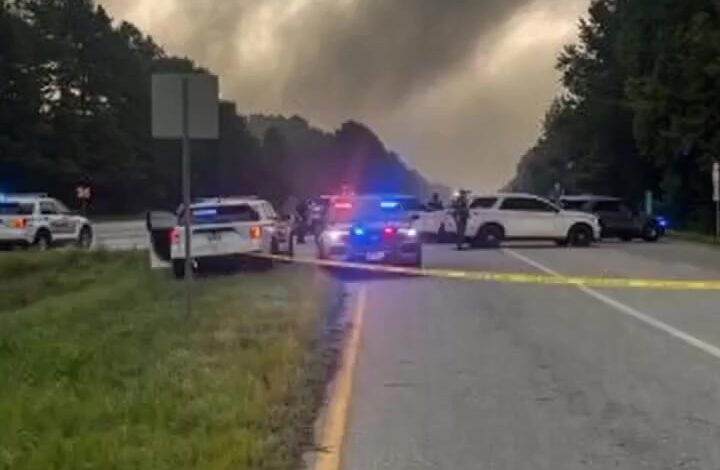
Police arrived quickly, racing toward a scene still clouded by uncertainty. Officers locked down the hospital and issued shelter-in-place orders while investigators worked to determine whether the danger remained active. Ambulances continued moving. Patients remained inside rooms. Somewhere behind secured doors, surgeries, treatments, and ordinary medical emergencies continued despite the chaos unfolding outside.
That contrast felt surreal to many employees afterward.
Because hospitals are places people associate instinctively with protection. Even amid illness and death, there exists an underlying assumption of safety — that violence belongs outside the walls, not crashing directly into morning shift change.
When gunfire enters spaces associated with healing, the psychological rupture cuts especially deep.
For a while, rumors overtook reality completely.
People feared a mass shooting.
A random attack.
A spree beginning to unfold.
Texts spread incomplete information faster than officials could confirm facts. Families rushed to call loved ones inside the building. Staff members trapped in locked offices checked social media desperately for clues while hearing only fragments through walls and radios.
Then gradually, the picture sharpened.
Investigators began identifying the shooting not as random public violence, but as something more targeted and disturbingly intimate:
one employee allegedly turning against another.
That distinction may have reduced the scale of immediate danger, but it did not erase fear for those present. In many ways, targeted workplace violence carries its own unique emotional damage because it exposes how private tensions can erupt suddenly inside familiar environments.
Coworkers begin replaying interactions afterward:
Did anyone notice warning signs?
Arguments?
Behavior changes?
Something that now feels obvious only in hindsight?
People search memory desperately after trauma because randomness feels unbearable. If there were signs, perhaps future violence becomes preventable. If there were none, then safety itself starts feeling fragile everywhere.
The wounded employee survived.
Physically, that fact matters enormously. Doctors stabilized him, and reports indicate he remains in stable condition. A different trajectory of grief was narrowly avoided that morning.
But survival does not mean absence of trauma.
Not for him.
Not for the coworkers who watched him fall.
Not for the staff who hid silently behind locked doors wondering whether more shots were coming.
Trauma reshapes ordinary places afterward.
That parking lot will never feel entirely neutral again to the people who were there. Every future shift change may carry echoes of panic:
loud noises triggering adrenaline,
people scanning surroundings instinctively,
the uneasy awareness that violence can rupture routine without warning.
Hospitals reopened because institutions must continue functioning even after fear enters them. Patients still need care. Emergencies still arrive. The machinery of medicine does not pause long for emotional processing.
Yet beneath resumed operations, something quieter lingers.
A collective nervousness.
A crack in assumed safety.
Healthcare workers already carry extraordinary emotional burdens:
burnout,
long hours,
staffing shortages,
constant exposure to illness, trauma, and death.
Incidents like this intensify that strain by adding another fear to environments already operating under immense pressure.
Now conversations extend beyond one shooting alone.
Questions emerge about workplace security,
employee mental health,
conflict intervention,
warning signs institutions miss until tragedy forces attention.
Because while the attack appears targeted, the fear it created became communal instantly. Everyone inside that hospital learned the same lesson simultaneously:
ordinary mornings can become emergencies in seconds.
And perhaps that is the most unsettling truth left behind after the lockdown lifted and police tape disappeared.
The wounded employee will carry scars.
The alleged shooter now faces consequences that will reshape multiple lives permanently.
Coworkers will keep replaying sounds and images they never expected to witness at work.
But the deeper wound may be harder to measure:
the loss of emotional certainty.
The loss of believing some spaces are automatically safe simply because they are meant for healing.
Now, when employees walk through those parking lots before sunrise, coffee warming their hands against the morning cold, they will likely glance around differently for a while.
Not paranoid.
Just aware.
Aware that violence does not always announce itself dramatically beforehand.
Aware that ordinary life can fracture suddenly.
Aware that survival sometimes begins with running from places you once trusted completely.
And for those who heard the shots echo between hospital walls that morning, normal may return outwardly —
but never quite in the same shape it held before 7 a.m.