Long before Julie Poole became known for speaking about spirituality and near-death experiences, she says her life was defined by pain rather than hope.
According to her public accounts, she grew up in an environment marked by trauma, carrying emotional wounds that shaped the way she saw herself and the world. Instead of feeling protected or secure, she has described believing from an early age that suffering was simply part of life and that happiness was something meant for other people.
By the time she reached adulthood, she says that belief had deepened into despair.
In interviews and talks, Poole has recounted a period during her twenties when she felt overwhelmed by emotional suffering and believed she could no longer continue. She has said that she attempted to end her life, convinced there was no path forward.
What she says happened next became the defining moment of her life.
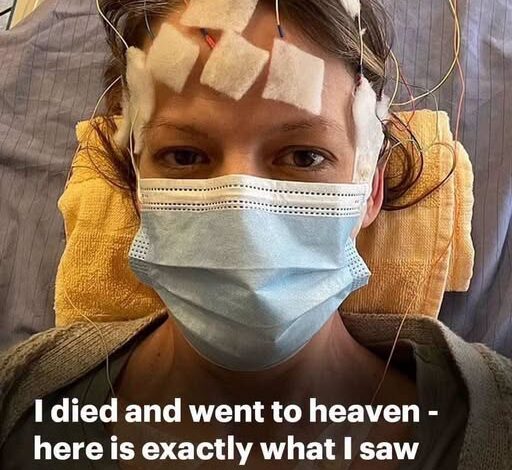
Poole describes experiencing what she believes was a near-death experience—an event she says was unlike anything she had ever known. She recalls entering a reality that felt more vivid and peaceful than ordinary life, one filled with an overwhelming sense of clarity, connection, and unconditional love.
These experiences are deeply personal.
People who report near-death experiences often describe profound feelings of peace, encounters with spiritual beings or deceased loved ones, panoramic life reviews, or an altered sense of time and consciousness. Researchers continue to study these reports, but there is no scientific consensus that confirms a single explanation for them. Some interpret them as spiritual events, while others suggest they may arise from complex neurological and psychological processes during life-threatening situations.
Poole’s interpretation is unmistakably spiritual.
She says she encountered guiding presences who showed her possibilities for humanity’s future. According to her account, she was told that periods of upheaval and uncertainty would eventually give way to greater compassion, honesty, and awareness. She has spoken about a future in which people rediscover their own inner strength, question systems they believe no longer serve them, and build lives rooted more in kindness than fear.
Whether viewed as prophecy, personal symbolism, or the product of an extraordinary psychological experience, these visions became the foundation of everything that followed.
Poole says she returned from the experience with a renewed determination to live.
Instead of seeing herself as someone defined by past trauma, she began speaking publicly about healing, forgiveness, intuition, and personal transformation. Over the years, she has built a following among people who find hope in her message that difficult times can become the starting point for profound change.
Her story resonates with many because it speaks to a universal human desire: the belief that suffering does not have to be the final chapter.
Even those who do not share her spiritual beliefs may recognize something familiar in the emotional arc of her journey. Countless people who survive profound trauma describe reaching a point where they choose, slowly and imperfectly, to rebuild their lives rather than remain defined by what happened to them.
That transformation does not require agreement about the supernatural.
It requires acknowledging the remarkable capacity people sometimes have to find meaning after devastating experiences.
At the same time, Poole’s broader claims about humanity’s future remain matters of personal belief rather than established fact. There is no objective evidence that verifies predictions about a coming “Golden Age” or confirms the spiritual visions she describes. For her followers, those messages are sources of inspiration. For others, they are philosophical reflections or expressions of faith.
Ultimately, each listener must decide how to interpret them.
Perhaps that is why her story continues to spark conversation.
It is not simply because she speaks about visions of the future, but because she asks people to consider the choices they make in the present. Her message consistently returns to the idea that compassion, integrity, and personal responsibility begin with ordinary decisions made every day—not with dramatic events or extraordinary experiences.
In the end, the lasting impact of Julie Poole’s story may lie less in whether others accept her account of what happened during her near-death experience and more in the question it leaves behind.
If the future is shaped not only by circumstances but also by the values we practice today, then every act of kindness, honesty, courage, and empathy becomes part of the world we are helping to create.
Whether one views her experience as a spiritual revelation, a deeply meaningful psychological event, or something else entirely, that invitation remains the same:
The future begins with the choices we make—one moment at a time.