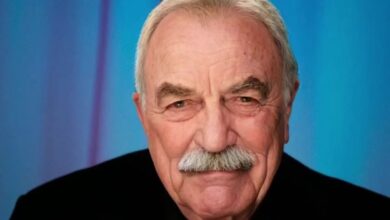
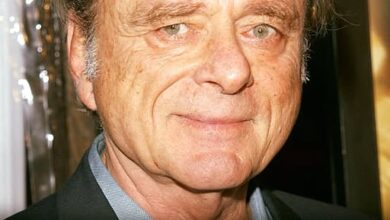
Meadow Walker, 27, Shares a Heartwarming Moment with Godfather Vin Diesel at Cannes – Photos

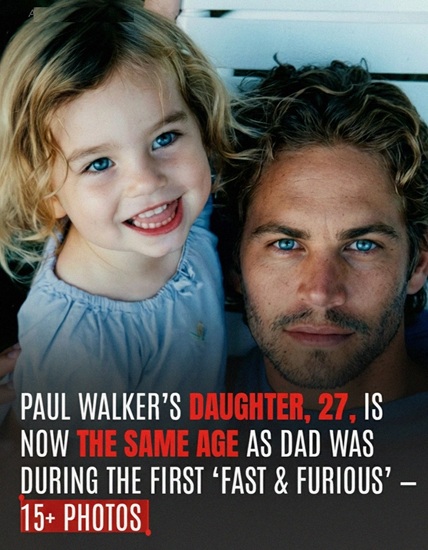
Twenty-five years after The Fast and the Furious first arrived in theaters, the franchise returned to Cannes carrying something far heavier than nostalgia.
What unfolded on the red carpet was not merely another anniversary event designed to celebrate a successful film series. It felt, instead, like a public reunion between people bound together by grief, memory, loyalty, and time itself. The atmosphere surrounding Vin Diesel and Meadow Walker that evening carried an emotional gravity impossible to manufacture through publicity alone.
Because for millions of fans around the world, the Fast franchise stopped being only about cars a very long time ago.
It became about family.
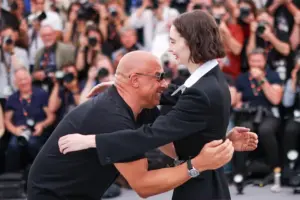
And nowhere was that more visible than in the embrace between Vin Diesel and Paul Walker’s daughter beneath the flashing cameras of Cannes.
The setting itself added to the emotional contrast. Cannes has always represented a certain version of cinema prestige — polished luxury, international glamour, carefully choreographed celebrity appearances. Yet the emotional center of the evening felt remarkably un-Hollywood.
There were no dramatic speeches initially.
No manufactured spectacle.
Just two people greeting each other with the familiarity of family members who have carried the same loss for more than a decade.
For longtime fans of the franchise, the moment hit with unusual force because Paul Walker’s absence has never truly stopped hovering over Fast & Furious. Even after years, new films, spin-offs, and global box office success, his memory remains emotionally embedded inside the identity of the series itself.
And perhaps that is because the relationship between Paul Walker and Vin Diesel never felt entirely performative to audiences.
Hollywood often sells artificial closeness convincingly. Casts promote films together, call each other “family” during press tours, and then quietly drift apart once production ends.
But Fast & Furious always felt slightly different.
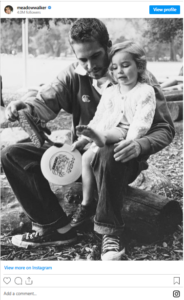
The chemistry between its core cast carried the texture of real history.
Over twenty-five years, audiences watched those actors age together publicly. They watched friendships deepen across premieres, interviews, weddings, births, losses, and tragedies. The franchise evolved from a relatively modest street-racing action film into one of the most financially successful movie series in history, but emotionally it remained rooted in the same idea repeated throughout nearly every installment:
family is chosen through loyalty, not blood alone.
That theme became painfully real after Paul Walker’s death in 2013.
When Walker died in a car accident at only forty years old, the tragedy shattered not only fans but the entire franchise itself. Production halted. Cast members publicly grieved. Interviews shifted from promotion to mourning. And suddenly, a series once associated primarily with speed and spectacle became inseparable from real-world loss.
The emotional ending of Furious 7 remains one of the rare moments where blockbuster cinema openly dissolved into collective grief. The final scenes between Diesel and Walker no longer felt like characters saying goodbye.
They felt like friends trying to survive separation in real time.
That emotional foundation still lingered visibly throughout Cannes in 2026.
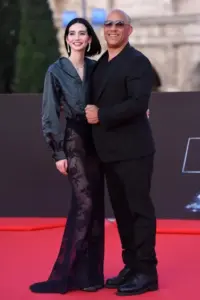
Vin Diesel, now fifty-eight, arrived wearing an understated all-black outfit that contrasted sharply with the extravagance often associated with festival appearances. There was something intentionally grounded about his presentation that evening. He did not appear interested in dominating headlines through spectacle. Instead, he moved through the event with the slower, more reflective demeanor of someone carrying memory into the room alongside him.
Meadow Walker’s presence deepened that atmosphere immediately.
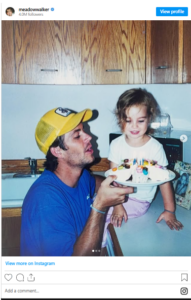
At twenty-seven, she has spent nearly half her life navigating public memory attached to her father’s legacy. For many children of celebrities, inherited fame becomes burdensome because audiences freeze parents permanently at the height of their cultural image while expecting children to emotionally carry that legacy forever.
Yet Meadow has approached her father’s memory with unusual grace and restraint over the years.
She rarely pursues attention aggressively.
Rarely exploits grief publicly.
Rarely turns remembrance into performance.
That restraint makes moments like Cannes feel more emotionally genuine because they are comparatively rare.
Her outfit reflected the same understated tone as Diesel’s. She wore a black blazer, blue jeans, and white heels — elegant without appearing overly stylized or theatrical. The simplicity mattered because it reinforced the emotional authenticity of the evening. Nothing about the reunion felt heavily curated for spectacle.
Then came the embrace.
Photographs captured Vin Diesel wrapping his arms around Meadow with unmistakable tenderness while she smiled against his shoulder. And instantly, the internet reacted.
Not cynically.
Emotionally.
Fans flooded social media with comments describing how moved they felt watching the interaction. Many referenced Paul Walker immediately, seeing Meadow not only as his daughter but as a living continuation of the emotional spirit he brought to the franchise.
Others reflected on how unusual it is for Hollywood relationships to survive this long with visible sincerity intact.
That sincerity became even more apparent because the reunion included Michelle Rodriguez and Jordana Brewster, two other central figures from the original films. Together, the group no longer resembled a standard press lineup.
They looked like people revisiting a shared chapter of life.
Jordana Brewster later referred to the photos as “family portraits” on social media, a phrase that spread rapidly among fans because it perfectly captured the emotional mood surrounding the gathering.
And perhaps what struck audiences most was how naturally Meadow fit inside that dynamic.
Not as a symbolic guest.
Not as a publicity device.
As family.
That distinction matters emotionally because grief often fractures relationships over time. Shared loss can pull people apart as easily as it pulls them together. Yet more than a decade after Paul Walker’s death, the people closest to him still visibly maintain connection with his daughter.
That continuity says something profound about the relationships formed through the franchise itself.
The emotional tone deepened further later that evening during Cannes’ midnight screening of the original 2001 film. Meadow returned wearing an olive green gown that balanced sophistication with quiet restraint. The screening itself already carried heavy nostalgia for audiences old enough to remember when The Fast and the Furious first arrived as a relatively simple story about underground racing culture.
Back then, nobody predicted what the series would become.
No one imagined it evolving into a multibillion-dollar global phenomenon spanning decades, genres, and generations.
And certainly nobody imagined that one of its central stars would be gone before the story itself finished.
Before the screening began, Vin Diesel addressed the audience directly. According to accounts from the event, his remarks carried visible emotion from the start. He spoke not only about the franchise’s history, but about the relationships underneath it — the friendships, memories, and shared experiences that transformed the films into something larger than entertainment.
He specifically acknowledged Meadow’s presence, describing her as deeply connected to the spirit of the series and to the family formed around it.
As the film played, the emotional atmosphere reportedly intensified throughout the theater. Audiences were no longer simply revisiting an old action movie. They were revisiting youth, memory, and the beginning of relationships that would eventually outgrow cinema itself.
And when the credits rolled, Vin Diesel reportedly remained seated silently for several moments afterward.
That silence mattered.
Sometimes grief becomes most visible not through dramatic breakdowns, but through stillness.
Eventually, Diesel spoke again, this time more directly about Paul Walker. He recalled private conversations, memories from filming, and the friendship they shared beyond cameras or scripts. The emotion in his voice reportedly became impossible to separate from the history itself.
Then Meadow joined him onstage.
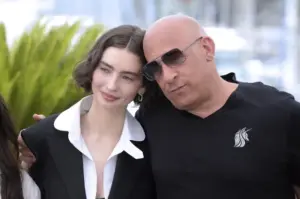
That image — Paul Walker’s daughter standing beside Vin Diesel twenty-five years after the franchise began — carried almost symbolic weight too heavy for words alone.
Because by then, Fast & Furious no longer represented only fictional family.
It represented surviving real loss together.
Over the years, Vin Diesel’s relationship with Meadow has repeatedly reinforced that idea publicly. Most famously, he walked her down the aisle at her wedding in 2021 following the death of her father.
That gesture resonated deeply because it transformed the franchise’s repeated “family” messaging into lived reality. Fans saw not marketing, but continuity of care extending far beyond film sets and contracts.
And Meadow herself has honored her father’s memory carefully rather than commercially. Through the Paul Walker Foundation, she has focused on ocean conservation, humanitarian work, and environmental causes connected directly to passions her father held privately during his lifetime.
She also appeared briefly in a later Fast installment, though audiences largely interpreted the cameo less as acting and more as tribute — a quiet acknowledgment that her father’s emotional presence still remained inside the franchise world he helped build.
Looking ahead, the Fast & Furious main saga is expected to conclude with its final installment in 2028. And that approaching ending adds another layer of emotional weight to moments like Cannes.
Because endings force reflection.
The cast members who once looked like ambitious young actors now stand as survivors of decades-long personal and professional evolution together. They have witnessed marriages, children, career highs, public scandals, aging, grief, and death while remaining connected through a franchise originally centered around illegal street races in Los Angeles.
That transformation itself feels almost unbelievable in retrospect.
Yet perhaps the most moving aspect of the Cannes reunion was how small and human the defining moment actually remained.
Not the cameras.
Not the applause.
Not the anniversary branding.
Just an embrace.
One man holding the daughter of a friend he still misses.
One daughter standing inside the community her father left behind.
One reminder that some relationships survive loss not because grief disappears, but because love continues adapting around absence.
And in that quiet moment beneath the festival lights, Paul Walker’s legacy no longer felt defined by tragedy at all.
It felt alive —
carried forward through loyalty,
memory,
and the people who still choose, year after year,
to keep his place at the table open.