Cracker Barrel Introduces a New Dining Guideline for Employees: A Look at the Brand’s Traditions, Changes, and Ongoing Evolution

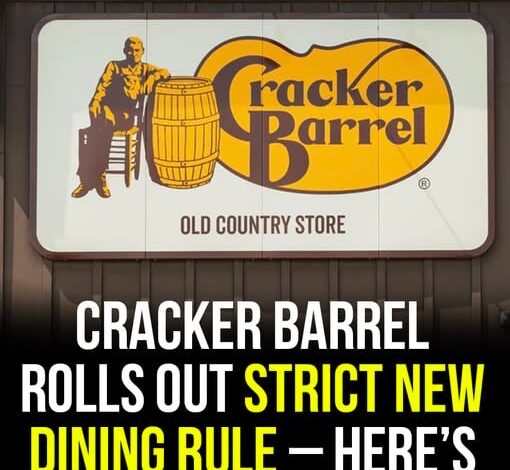
For millions of Americans, Cracker Barrel has never been just another restaurant.
It occupies a unique place in the cultural landscape.
Part diner.
Part country store.
Part roadside landmark.
Part memory.
Long before GPS systems guided travelers turn by turn, families spotted the familiar wooden sign from highway exits and knew exactly what waited ahead. Rocking chairs lined the porch. Checkerboards rested on oversized barrels. The smell of breakfast drifted through the doors regardless of the hour. Shelves overflowed with nostalgic candies, old-fashioned toys, and reminders of simpler times.
For countless people, a stop at Cracker Barrel became woven into family traditions.
Road trips.
Holiday travel.
Weekend visits with grandparents.
Long drives to college.
Cross-country moves.
Military homecomings.
Summer vacations.
The restaurant served food, certainly.
But it also served familiarity.
A sense of continuity in a world that seemed to change faster every year.
That emotional connection helps explain why even a seemingly minor corporate memo could suddenly attract national attention.
On paper, the guideline appeared straightforward.
An internal recommendation.
A business-travel policy.
The kind of administrative document most companies distribute without generating headlines.
The memo encouraged employees traveling for work to dine at Cracker Barrel locations when practical and placed certain limitations on alcohol reimbursement during business trips.
Ordinarily, such policies would remain buried inside employee handbooks and expense-report systems.
Instead, this one sparked widespread discussion.
Questions appeared online.
Commentators weighed in.
Customers reacted.
Employees shared opinions.
And suddenly a routine corporate guideline became part of a much larger conversation.
At first glance, the reaction seemed disproportionate.
Why would people care so much about where employees eat during work travel?
Why would an internal reimbursement policy capture public attention?
The answer has less to do with the policy itself and more to do with what people believed it represented.
Because when Americans think about beloved brands, they rarely focus only on products.
They think about values.
Identity.
Culture.
Authenticity.
The stories companies tell about themselves.
And the stories customers tell about those companies.
The memo became a lightning rod because people viewed it through that broader lens.
Some interpreted the guidance as evidence that Cracker Barrel wanted employees to understand the customer experience firsthand.
Others questioned whether the policy reflected excessive corporate control.
Still others viewed it as a symbolic statement about the company’s priorities.
The debate quickly expanded beyond expense reports and meal reimbursements.
It became a discussion about culture.
What does Cracker Barrel stand for?
How does it balance tradition and modernization?
How does it preserve authenticity while operating as a major public company?
These questions matter because Cracker Barrel occupies an unusual position in American life.
Unlike many restaurant chains, its brand identity is built heavily around nostalgia.
The company sells more than meals.
It sells familiarity.
The image of front porches.
Country hospitality.
Slower conversations.
Traditional values.
A connection to an idealized version of American life.
Whether that image perfectly reflects reality is almost beside the point.
The emotional connection is real.
And emotional connections create strong reactions whenever people perceive change.
That dynamic has followed Cracker Barrel for years.
The company has repeatedly discovered that customers pay close attention to even small shifts in identity.
A menu change becomes news.
A store redesign becomes debate.
A branding update becomes controversy.
What might seem minor inside a corporate boardroom can feel deeply personal to customers who have built memories around the brand.
The company’s experience with its logo provides one of the clearest examples.
When Cracker Barrel introduced a more modern version of its visual identity, the reaction was swift.
Many customers disliked it.
Not necessarily because the new design was objectively bad.
Because it felt unfamiliar.
It felt like change imposed on something people preferred unchanged.
The criticism spread quickly.
Customers voiced frustration.
Social media amplified concerns.
The message became difficult to ignore.
Eventually, the company responded.
The familiar “Old Timer” identity returned.
The decision demonstrated something important.
Cracker Barrel’s relationship with its customers operates differently than many corporate brands.
People do not merely purchase products there.
They feel ownership.
Not legal ownership.
Emotional ownership.
Customers often behave as though the brand belongs partly to them because their memories are attached to it.
Every family breakfast.
Every holiday stop.
Every long drive broken up by pancakes and coffee.
Those experiences create loyalty.
But they also create expectations.
The recent memo controversy unfolded within that context.
The company quickly clarified its intentions.
Executives emphasized that the guideline was flexible rather than mandatory.
Employees were not being forced into rigid behavior.
The recommendation existed primarily to help workers better understand the guest experience.
The logic was simple.
If employees regularly experience the restaurants as customers do, they gain insights that may improve decision-making.
Many hospitality businesses embrace similar philosophies.
The best way to understand service is often to experience it firsthand.
Seen from that perspective, the guideline appears practical rather than controversial.
Yet the public reaction remained fascinating.
Because it revealed how closely people watch institutions they care about.
Customers interpreted the memo as a clue.
A glimpse into corporate culture.
A signal about priorities.
A reflection of values.
In many ways, the response said as much about consumers as it did about the company.
Modern brands increasingly function as cultural symbols.
People form emotional relationships with them.
They celebrate them.
Criticize them.
Defend them.
Worry about them.
Especially when those brands become tied to family traditions and personal history.
Cracker Barrel occupies precisely that space.
The restaurant chain exists at the intersection of commerce and nostalgia.
That position creates both opportunity and risk.
Nostalgia is powerful.
It creates loyalty that competitors struggle to replicate.
But nostalgia also creates resistance to change.
Customers want improvement.
They want quality.
They want innovation.
Yet they often want those things without losing the familiar atmosphere that drew them in originally.
Balancing those competing demands is extraordinarily difficult.
Every historic brand eventually faces the same challenge.
How do you evolve without alienating the people who made you successful?
How do you modernize while preserving identity?
How do you attract new generations without abandoning older ones?
There are no perfect answers.
Only ongoing negotiation.
Cracker Barrel’s history demonstrates that negotiation repeatedly.
The company adapts.
Customers react.
The company adjusts.
Customers respond.
A continuous conversation unfolds between the brand and the people who support it.
The memo became another chapter in that conversation.
A relatively small issue transformed into a broader reflection on culture, tradition, and authenticity.
Not because the policy itself was revolutionary.
Because people care.
Care enough to pay attention.
Care enough to question.
Care enough to debate what the company should represent.
In a business environment where many brands struggle to create meaningful customer loyalty, that level of engagement is remarkable.
It can be frustrating for executives.
Controversies emerge unexpectedly.
Minor decisions attract major scrutiny.
Every change becomes public discussion.
Yet those challenges exist precisely because the emotional connection remains strong.
People rarely argue passionately about brands they do not care about.
The deeper truth behind the controversy is surprisingly simple.
Customers want Cracker Barrel to succeed.
They want it to remain recognizable.
They want it to remain connected to the memories it helped create.
At the same time, they understand that businesses cannot remain frozen in time forever.
Growth requires adaptation.
Markets change.
Consumer habits evolve.
Workplaces modernize.
The challenge lies in managing those changes carefully enough that the core identity survives.
That balance may ultimately be Cracker Barrel’s greatest challenge.
Not serving food.
Not managing expenses.
Not writing travel policies.
Maintaining trust.
Preserving the feeling that stepping through those doors still means something.
Because for many families, it does.
The rocking chairs.
The country store.
The familiar menu.
The sense of comfort.
These things matter.
Perhaps more than outsiders realize.
And that is why a simple internal memo became national conversation.
Not because of where employees eat.
But because it touched something larger.
The relationship between a beloved institution and the people who feel connected to it.
A relationship built over decades.
Strengthened through memories.
Tested by change.
And sustained by the delicate belief that while the world keeps moving forward, some places can still feel reassuringly familiar.
In the end, the controversy was never really about reimbursement policies.
It was about trust.
About identity.
About a historic American brand trying to evolve without losing the emotional bond that keeps generations of families walking back through its doors, one road trip at a time.