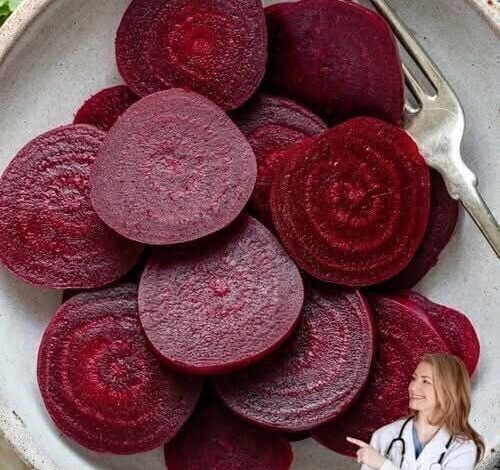
Beetroot has earned its reputation not because of health fads or social media trends, but because of what it naturally contains.
For centuries, people have included beets in their diets for their rich flavor, vibrant color, and nutritional value. Today, modern research continues to explore the compounds hidden inside this humble root vegetable, revealing why it has become a popular addition to health-conscious meals around the world.
Its striking deep-red color is more than just visual appeal.
That rich pigment comes from powerful plant compounds that may support circulation, digestion, and overall wellness. While beetroot is not a miracle food and does not provide instant results, its benefits can accumulate gradually when consumed as part of a balanced, nutritious diet.
In many ways, beetroot’s greatest strength lies in its consistency.
Rather than dramatically changing the body overnight, it works quietly in the background, supporting natural functions that contribute to long-term health and well-being.
One of the most researched aspects of beetroot is its naturally high nitrate content.
Although nitrates sometimes receive negative attention in other contexts, the nitrates found naturally in vegetables behave differently within the body. After consumption, these compounds are converted into nitric oxide, a molecule that plays an important role in maintaining healthy blood flow.
Nitric oxide helps blood vessels relax and widen.
As circulation improves, oxygen and nutrients can move more efficiently throughout the body. This process supports cardiovascular health and may help the body perform everyday tasks more effectively.
For some individuals, the benefits become noticeable during physical activity.
Athletes and active adults have shown particular interest in beetroot because improved oxygen delivery may help support endurance and exercise performance. Some people report feeling less fatigued during workouts, while others notice they recover more comfortably afterward.
The effects are often subtle rather than dramatic.
Still, over time, improved circulation can contribute to a greater sense of energy and physical balance.
The benefits may extend beyond physical activity as well.
Because the brain relies heavily on healthy blood flow, improved circulation may also support concentration and mental performance. Some individuals describe feeling more focused or mentally refreshed after regularly including nitrate-rich foods such as beetroot in their diets.
Again, the changes are typically gradual.
Beetroot is not a stimulant.
It does not create sudden bursts of energy.
Instead, it may help support the body’s natural ability to function efficiently.
Another important advantage of beetroot is its fiber content.
Fiber plays a vital role in digestive health, yet many people consume far less than recommended. Beetroot provides dietary fiber that helps support regular digestion and contributes to a healthy gastrointestinal system.
A well-functioning digestive tract does far more than process food.
It influences comfort, nutrient absorption, immune function, and even aspects of mood and energy regulation.
The fiber found in beetroot helps food move through the digestive system more efficiently while supporting the growth of beneficial gut bacteria. These microorganisms contribute to a healthier gut environment and play an important role in overall wellness.
Fiber also helps slow the absorption of sugars into the bloodstream.
As a result, energy levels may remain more stable throughout the day, reducing the sharp rises and crashes that can occur after consuming highly processed foods.
For many people, this translates into steadier energy and improved daily comfort.
Beetroot also contains a unique group of antioxidants known as betalains.
These compounds are responsible for the vegetable’s vivid red-purple color and have attracted considerable scientific interest due to their antioxidant properties.
Every day, the body is exposed to oxidative stress generated by normal metabolic activity, environmental factors, and lifestyle influences. Antioxidants help neutralize some of these effects, supporting the body’s natural defense systems.
Betalains may contribute to this protective process.
Researchers continue to investigate their potential role in supporting overall cellular health and helping the body respond to everyday physiological stress.
In addition, beetroot is often associated with supporting normal liver function.
This does not mean it “detoxifies” the body in the dramatic way many marketing claims suggest.
The liver already possesses sophisticated systems for processing and eliminating waste products.
Rather than forcing a cleanse or creating an artificial detox effect, the nutrients found in beetroot may help support the body’s existing mechanisms as they perform their natural functions.
This distinction is important.
True health support is often less dramatic than advertising promises.
The most effective nutritional habits tend to work gradually, reinforcing the body’s natural processes rather than attempting to replace them.
That is precisely where beetroot excels.
It provides nourishment.
It supplies valuable nutrients.
It supports systems already working to keep the body healthy.
And it does so through a simple, whole-food approach.
Whether roasted, steamed, blended into smoothies, added to salads, or enjoyed as juice, beetroot can be an easy addition to a balanced eating plan.
Its benefits may not be immediately obvious after a single serving.
But over weeks and months, consistent consumption can become part of a broader strategy for supporting circulation, digestion, energy levels, and overall wellness.
In a world filled with quick fixes and exaggerated health claims, beetroot offers something refreshingly simple.
Not a miracle.
Not a shortcut.
Just a nutrient-rich food that works quietly alongside the body’s natural systems.
And sometimes, those are the habits that make the biggest difference over time.