Most people dream of living a long life. Few ever imagine living long enough to witness more than a century of human history unfold before their eyes.
Maria Branyas Morera did exactly that.
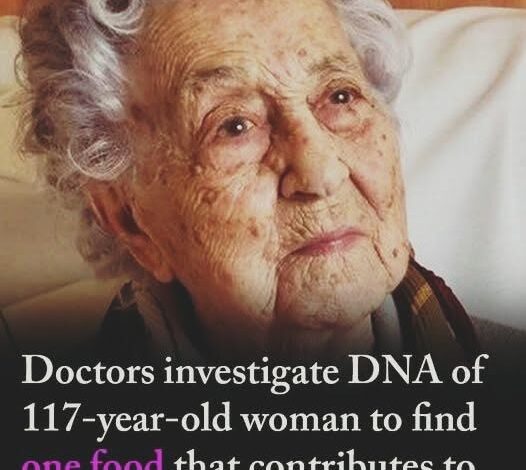
Born on March 4, 1907, Maria’s life stretched across an astonishing 117 years, making her one of the oldest verified people ever to live. During her lifetime, she witnessed a world transformed beyond recognition. She saw the rise of automobiles, airplanes, television, computers, the internet, and smartphones. She lived through two world wars, global pandemics, economic upheavals, and technological revolutions that reshaped civilization itself.
Yet what fascinated scientists most wasn’t simply how long she lived.
It was how well she lived.
Even in her later years, Maria remained mentally engaged, socially connected, and remarkably resilient. Her extraordinary longevity sparked the interest of researchers around the world who hoped her life might help unlock some of the mysteries of healthy aging.
What they discovered would make her story even more remarkable.
A Life That Spanned Generations
Although Maria was born in San Francisco, her journey soon took her far from the United States. In 1915, while still a child, she moved with her family to Spain, eventually settling in Catalonia.
The move was not without tragedy.
During the voyage, her father became ill and died, leaving the family to face an uncertain future in a new country. Despite the hardship, Maria built a life in Spain and remained there for the rest of her days.
As decades passed, she witnessed history firsthand.
Empires rose and fell.
Political systems changed.
Scientific breakthroughs transformed medicine.
Entire industries emerged from inventions that had once seemed impossible.
By the time she reached adulthood, radio was still a novelty. By the time she reached old age, people were carrying powerful computers in their pockets.
Few individuals have ever experienced such a sweeping view of human progress.
The Secret Behind Her Extraordinary Longevity
As Maria’s age attracted international attention, researchers became increasingly eager to understand what allowed her to remain relatively healthy for so long.
Unlike many people who reach extreme old age, she maintained notable mental clarity and social engagement well into her later years. That combination made her an especially valuable subject for longevity research.
Recognizing the potential scientific value of her unique biology, Maria made an unusual request.
She wanted her body and genetic material studied after her death.
Her hope was simple: if researchers could learn something from her life, perhaps future generations could benefit from that knowledge.
Scientists accepted the challenge.
Research teams from institutions including the University of Barcelona and the Josep Carreras Leukaemia Research Institute began examining her biological profile, searching for clues hidden within her cells, genes, and overall health patterns.
What Researchers Found
The results revealed a fascinating combination of genetics, biology, and lifestyle.
According to researchers, several biological markers suggested that certain aspects of Maria’s cellular health appeared younger than her chronological age. While her birth certificate said 117, some internal indicators painted a picture of a body aging more slowly than expected.
Her cardiovascular profile also attracted attention.
Scientists noted favorable cholesterol patterns, including lower levels of LDL cholesterol—the type often associated with increased cardiovascular risk—and higher levels of HDL cholesterol, commonly known as “good” cholesterol.
These characteristics are frequently associated with healthier aging and reduced risk of certain chronic diseases.
Researchers also found evidence suggesting that her lifestyle choices may have played a meaningful role.
She reportedly avoided smoking and excessive alcohol consumption, maintained daily routines, and remained socially active throughout much of her life.
While none of these habits alone can guarantee exceptional longevity, they are consistently associated with better health outcomes in aging populations.
The Role of Diet and Daily Habits
One aspect of Maria’s lifestyle that attracted particular interest was her diet.
Reports indicated that she regularly consumed fermented foods such as yogurt, which contain beneficial bacteria known as probiotics.
Scientists continue studying the relationship between gut health and aging, and emerging research suggests that maintaining a diverse and healthy gut microbiome may influence overall wellness, inflammation levels, and immune function.
Maria’s dietary habits reflected a broader pattern of moderation rather than extremes.
She was not known for following trendy health regimens or restrictive diets.
Instead, her approach appeared rooted in consistency, balance, and simplicity.
These qualities are increasingly recognized as important components of long-term health.
Genetics and the Science of Aging
Perhaps the most intriguing findings came from the study of her genetics.
Researchers examined various biological factors related to aging, including structures called telomeres.
Telomeres act like protective caps at the ends of chromosomes. In general, they tend to shorten as people age, which is why scientists often study them as potential indicators of biological aging.
Maria’s case, however, proved more complex.
Her biological profile challenged some traditional assumptions about aging, suggesting that longevity cannot be explained by any single factor. Instead, researchers believe extreme lifespan results from a complex interaction between genetics, environment, lifestyle, and chance.
In other words, there is no single “longevity gene.”
Rather, exceptionally long lives may emerge when multiple favorable factors align over many decades.
More Than Genetics
What made Maria’s story especially compelling was that her life offered lessons extending beyond biology.
Those who knew her often described her as calm, emotionally balanced, and deeply connected to family and community.
She maintained relationships.
She stayed engaged with the world around her.
She valued routine and stability.
Researchers studying aging have repeatedly found that social connection and emotional well-being are strongly associated with healthier outcomes later in life.
Maria’s life seemed to reflect those findings.
Even as she grew older, she remained interested in current events, family life, and the changing world around her.
A Symbol of Resilience
Maria also became known for surviving challenges that would have seemed impossible for someone of her age.
In 2020, during the COVID-19 pandemic, she contracted the virus and recovered, making her one of the oldest known individuals to survive the disease.
The recovery further fueled scientific interest in her remarkable resilience.
At the same time, her public comments often reflected a perspective shaped by more than a century of experience.
She frequently emphasized gratitude, emotional balance, family bonds, and respect for older adults.
Her words resonated with people around the world because they reflected wisdom earned through a lifetime few could imagine.
A Legacy Beyond Longevity
Scientists continue analyzing the information gathered from Maria Branyas Morera’s case, hoping it will deepen our understanding of human aging.
While researchers have not uncovered a single secret capable of guaranteeing a 117-year lifespan, her life reinforces an important lesson: longevity is rarely the result of one factor alone.
Genes matter.
Lifestyle matters.
Environment matters.
Relationships matter.
Together, these influences shape how we age and how well we live throughout that process.
Maria’s greatest contribution may not be the number of years she accumulated, but the opportunity she provided for science to learn from them.
Her story reminds us that aging is not simply about adding years to life.
It is also about adding life to those years.
And while few people will ever reach 117, the lessons drawn from her remarkable journey may help countless others live healthier, fuller, and more meaningful lives for generations to come.