Father Accused of Killing the Man Charged With Assaulting His Daughter Walked Into Court Facing Life in Prison—Then a Judge Made a Decision That Shocked Everyone

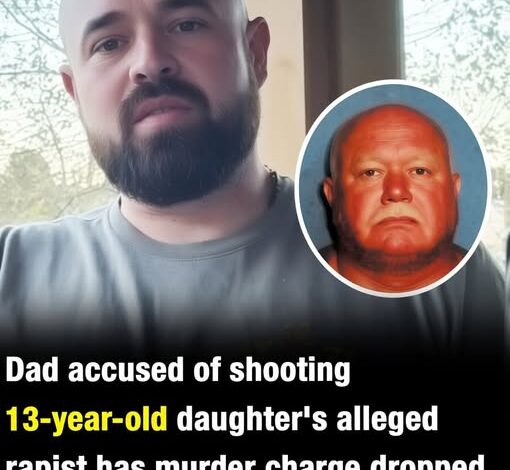
The courtroom was expecting a trial.
Instead, it witnessed the collapse of one of the most controversial criminal cases in Arkansas in recent memory.
Reporters packed every available seat.
Television crews waited outside.
Families sat quietly, their expressions revealing years of exhaustion, grief, anger, and uncertainty.
Supporters lined the hallways, hoping for vindication.
Critics watched closely, expecting accountability.
For nearly two years, the case had fueled fierce debate throughout the state. Social media discussions turned into arguments. Community meetings became emotional. Legal experts weighed in repeatedly.
Some people saw Aaron Spencer as a father who had been pushed beyond the limits of what any parent could endure.
Others insisted that personal outrage, no matter how understandable, could never justify taking a life.
Everyone knew the trial would be significant.
Almost nobody anticipated that it would never happen.
Then the judge spoke.
And with a single ruling, the entire case changed.
The second-degree murder charge against Aaron Spencer was dismissed.
No jury verdict.
No dramatic cross-examinations.
No weeks of testimony.
Just a decision that immediately stunned supporters, critics, and legal observers alike.
Ironically, the ruling was not primarily about the shooting itself.
It was about something that was no longer there.
A missing piece of evidence.
A missing SD card.
And the consequences of its disappearance.
The Man at the Center of the Storm
Long before the criminal case made headlines, Aaron Spencer was already well known throughout his community.
Friends described him as disciplined, dependable, and deeply committed to his family. As an Army veteran and outspoken supporter of law enforcement, he had built a reputation for being actively involved in local affairs.
To those who knew him, he was someone who believed in responsibility, order, and protecting the people he loved.
That image would become central to everything that followed.
The story began in October 2024.
According to court records, Spencer encountered 67-year-old Michael Fosler late at night while Fosler was allegedly with Spencer’s teenage daughter.
Investigators later alleged that Spencer forced Fosler’s vehicle off the road.
Moments later, emergency dispatchers received a call.
The caller was Aaron Spencer himself.
He reported that he had shot Fosler.
By the time authorities arrived, the situation had already escalated into a tragedy that would dominate headlines for months.
Fosler died from his injuries.
Spencer was arrested.
Eventually, prosecutors charged him with second-degree murder.
The Details That Divided a Community
What transformed the case from a local homicide investigation into a statewide controversy were the allegations already surrounding Fosler before the shooting occurred.
Court records indicated that Fosler had been facing multiple sexual offense charges involving Spencer’s teenage daughter.
Those charges had not yet been resolved.
The legal process was still ongoing.
The revelation immediately polarized public opinion.
For many people, the case became impossible to separate from the allegations involving Spencer’s daughter.
They saw a father reacting to a situation that had already inflicted immense trauma on his family.
Others argued that regardless of the accusations against Fosler, the justice system exists specifically to prevent individuals from becoming judge, jury, and executioner.
The debate quickly spread beyond the courtroom.
Talk radio covered it.
News outlets analyzed it.
Social media exploded with opinions.
The case touched on some of society’s most emotionally charged questions:
What would a parent do to protect a child?
Where does justice end and vigilantism begin?
And should personal motives ever affect how criminal responsibility is viewed?
The Political Spotlight
As if the case were not already attracting enough attention, Spencer’s public profile grew even larger.
Just months before the murder trial was expected to begin, he won a Republican primary election for sheriff in Lonoke County.
The victory surprised some observers and energized others.
Throughout his campaign, Spencer frequently spoke about what he believed were failures within the criminal justice system.
Supporters viewed him as someone willing to challenge institutions they believed had failed families like his.
Critics saw the campaign differently, arguing that a man facing a murder charge should not be seeking public office.
Regardless of perspective, the election intensified public interest in the case.
What had started as a criminal prosecution was now also a political story.
The Missing Evidence
As prosecutors prepared for trial, attention shifted to an issue that initially seemed technical.
But it would soon become the most important factor in the entire case.
According to Spencer’s defense team, critical dash-camera evidence connected to the investigation had disappeared.
Specifically, the defense argued that an SD memory card containing potentially important footage had not been properly preserved by investigators.
At first glance, the dispute appeared procedural.
But as hearings continued, its significance became increasingly clear.
Defense attorneys argued that the missing evidence may have contained information essential to understanding exactly what occurred during the confrontation.
More troubling, they argued that investigators could not adequately explain when the evidence disappeared, how it vanished, or what efforts had been made to preserve it.
The issue quickly evolved from a technical concern into a constitutional one.
The defense maintained that Spencer’s ability to receive a fair trial had been severely compromised.
Without the evidence, they argued, important legal defenses could be weakened or entirely lost.
The Judge’s Decision
The dispute ultimately landed before Judge Ralph Wilson Jr.
After reviewing the circumstances, he faced a difficult question.
How should the court respond when potentially critical evidence can no longer be examined?
Judges generally prefer remedies that preserve a case rather than destroy it.
Dismissal is often considered a last resort.
It is among the most serious actions a court can take.
That reality made what happened next even more remarkable.
After evaluating the evidence and the circumstances surrounding the missing SD card, Judge Wilson concluded that the situation had crossed a line.
In his written ruling, he emphasized that dismissing criminal charges is rare.
However, he found that the loss of the dash-camera evidence impaired Spencer’s ability to defend himself and undermined his right to a fair trial.
The consequence was immediate.
The murder charge was dismissed.
Just like that, the trial ended before it began.
Shockwaves Through the Legal Community
The ruling triggered intense reactions.
Supporters celebrated.
Some hugged outside the courthouse.
Others described the decision as a victory for due process and constitutional protections.
Spencer’s attorney praised the ruling and argued that her client should never have faced prosecution in the first place.
She emphasized the emotional toll the case had taken on Spencer and his family.
“This father should never have been charged for protecting his child,” she said after the decision.
Not everyone agreed.
Critics pointed out that the dismissal did not necessarily resolve every question about the shooting itself.
Instead, they argued, the ruling focused on procedural fairness and evidence preservation rather than determining whether Spencer’s actions were justified.
That distinction became central to the public conversation.
Because legally speaking, the dismissal was not a declaration of innocence.
It was a determination that the case could not proceed fairly under the circumstances.
Why the Missing Evidence Mattered
For legal experts, the case became a powerful example of why evidence preservation is so important.
Criminal trials depend on facts.
Facts depend on evidence.
And evidence must be protected.
When critical evidence is lost, destroyed, mishandled, or cannot be reviewed, the integrity of the entire process may be called into question.
That principle exists regardless of who the defendant is.
Regardless of public opinion.
And regardless of how emotionally charged a case may become.
The justice system cannot function properly if evidence disappears without explanation.
For many legal observers, that lesson became the most significant aspect of the case.
A Debate That Isn’t Over
Even though the criminal charge has been dismissed, the broader conversation continues.
For some people, Aaron Spencer will always be viewed as a father defending his daughter when he believed the system had failed.
For others, the case remains a troubling example of the dangers of taking justice into one’s own hands.
For many, the truth lies somewhere in between.
The story touches on deeply emotional issues that rarely have simple answers.
Parental instinct.
Victims’ rights.
Due process.
Public trust in institutions.
Accountability.
Justice.
Each perspective carries weight.
Each raises difficult questions.
And those questions continue long after the courtroom proceedings have ended.
Today, the trial that was supposed to captivate a jury exists only as a legal what-if.
The murder charge is gone.
The courtroom battle never happened.
A single missing piece of evidence altered the course of an entire criminal case.
And while Aaron Spencer’s legal fight may now be over, the debate surrounding it is likely far from finished.
Because sometimes the most significant courtroom decisions are not the ones that determine guilt or innocence.
They are the ones that force people to ask whether justice can truly exist when the evidence needed to find the truth is no longer there.