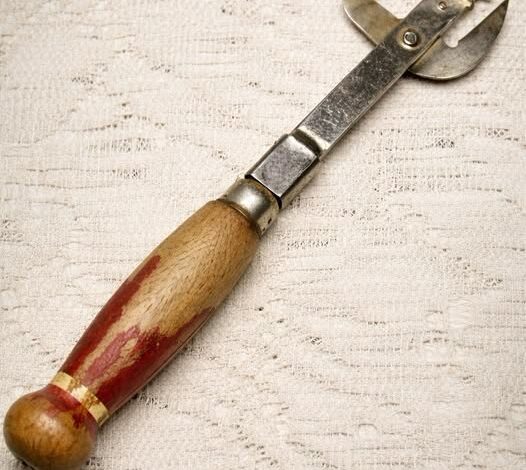
It was never truly a weapon, but it was never completely harmless either.
The so-called “murder tool” tucked away in grandma’s kitchen drawer was actually a relic from a tougher, less forgiving era of home cooking: an old puncture-style can opener. Unlike the smooth, rotating openers many people use today, this one was designed to stab, pierce, and pry its way through metal.
Before cushioned handles, safety wheels, and effortless electric openers, opening a can required pressure, balance, and a little courage. You had to force sharp steel through steel, trusting your grip as much as the tool itself. One wrong slip could leave more than the lid jagged.
For many people online, recognizing the object stirred an odd mix of nostalgia and discomfort. It brought back memories of grandparents’ kitchens, crowded drawers, Sunday dinners, and the small dangers that once came with everyday chores.
That reaction reveals something quietly true about domestic life in the past: danger often lived in plain sight.
Kitchens were full of tools that demanded respect. Sharp knives without protective covers. Mandolines without guards. Hot pans grabbed with thin towels. Open flames, heavy cast iron, splintering wooden handles, and metal edges that could punish the careless in an instant.
People used these things because they had to.
They learned caution through repetition, and sometimes through injury.
The old can opener became a symbol of that world—a time when household tools were practical, durable, and often unforgiving. It reminded people that convenience was not always part of daily life. Tasks that now feel effortless once required force, patience, and risk.
In that sense, the rusted opener represents more than an outdated kitchen gadget.
It represents generations who made do with what they had, who accepted small hazards as part of ordinary routine, and who rarely complained about the roughness of the tools they used every day.
Modern kitchens are safer, smoother, and easier in countless ways. We have better designs, softer grips, protective guards, and devices built to reduce accidents. But objects like this remind us how those improvements came to matter.
They were shaped by experience.
By inconvenience.
By cuts, burns, slips, and lessons learned the hard way.
So while the “murder tool” nickname may be exaggerated, the feeling behind it makes sense. That old can opener looks intimidating because it belongs to a time when even simple tasks carried a sharper edge.
And maybe that is why it fascinates people now.
It is not just a tool.
It is a reminder of how much everyday life has changed—and how many small dangers previous generations quietly accepted just to get dinner on the table.