Gas Station Worker Covers Shortage for Struggling Mom and the Karma That Followed Will Give You Chills

For twenty-three years, Ross lived the kind of life built on routine and hard work. Every morning he walked through the factory gates believing loyalty still meant something. But at fifty-five years old, that belief shattered the day he arrived to find the textile plant locked shut, chains wrapped around the entrance like a final goodbye. No warning. No appreciation. Just silence. After decades of dedication, the company moved on without him, leaving Ross standing in an empty parking lot wondering where men like him still belonged.
Ross was never loud or demanding. He was the kind of man who kept his head down, worked overtime without complaint, and believed honesty still mattered. But the world around him had changed, and suddenly there was no place left for people who thought effort alone guaranteed stability.
Eventually, he found another job—not glamorous, but enough to survive. He started working nights at a small gas station off Highway 52. The place sat alone beside the road like a forgotten checkpoint for travelers drifting through the darkness. Most customers barely looked at him. They paid for fuel, grabbed snacks, and disappeared back into the night. Compared to the busy energy of the factory, the station felt empty and quiet, filled only with flickering lights and the constant hum of refrigerators.
Still, Ross accepted it. A paycheck was a paycheck.
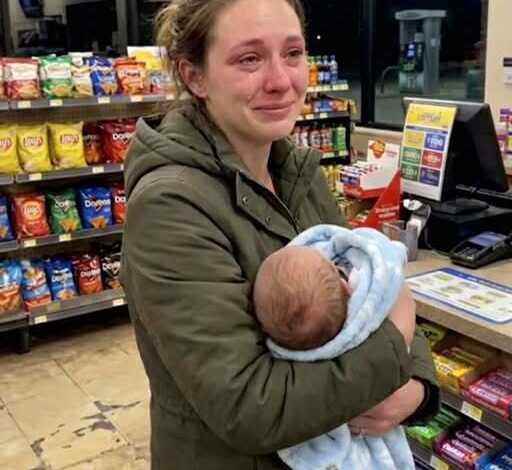
One cold night around two in the morning, the front bell rang and a woman walked inside carrying a sleeping toddler on her shoulder. Ross immediately noticed something unusual about her. She wasn’t just exhausted—she looked emotionally drained, like someone forcing herself to keep moving despite being completely overwhelmed inside.
She walked quickly through the aisles, ignoring everything unnecessary. No candy. No drinks. No extra purchases. She picked up only essentials: milk, bread, and diapers.
At the counter, Ross scanned the items while the woman dug through her purse counting wrinkled dollar bills and loose change. When the register displayed the total—$22.40—her expression changed instantly.
She recounted the money several times before quietly realizing she didn’t have enough.
She was four dollars short.
Embarrassed, she looked down and softly asked whether she should return the bread or the milk.
Ross glanced at the sleeping child resting against her shoulder and saw pure exhaustion written across the woman’s face. In that moment, she stopped looking like a customer to him. She looked like someone barely holding her life together.
Without making a scene, Ross pulled a five-dollar bill from his own wallet and slipped it into the register.
“You’re okay,” he told her calmly. “The register’s been acting strange all night. Looks like you got a discount.”
The woman froze for a second, clearly understanding what he had done. Tears filled her eyes, but she simply whispered thank you, gathered her bags, and walked back into the cold darkness outside.
Ross didn’t think much of it afterward. To him, it wasn’t some heroic act. He had simply helped somebody who needed help.
About a week later, while getting ready for work, Ross received a call from his manager saying someone had left an envelope for him at the station.
Inside was a handwritten letter and a check for five hundred dollars.
The letter came from the woman that night—Emily.
She explained that she hadn’t just been shopping for groceries. She had been escaping an abusive relationship. After secretly saving small amounts of money for months, she finally found the courage to leave with her child and drive across several states to reach her parents’ home.
By the time she arrived at Ross’s gas station, she was mentally and physically exhausted. Being four dollars short felt like proof that she couldn’t make it on her own. She admitted she had seriously considered turning around and going back because she felt hopeless and alone.
But Ross’s small act of kindness changed that.
It wasn’t really about the money. It was about the fact that a complete stranger noticed her struggle and helped without humiliating her. That moment gave her enough strength to keep driving until she safely reached her family.
Ross felt uncomfortable accepting the check and tried to refuse it. Eventually, he spoke with Emily’s father, who explained that the money wasn’t repayment—it was gratitude. Their family simply wanted Ross to understand how much his kindness meant during the worst night of Emily’s life.
Ross eventually accepted the gift but donated much of it to a local shelter for women escaping abuse.
After that experience, something inside him changed. Losing the factory job no longer felt like the end of his purpose. He realized his value wasn’t tied to a building or a company. Even behind the counter of a lonely gas station, he still had the ability to affect people’s lives in ways he never expected.
The station itself never changed much. The lights still flickered. Cars still rushed down Highway 52 in the middle of the night. But Ross started seeing people differently. He paid closer attention to tired faces, nervous voices, and quiet struggles hidden behind ordinary conversations.
He understood that the biggest moments in life rarely arrive with applause or recognition. Sometimes they happen silently—in a nearly empty gas station, during a four-dollar shortage, when one person chooses kindness instead of indifference.
And Ross learned something important: even if you can’t fix the entire world, you might completely change the world for one person at exactly the moment they need it most.
For a long time after Emily’s letter arrived, Ross kept thinking about her final sentence.
You reminded me that kindness still exists.
The words stayed with him in ways he didn’t expect.
At first, he folded the letter carefully and tucked it into the glove compartment of his old truck beside faded insurance papers and gas receipts. But over the following months, he found himself rereading it during quiet moments before work. Not because he needed praise. Because after losing the factory, he had quietly started believing his life no longer mattered much to anyone.
Factories give people more than paychecks. They give identity.
For twenty-three years, Ross knew exactly who he was:
a dependable man,
a provider,
someone whose work had visible purpose.
Then one locked gate erased all of it overnight.
The gas station never felt important in the same way. Customers rarely remembered his name. Teenagers tossed crumpled money on the counter while staring at phones. Truckers drifted in and out with tired nods. Most nights passed in routine silence broken only by coffee refills and lottery tickets.
But Emily’s letter changed how Ross saw the space around him.
Suddenly the station no longer felt meaningless.
It felt human.
One icy evening near Christmas, Ross noticed an older man lingering near the coffee station for almost an hour. His coat looked too thin for the weather, and he kept pretending to reorganize sugar packets every time another customer walked in.
Eventually Ross approached him quietly.
“You waiting on somebody?”
The man hesitated before answering.
“Truck broke down about five miles back.”
Ross nodded.
“No tow?”
The man laughed bitterly.
“Not until payday.”
Ross looked outside at the freezing rain hitting the windows sideways. Then he grabbed the station phonebook from beneath the counter and started making calls until he found a mechanic willing to delay payment.
The old man stared at him in disbelief.
“You don’t even know me.”
Ross shrugged lightly.
“Didn’t know Emily either.”
The man frowned slightly.
“Who’s Emily?”
Ross smiled faintly.
“Somebody who reminded me people need help more often than they admit.”
Wordlessly, the man sat down at the coffee station afterward and cried quietly into his paper cup while waiting for the tow truck.
Moments like that began happening more frequently after Emily’s letter.
Not because Ross suddenly became a saint.
Because once you start paying attention carefully, you realize how many people are barely holding themselves together.
There was the teenage boy pretending to shop for snacks while obviously trying to stay warm after being kicked out by his stepfather.
The exhausted nurse buying microwave dinners at three in the morning after double shifts at the county hospital.
The young father whose debit card declined repeatedly while his embarrassed daughter stood beside him clutching cough medicine.
Before, Ross might have simply processed transactions and moved on.
Now he noticed things.
And noticing changes people.
One slow Thursday night, his manager Carla leaned against the counter watching him quietly after he paid for another customer’s coffee without mentioning it.
“You do that a lot now,” she observed.
Ross looked up from the register.
“Do what?”
“Help people.”
He shrugged.
“Doesn’t cost much.”
Carla smiled sadly.
“That’s not true.”
Ross frowned slightly.
“Yes it does,” she replied softly. “People just forget kindness costs emotional energy too.”
The comment stayed with him long afterward because she was right.
Caring requires attention.
Attention requires effort.
And effort becomes difficult in a world training people constantly to harden themselves emotionally just to survive.
Still, Ross couldn’t seem to stop anymore.
Not after understanding what a tiny moment of dignity could mean to someone drowning quietly.
Several months later, Emily visited the station unexpectedly.
Ross almost didn’t recognize her at first.
The terrified woman from that freezing night looked completely different standing beneath the fluorescent lights now. She looked rested. Stronger somehow. Her little boy—now awake and energetic instead of sleeping silently against her shoulder—held tightly to her hand while staring curiously at the candy shelves.
“You cut your hair,” Ross blurted awkwardly.
Emily laughed softly.
“I needed things to feel different.”
Ross nodded because he understood that more than she probably realized.
She introduced him properly to her son, Noah, who immediately became fascinated by the rolling hot dog machine near the counter.
Then Emily handed Ross another envelope.
His stomach tightened instantly.
“You already paid me back.”
“I know.”
“I don’t need money.”
“It’s not money this time.”
Inside the envelope sat photographs.
Emily and Noah decorating a small apartment.
Noah starting preschool.
A family dinner with smiling grandparents.
A tiny backyard birthday party with balloons tied to lawn chairs.
Ordinary moments.
Safe moments.
Ross stared at the photos quietly while emotion pressed unexpectedly against his throat.
“I thought you should see what you helped save,” Emily whispered.
That sentence nearly broke him.
Because people rarely get to witness consequences of kindness directly. Most good deeds disappear quietly into the world without resolution. You hold a door. Offer encouragement. Help someone briefly.
Then life moves on.
But now Ross stood holding proof that one small decision during a night shift had rippled outward into birthdays, bedtime stories, safety, and survival.
Noah tugged gently on Ross’s sleeve then.
“Mom says you’re why we kept driving.”
Ross blinked hard immediately.
Children say things with devastating simplicity sometimes.
Emily looked embarrassed suddenly.
“You didn’t save us alone,” she clarified quickly. “But you mattered.”
Ross nodded once because speaking felt difficult.
After they left, he sat alone in the stockroom for nearly twenty minutes staring at the photographs again.
Not because he thought himself heroic.
Because for the first time since losing the factory, he understood something essential:
purpose had never actually lived inside the factory walls.
It lived inside him all along.
The job had simply given it structure.
That realization changed the way Ross carried himself afterward.
He still stocked shelves.
Still cleaned coffee spills.
Still worked long overnight shifts under flickering lights.
But shame disappeared from it.
Dignity returned quietly.
One evening, a younger cashier named Tyler complained bitterly during closing about feeling stuck at the station forever.
“No offense,” Tyler muttered, “but I don’t want to still be here at fifty-five.”
Ross surprised himself by laughing softly.
“Neither did I.”
Tyler looked instantly guilty.
“I didn’t mean—”
“I know.”
Ross finished counting the register calmly before continuing.
“But listen carefully. There’s nothing wrong with wanting more for your life. Just don’t make the mistake of thinking your value depends on a job title.”
Tyler stayed quiet.
Ross looked around the empty station thoughtfully.
“This place matters to people more than you think.”
At first Tyler looked skeptical.
Then over time, he started noticing things too.
The exhausted travelers.
The lonely regulars lingering for conversation.
The frightened faces pretending everything was fine.
Compassion spreads strangely that way.
Not loudly.
Quietly.
One person choosing gentleness long enough for someone else to remember it exists.
Years later, after Ross finally retired, Carla framed Emily’s original letter and hung it behind the counter near the coffee machines.
Most customers barely noticed it.
But occasionally someone would stop long enough to read the story.
And on difficult nights, new employees sometimes found themselves quietly paying for somebody’s groceries, coffee, or gas without creating embarrassment around it.
Not because company policy required it.
Because an older man named Ross once proved that four dollars offered with dignity could change the direction of an entire life.
And perhaps that is the most important truth Ross ever learned:
people rarely remember the strangers who looked past them.
But they never forget the ones who truly saw them when they felt invisible.