He became a father at 13, while she became a mother at 13, but wait till you see how the youngest parents looks like now…

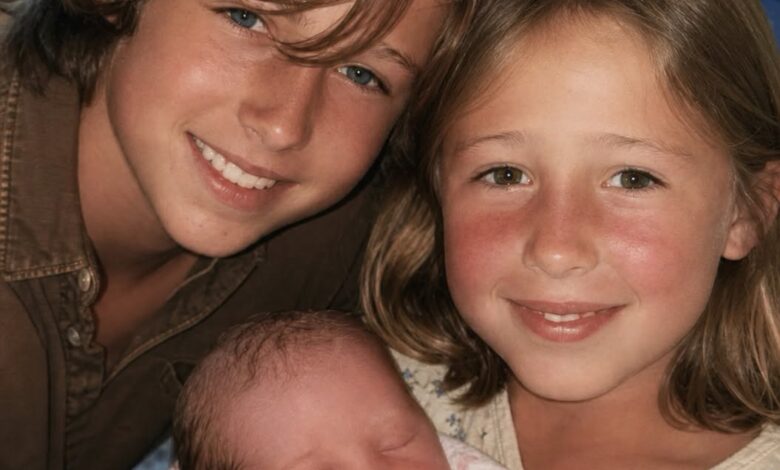
She is twelve years old.
That fact should come before everything else.
Before the headlines.
Before the photographs.
Before the arguments about records, relationships, marriage, or what happens next.
She is a child.
And now she has a child of her own.
While other girls her age are thinking about homework, friendships, school holidays, and what they might become when they grow up, she is recovering from childbirth and confronting responsibilities that overwhelm many adults.
Her baby was reportedly born healthy.
In the middle of an extraordinarily difficult situation, that is something worth being grateful for.
But a healthy delivery does not make the circumstances uncomplicated.
It does not transform a twelve-year-old into an adult.
It does not mean her body, education, emotional development, or future no longer require protection.
And it certainly does not mean the story should be treated as a curiosity.
Yet curiosity is exactly what stories like this attract.
People see an astonishing age and immediately begin asking questions.
How could this happen?
Where were the parents?
Did nobody notice?
What will happen to school?
Will the young couple stay together?
Can they possibly raise a baby?
Those questions are understandable.
But somewhere beneath all of them is a girl who may still be trying to understand what has happened to her own life.
She reportedly wants to return to school.
That detail may be the most revealing of all.
Because despite everything that has happened, part of her remains exactly where a twelve-year-old should be.
In a classroom.
Learning.
Talking with friends.
Completing assignments.
Imagining a future that has not already been decided for her.
Motherhood has entered her life extraordinarily early, but it should not be permitted to erase every other part of her identity.
She is somebody’s mother now.
She is also still somebody’s daughter.
Still a student.
Still developing.
Still entitled to an education.
Still entitled to medical care appropriate to her age and circumstances.
Still entitled to adults who protect her rather than expecting her to suddenly possess adult judgment because she has given birth.
That distinction is crucial.
Pregnancy can change a child’s circumstances overnight.
It cannot accelerate childhood development by command.
A baby doesn’t magically give a twelve-year-old the emotional resources of a twenty-five-year-old.
Responsibility and maturity aren’t the same thing.
Sometimes circumstances force children to become responsible for things far beyond their years.
That does not mean the situation is healthy.
Around her, adults are reportedly trying to create stability.
Family support can make an enormous difference.
A young mother without reliable adults around her could quickly become overwhelmed by feeding schedules, medical appointments, interrupted sleep, school obligations, financial dependence, and the relentless nature of caring for a newborn.
Even experienced adult parents can be shocked by those first months.
Sleep disappears.
Days and nights blur together.
Babies cry for reasons nobody can immediately identify.
Feeding becomes an around-the-clock responsibility.
There are vaccinations.
Checkups.
Laundry.
Nappies.
Illnesses.
Growth milestones.
Expenses.
And the constant knowledge that another human being depends on you completely.
Now imagine carrying that responsibility before you’ve even finished growing yourself.
This is why the conversation cannot stop at whether the young parents “love” their baby.
Love matters.
It is not enough.
Children need stable housing.
Food.
Healthcare.
Education.
Protection.
Consistent caregiving.
Financial resources.
Adults capable of making difficult decisions.
The newborn needs all of those things.
So does the twelve-year-old mother.
Her thirteen-year-old boyfriend has reportedly spoken about their relationship in the language young people often use when emotions feel enormous and permanent.
To him, it may genuinely feel like true love.
That feeling should not be mocked.
Young people’s emotions are real simply because they are young.
But adults have a responsibility to understand something teenagers cannot always see clearly:
Feeling certain at thirteen does not guarantee what life will look like at sixteen, twenty, or thirty.
That is not cynicism.
It is development.
People change enormously during adolescence.
Personalities develop.
Goals change.
Relationships change.
Education opens possibilities that didn’t exist before.
The person someone believes they will become at thirteen may bear little resemblance to the adult who eventually emerges.
That is why talk of lifelong commitment or marriage should be approached with extraordinary care rather than romanticized.
The priority is not creating a fairy-tale ending around two very young people.
The priority is making sure everyone involved is safe.
That means the circumstances surrounding the pregnancy require appropriate safeguarding attention under the relevant laws and child-protection systems.
When children this young are involved, adults should not simply shrug and label the situation romance.
Questions about consent, coercion, exploitation, family circumstances, legal protections, and the welfare of both young people matter.
Those questions belong with qualified professionals and appropriate authorities, not with an online crowd conducting its own investigation.
Privacy matters enormously too.
A twelve-year-old may not understand what permanent internet exposure means.
Adults barely understand it.
A photograph posted today can follow someone for decades.
Search engines do not forget easily.
Screenshots survive deleted posts.
A story that strangers consume for two days can become part of a child’s digital identity for the rest of her life.
Imagine being twenty-eight and discovering that the most intimate medical event of your childhood still appears when someone searches your name.
Imagine employers finding it.
Future partners.
Your own child.
Classmates.
The public’s curiosity should never outweigh a minor’s right to dignity.
That applies to the baby as well.
This newborn did not choose to become part of a viral story.
One day, that baby will become a child capable of reading.
Then a teenager capable of searching.
The way adults describe the circumstances now may eventually be encountered by the very person whose birth created the headlines.
That should encourage restraint.
There is another danger in stories involving extremely young parents.
They can accidentally become romanticized.
People see photographs of a young couple holding a baby and focus on devotion.
“They’re going to make it.”
“They’re more mature than adults.”
“True love.”
Perhaps they will remain important parts of each other’s lives.
Perhaps they will become caring parents with substantial family support.
We should hope for the best possible future for all three of them.
But hope should never require pretending the circumstances are ideal.
A twelve-year-old pregnancy carries serious concerns.
The girl’s physical health matters before, during, and after delivery.
So does her mental health.
She may experience emotions she cannot easily explain.
Fear.
Attachment.
Regret.
Love.
Exhaustion.
Confusion.
Embarrassment.
Pride.
Grief for the childhood she expected to have.
Several of those emotions can exist simultaneously.
Adults around her need to make room for that complexity.
They should not demand that she perform happiness because the baby is healthy.
Nor should they make her feel that motherhood has ruined her future.
Neither extreme helps.
Her life has changed dramatically.
It has not ended.
Education becomes especially important now.
Returning to school may require practical support.
Who watches the baby while she attends classes?
How will she keep up after missing lessons?
Can school staff protect her privacy?
What happens if other students tease or harass her?
Will she have access to counseling?
Can her education continue without treating motherhood as either shameful or glamorous?
Those questions may determine far more about her long-term future than any viral headline.
A twelve-year-old who becomes a mother should not be quietly pushed out of education because adults decide her path has already been chosen.
If anything, education becomes even more valuable.
She needs options.
Skills.
Independence.
A chance to develop an identity beyond one extraordinary event that happened during childhood.
The thirteen-year-old father needs guidance too.
It is easy for public discussion to focus entirely on the girl because pregnancy and childbirth happened to her body.
But if he is expected to have an ongoing role in the baby’s life, he also needs adults teaching him what responsible parenthood actually means.
Not slogans.
Not declarations about true love.
Real responsibility.
Showing up.
Learning how to care for an infant safely.
Supporting the child’s needs.
Respecting the mother.
Continuing his own education.
Understanding that being a father is measured through years of behavior, not one emotional statement.
He is also still a child.
That means expectations must be paired with support.
You cannot reasonably demand adult-level responsibility from children while denying them the adult guidance necessary to develop it.
The extended families may therefore become the foundation holding everything together.
Their support can determine whether the young parents continue school, receive proper healthcare, and avoid becoming isolated.
But family support must not become denial.
Saying, “We love them and we’ll help,” is valuable.
Saying, “Therefore nothing about this situation requires concern,” is not.
Love and concern can coexist.
In fact, they should.
Protecting children sometimes means refusing to romanticize what they are going through.
The baby will need stability for years, not weeks.
The novelty will fade.
The cameras will leave.
Public fascination will move to another story.
That is when the real work begins.
At two in the morning when the baby won’t settle.
On Monday morning when school starts.
When money is tight.
When one young parent wants to see friends.
When exams arrive.
When the baby gets sick.
When the relationship between the teenagers inevitably changes in some way, whether they remain together or not.
Those are the moments when a support system proves whether it is real.
And if the young relationship eventually ends, that should not automatically be treated as a moral failure.
Adults separate.
Teenagers change even more dramatically.
The goal should not be forcing two children to remain romantically attached forever because they share a baby.
The goal should be ensuring the baby remains loved and properly cared for regardless of what happens between the parents.
Co-parenting, where safe and appropriate, does not require romantic permanence.
Neither does responsible adulthood.
There is a broader lesson here about how society responds when childhood collides suddenly with adult consequences.
Our instinct is often judgment.
Someone must be blamed.
The parents.
The schools.
The children themselves.
Society.
The internet can produce thousands of verdicts before professionals closest to the situation have finished assessing what happened.
But judgment is cheap.
Support is difficult.
Support means finding childcare.
Paying for necessities.
Arranging medical appointments.
Protecting education.
Providing counseling.
Teaching parenting skills.
Ensuring safeguarding.
Giving exhausted young people somewhere safe to admit that they are overwhelmed.
It means staying after the headlines disappear.
That’s what these children need.
Not strangers gawking at them.
Not people turning their lives into evidence for some larger cultural argument.
Not romantic stories suggesting that love automatically conquers every practical problem.
And not condemnation telling them their futures are already destroyed.
They need adults.
Reliable ones.
People capable of holding two truths at once.
A newborn baby can be deeply loved and still have arrived under circumstances that demand serious concern.
A twelve-year-old can love her child and still need to be protected as a child herself.
A thirteen-year-old can sincerely care about his girlfriend and baby while still lacking the maturity and resources of an adult father.
Families can support them without pretending everything is normal.
And society can wish all three of them well without celebrating childhood pregnancy.
Those distinctions are not contradictions.
They are what responsible compassion looks like.
Years from now, perhaps the girl will remember very little about the headlines.
Hopefully she will remember something else.
A teacher who saved her a desk.
A relative who watched the baby so she could study.
A doctor who spoke to her respectfully instead of treating her like a spectacle.
An adult who asked what she wanted her future to look like.
Someone who reminded her that becoming a mother did not erase her right to grow.
Perhaps the young father will remember being taught that responsibility isn’t demonstrated through promises of forever.
It is demonstrated through consistency.
And perhaps their child will grow up surrounded not by the chaos strangers predicted, but by adults who made deliberate choices to provide stability.
That would be the ending worth hoping for.
Not a fairy tale.
Not two children being forced to impersonate adults.
A support system strong enough to let them develop while ensuring the baby is cared for.
Because the most important question isn’t whether the twelve-year-old mother can convince the world that she is mature enough.
She shouldn’t have to.
The adults around her need to be mature enough.
Mature enough to protect her privacy.
Mature enough to investigate any safeguarding concerns appropriately.
Mature enough to keep her in education.
Mature enough to support the newborn.
Mature enough to help the young father understand his responsibilities.
And mature enough not to turn an extraordinarily vulnerable moment into entertainment.
The baby may be healthy.
That is wonderful.
Now comes the much longer challenge.
Making sure the three young lives at the center of this story remain healthy, protected, educated, and allowed to develop beyond the circumstances that brought strangers’ attention to them.
One child has just entered the world.
Two others are still growing up.
All three deserve the chance to do so safely.