HOLLYWOOD ICON TRADES GLAMOR FOR FLOUR AND FROSTING THE INSPIRING STORY OF THE ACTRESS WHO LEFT THE BIG SCREEN TO BUILD A BAKING EMPIRE

Hollywood often sells the idea that fame is the final destination.
The lights, the cameras, the applause, the unforgettable close-up—these are the things audiences are taught to associate with success. But for some people, the brightest part of life begins only after the spotlight fades. Joy Harmon’s story is one of those rare lives that moved from cinematic immortality to something quieter, warmer, and perhaps even more meaningful.
To many film fans, Joy Harmon will always be remembered for one brief but legendary appearance in Cool Hand Luke. Her screen time lasted only a few minutes, yet it became one of the most talked-about moments in classic cinema. But to the people who knew her beyond the camera, she was far more than a striking Hollywood beauty. She was a mother, grandmother, animal lover, entrepreneur, and gifted baker whose true legacy was built not on glamour, but on creativity, resilience, and love.
Joy Harmon first entered the entertainment world during the late 1950s and early 1960s, an era when Hollywood was filled with polished images, carefully crafted personas, and larger-than-life stars. With her radiant presence and natural charm, she seemed perfectly suited to the screen. She appeared in films and television programs, steadily building a career in an industry known for both opportunity and rejection.
Then came the role that would make her unforgettable.
In the 1967 classic Cool Hand Luke, Harmon appeared as the young woman known simply as Lucille, or “the Girl,” in a scene where she washes a car under the blazing sun while a group of prisoners watch in stunned silence. The moment required almost no dialogue, yet it became one of the most memorable sequences of the film. Her presence, confidence, and screen magnetism turned a short scene into a cultural landmark.
For many actors, even a single iconic moment like that would become something to chase forever. Hollywood often encourages people to remain attached to the role that made them famous, to repeat it, market it, and live inside it as long as the public remains interested.
But Joy Harmon did something different.
She stepped away.
By the early 1970s, after her final acting credits, she quietly left the entertainment industry behind. To outsiders, it may have looked like disappearance. To Joy, it was transformation.
Long before she became known to movie audiences, she had another passion: baking. On film sets, she was known for bringing homemade treats to cast and crew members. While others might have been thinking about auditions, contracts, or their next big break, Joy was thinking about recipes, textures, flavors, and the joy of feeding people.
What began as a personal passion eventually became the center of her second act.
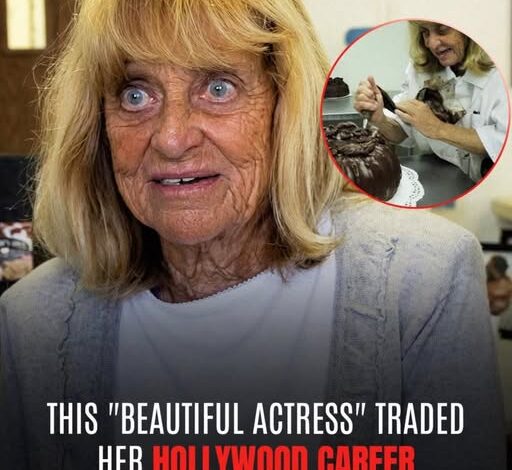
From her own kitchen, she founded Aunt Joy’s Cakes, a bakery built on recipes she had refined over years. At first, it was small and personal, the kind of business that grows through word of mouth and genuine enthusiasm. But the quality of her work quickly earned attention. Soon, her cakes, cookies, and chocolate-dipped treats became beloved by clients who appreciated not only the taste, but the care behind every order.
In a beautiful twist, Disney Studios became one of her early major clients. The woman who had once appeared on studio screens was now serving the industry in an entirely different way, supplying productions with handmade sweets instead of performances. It was not a step down from Hollywood. It was a step into a life that fit her more honestly.
Her bakery became a reflection of who she was: generous, hardworking, creative, and deeply connected to the simple pleasures of everyday life. Each treat carried the same attention she had once brought to acting, but now her art was something people could hold, share, and taste.
Joy’s dedication to her work remained strong even in her later years. Even as she entered her eighties, she continued to stay involved with the bakery, proving that passion does not have an expiration date. In the weeks before her passing, she battled pneumonia and spent time in the hospital and rehabilitation. Yet according to those close to her, she still believed she would recover and return to the work she loved.
That detail says so much about her spirit.
She did not see herself as finished.
She was still planning, still working, still tied to the life she had built with her own hands. Just one day before her final hospitalization, she was reportedly still involved in the business. That determination gives her final chapter a sense of quiet courage. She held onto purpose until the end.
Joy Harmon died peacefully at her Los Angeles home at the age of eighty-six, surrounded by family. Her passing brought an outpouring of tributes from fans who remembered her beauty, her iconic film moment, and the unforgettable impression she left on classic cinema.
But the most moving tributes were not only about her screen career.
They came from people who remembered her kindness.
Her warmth.
Her love of animals.
Her devotion to family.
Her ex-husband shared memories of a woman who cared deeply for the living things around her, feeding peacocks, squirrels, chickens, and other animals that visited her property. That image feels fitting: Joy Harmon, once framed by Hollywood cameras, later surrounded by the natural rhythms of home, animals, family, and baking.
It is a portrait of a life that found its deepest meaning away from performance.
Joy left behind three children and nine grandchildren. To them, she was not simply the woman from an unforgettable movie scene. She was the heart of the family. The one whose kitchen carried familiar smells. The one whose hands created comfort. The one who proved that legacy is not always built in headlines.
Her story challenges the narrow way society often defines success. Many people spend their lives trying to become known. Joy Harmon became known, then had the courage to choose something more personal. She proved that reinvention is not failure. Walking away from fame does not mean disappearing. Sometimes it means finally becoming whole.
She was an actress, yes.
But she was also a builder.
A baker.
A businesswoman.
A mother.
A woman who understood that five minutes on screen could make someone famous, but a lifetime of love, work, and generosity could make someone unforgettable.
In the end, Joy Harmon’s greatest role was the one she chose for herself. She moved from Hollywood glamour to the warmth of a kitchen, from cinematic fantasy to real-life sweetness, from being watched to being remembered.
And perhaps that is why her legacy feels so lasting.
Because Joy Harmon did not merely leave behind a famous scene.
She left behind proof that life can begin again, that passion can outlast fame, and that the sweetest legacies are often made far from the spotlight.