I found a strange patch of skin on my son’s ear this morning. His doctor appointment is a week away — what should I do meanwhile?

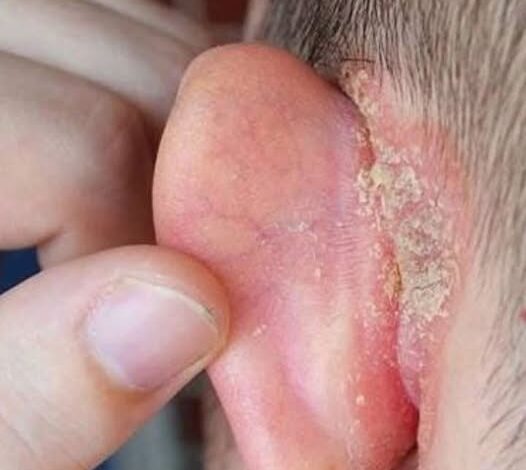
The first signs often seem small enough to dismiss—a child tugging at an ear, scratching absentmindedly during a car ride, or complaining that the skin behind the ear “feels funny.” But what begins as mild irritation can quickly become a painful cycle of relentless itching, redness, and cracked skin. When atopic dermatitis, commonly known as eczema, affects the ears, it frequently catches families by surprise. Most people associate eczema with the hands, elbows, or knees, not such a delicate and sensitive part of the body. Yet the ears can be one of the most uncomfortable places for a flare-up, leaving both children and parents frustrated as they struggle to find relief.
The skin covering the ears is remarkably thin and vulnerable. Unlike thicker areas elsewhere on the body, it has very little protection against everyday irritants. Even ordinary activities can trigger inflammation in a child whose skin is already prone to eczema. Sweat trapped after running outside, shampoo residue left behind during bath time, headphones worn for long periods, or the small metal pieces on hats, eyeglasses, or helmets can all contribute to irritation. What appears harmless for one child may be enough to spark an uncomfortable flare in another.
Once irritation begins, the itching often becomes the greatest challenge. Children naturally scratch when something feels uncomfortable, but each scratch damages the already weakened skin barrier. Tiny cracks can develop around the outer ear, behind the ear, or even near the entrance of the ear canal. As the skin breaks down, it becomes more vulnerable to bacteria and other irritants, creating a cycle in which inflammation fuels itching, scratching causes further damage, and the damaged skin becomes even more inflamed. Breaking that cycle can feel overwhelming for parents who only want to ease their child’s discomfort.
Many caregivers also carry an unnecessary burden of guilt. They may wonder whether they used the wrong shampoo, skipped a moisturizer, or overlooked an allergy that somehow caused the condition. Others worry that the rash signals a more serious illness or fear that it will never improve. These concerns are understandable, especially when the affected skin looks raw or when a child wakes repeatedly during the night because of intense itching.
In reality, atopic dermatitis is a complex condition influenced by genetics, the immune system, and environmental triggers. It is not caused by poor hygiene or a parent’s mistake. While certain products or materials may aggravate symptoms, they are usually triggers rather than the underlying cause. Understanding this distinction often brings enormous relief, allowing families to focus less on blame and more on practical steps that support healing.
Fortunately, caring for eczema on the ears does not have to be complicated. Consistency is often more important than complexity. Gentle cleansing with lukewarm water and mild, fragrance-free products helps remove sweat and irritants without stripping away the skin’s natural protective oils. After washing, carefully patting the area dry instead of rubbing can prevent additional irritation. Applying a fragrance-free moisturizer while the skin is still slightly damp helps lock in hydration and strengthens the skin barrier, making it more resilient against future flare-ups.
Avoiding unnecessary irritants can also make a remarkable difference. Switching to fragrance-free shampoos and body washes, choosing soft fabrics that do not rub against the ears, and limiting contact with nickel-containing jewelry or metal accessories may significantly reduce irritation. Even small adjustments, such as cleaning headphones regularly or allowing the ears to stay cool and dry after physical activity, can help prevent repeated flare-ups.
One of the greatest challenges, however, is preventing scratching. Young children often scratch without realizing it, especially while asleep. Keeping fingernails trimmed short reduces the amount of damage caused when they do scratch. Offering distractions during the day, using soft cotton gloves at night when appropriate, or redirecting attention to calming activities may also help interrupt the itch-scratch cycle. Although these strategies may seem simple, they can play an important role in protecting fragile skin while it heals.
There are times when home care alone is not enough. If redness continues to worsen, swelling develops, yellow crusts appear, fluid begins to drain, or the child develops fever or increasing pain, medical evaluation is important because these symptoms may indicate an infection requiring treatment. Likewise, eczema that repeatedly returns despite careful skin care deserves a professional assessment to identify potential triggers and create a personalized management plan.
Working with a pediatrician or dermatologist can replace uncertainty with confidence. These specialists can recommend treatments tailored to the child’s age, the severity of the eczema, and the specific areas affected. They can also help families recognize early warning signs of a flare, making it easier to intervene before symptoms become severe.
Perhaps the most reassuring truth is that ear eczema does not have to control a child’s daily life. With gentle skin care, thoughtful avoidance of common triggers, and appropriate medical guidance when needed, even stubborn flare-ups can improve. Over time, many families learn to recognize what their child needs long before irritation becomes severe.
The journey may require patience, but every small step toward healthier skin builds confidence. What once felt like an endless cycle of itching and worry gradually becomes a manageable part of everyday life. Instead of feeling powerless, parents gain the knowledge and reassurance to care for their child with calm determination, knowing that healing is possible and that brighter, more comfortable days lie ahead.