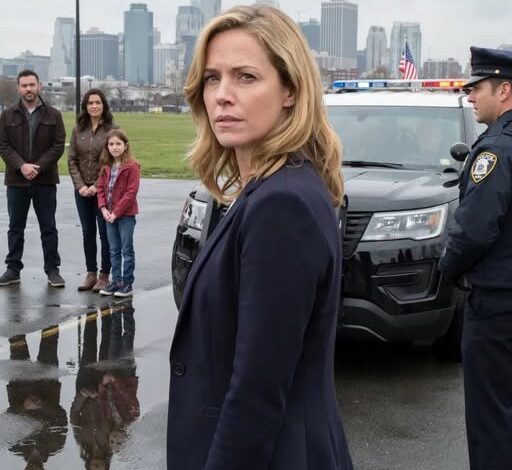
By 7:12 on a Monday morning, I was standing in my kitchen holding a cup of coffee I hadn’t yet tasted when a police officer asked me a question that changed everything.
“Ms. Donnelly, did you give anyone permission to take your vehicle out of Franklin County this weekend?”
For a moment, I genuinely thought I’d misheard him.
My name is Claire Donnelly. I’m thirty-four years old, a clinical trial coordinator in Columbus, Ohio, and the kind of person who believes details matter.
Maybe that’s because of my job.
One missing signature can delay months of work. One incorrect entry can affect an entire study.
I’ve spent years building a life around organization, accountability, and planning.
My family, unfortunately, has spent years operating by a different philosophy.
Assume forgiveness.
Ignore consequences.
Figure it out later.
Usually, I was the one expected to clean up whatever “later” became.
That morning, I had no idea just how expensive that expectation was about to get.
The weekend had started with what should have been a simple conversation.
My mother called Friday afternoon while I was working from home.
The moment her name appeared on my phone, I felt that familiar knot tighten in my stomach.
She started pleasantly enough.
She always did when she wanted something.
After a few minutes of small talk, she brought up my younger sister, Megan.
Apparently, Megan wanted to take her kids to a lake before summer ended.
A fun family outing.
Something memorable.
Something special.
I listened quietly.
Then I asked the question that saved us both time.
“What do you need?”
My mother laughed.
“Claire, don’t make it sound like that.”
A few seconds later, she asked if Megan could borrow my SUV.
Just for the weekend.
Their van was unreliable.
Dad didn’t trust it on the highway.
The kids were excited.
It would mean so much.
I said no.
Not angrily.
Not emotionally.
Just no.
I explained that I needed the vehicle Monday morning and wasn’t comfortable lending it out.
That should have ended the conversation.
In healthy families, it probably would have.
Not in mine.
The guilt campaign started immediately.
“It’s only for a couple of days.”
“Your sister needs help.”
“The children are so excited.”
Every argument was carefully designed to make my boundary sound selfish.
I repeated my answer.
No.
A few minutes later, my father texted.
Then Megan called.
By the end of the evening, all three of them had taken turns trying to convince me that my ownership of my own vehicle was somehow unreasonable.
Finally, I sent a group text.
Clear.
Direct.
Impossible to misunderstand.
“No one is taking my car. Do not use the garage code. Do not touch the spare key. I am not joking.”
Then I put my phone away.
Problem solved.
Or so I thought.
Saturday morning came and went.
Sunday passed quietly.
By Monday, the argument had mostly faded from my mind.
Until the police called.
Standing in my hallway, I listened as the sergeant explained that my vehicle had been towed from a private marina nearly two counties away.
At first, nothing made sense.
My SUV was supposed to be sitting safely in my garage.
Then I opened my garage app.
The access logs appeared instantly.
Saturday.
8:13 a.m.
Garage open.
Saturday.
8:16 a.m.
Garage closed.
I felt physically sick.
They had done it.
After every warning.
Every refusal.
Every conversation.
They had gone into my garage and taken the vehicle anyway.
The sergeant continued speaking.
A family group had been associated with the SUV.
Someone claimed they had permission.
Someone claimed they always borrowed it.
That was the moment my shock became anger.
Because this wasn’t confusion.
This wasn’t misunderstanding.
This was entitlement.
My family hadn’t forgotten my answer.
They had simply decided it didn’t matter.
Then came the detail that made everything worse.
The woman believed to be driving had a suspended license.
Megan.
Of course it was Megan.
Months earlier, she’d mentioned some citation issue she’d been ignoring.
Apparently, she was still ignoring it.
Except now my vehicle, my insurance, and my name were attached to her decisions.
The sergeant asked again.
“Did you give anyone permission to use the vehicle?”
I looked at my phone.
At the messages.
At the timestamps.
At the proof.
And for the first time in my life, I didn’t soften the truth to protect my family.
“No,” I said.
“I explicitly denied permission.”
The silence that followed felt surprisingly peaceful.
Not because the situation was good.
Because I had finally stopped carrying responsibility for choices that weren’t mine.
Later that morning, I drove to the impound yard.
My SUV sat behind a chain-link fence looking dirty but intact.
Mud covered the lower panels.
Food wrappers littered the interior.
A cup holder had been broken.
The vehicle wasn’t ruined.
Yet somehow that made me angrier.
Because the damage was just enough for people to dismiss.
Just enough for someone to say I was overreacting.
Inside the office, I met with the sergeant and provided screenshots of everything.
The text messages.
The garage logs.
The camera footage showing my father entering my property.
Every piece of evidence.
Then the office door opened.
And in walked my mother, father, and Megan.
Not one of them looked sorry.
They looked annoyed.
My mother spoke first.
“Claire, this has gotten completely out of hand.”
Not hello.
Not apology.
Not concern.
Just frustration that consequences had entered the conversation.
The sergeant began asking questions.
Who accessed the garage?
Who drove the vehicle?
Who told deputies they had permission?
One by one, their stories began collapsing.
My mother admitted they assumed I would get over it.
My father claimed he had driven most of the trip.
Megan stopped talking entirely once the suspended license issue surfaced.
For the first time in my life, nobody could talk their way around reality.
Because reality had paperwork.
Then the tow clerk printed the bill.
Towing fees.
Storage fees.
Administrative charges.
Cleaning assessments.
The total sat at $1,812.
My mother’s head immediately turned toward me.
“Claire, just pay it and we’ll figure it out later.”
The sentence was so familiar it almost made me laugh.
Figure it out later.
Translation:
You pay now.
We forget later.
I looked directly at her.
Then at the clerk.
And calmly said, “No.”
The room fell silent.
“The people who took the vehicle can pay for the vehicle.”
My father stared at me.
“Don’t do this.”
I met his eyes.
“You already did.”
For once, nobody had a response.
Eventually, they paid.
Every dollar.
Every fee.
Every consequence.
The clerk handed the receipt to me.
Not them.
Me.
And something shifted inside me at that moment.
Not triumph.
Not revenge.
Something deeper.
Recognition.
For years, I had confused keeping the peace with being kind.
I thought protecting relationships meant absorbing damage.
I thought love required flexibility.
Patience.
Understanding.
But standing there in that office, I finally saw the pattern clearly.
They weren’t asking for help.
They were expecting access.
Access to my property.
My time.
My energy.
My resources.
And whenever I resisted, they called it selfishness.
That afternoon, I changed every garage code.
Removed every spare key.
Updated every lock.
Then I sat alone at my kitchen table and started making a list.
Every incident.
Every borrowed item returned damaged.
Every emergency that somehow became my responsibility.
Every favor treated as an obligation.
By the time I finished, the list filled several pages.
The car wasn’t the story.
The car was simply the first time I refused to pretend the story wasn’t happening.
That evening, I sent a single email.
Short.
Factual.
No emotion.
No insults.
No debate.
You took my vehicle after I denied permission.
You exposed me to legal and financial risk.
Effective immediately, you no longer have access to my home, garage, or vehicle.
Do not ask to borrow money, property, or time until I choose otherwise.
Then I pressed send.
The responses arrived quickly.
My mother accused me of destroying the family.
My father called it a misunderstanding.
Megan claimed I had embarrassed her.
I didn’t answer.
Because for the first time, I understood something important.
People who benefit from your lack of boundaries rarely celebrate when you create them.
The following weeks were ugly.
Relatives called.
Stories spread.
Versions of events were edited and rewritten.
But every time someone asked what happened, I told them exactly the same thing.
I said no.
They took the car anyway.
Police became involved.
Those simple facts did more work than any argument ever could.
Five months later, I was driving that same SUV to a medical conference in Cleveland.
The replacement cup holder held fresh coffee.
The interior smelled clean.
The highway stretched ahead.
And for the first time in years, my stomach wasn’t carrying the weight of someone else’s crisis.
Work was better.
My home was calmer.
Even my thoughts felt lighter.
The strange thing about boundaries is that people often describe them as walls.
They aren’t.
They’re doors.
Doors that let healthy relationships enter while keeping exploitation outside.
Looking back, people still occasionally ask whether I regret involving law enforcement.
My answer never changes.
I regret that it became necessary.
But I don’t regret telling the truth.
Because the truth didn’t destroy my family.
It revealed it.
And once I saw clearly how much of my life had been built around managing other people’s entitlement, I couldn’t unsee it.
The biggest lesson wasn’t about cars.
Or police reports.
Or impound fees.
It was this:
Love that depends on your obedience isn’t love.
Respect that disappears when you say no was never respect.
And sometimes the most important thing you’ll ever recover isn’t your property.
It’s your right to stop explaining why it belongs to you in the first place.
That Monday morning started with a police officer asking whether anyone had permission to use my vehicle.
By the end of it, I finally asked myself a much more important question.
Who had permission to use my life?
For years, the answer had been everyone except me.
Now, finally, that had changed.