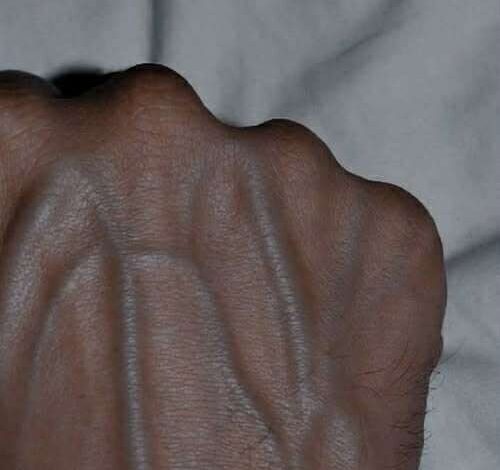
The sight of prominent veins can be surprisingly unsettling.
For many people, it happens suddenly—or at least it feels that way. One day your hands, arms, legs, or feet appear completely ordinary. Then, seemingly overnight, blue, green, or purple lines become more noticeable beneath the skin. What was once invisible now seems impossible to ignore.
The mind often reacts faster than reason.
Questions begin to surface.
Is this normal?
Am I getting sick?
Is something wrong with my circulation?
Could this be a sign of a serious disease?
A quick internet search rarely helps. Within minutes, harmless explanations compete with alarming medical possibilities, and what started as simple curiosity can quickly turn into genuine anxiety.
Yet the reality is often far less frightening than people imagine.
Visible veins are frequently a reflection of normal changes occurring within the body rather than evidence of an impending medical crisis. In many cases, they are simply a reminder that the human body is dynamic, constantly adapting to age, environment, activity levels, and genetics.
One of the most common reasons veins become more noticeable is the natural thinning of the skin.
As people age, the skin gradually loses some of its thickness and elasticity. Layers that once concealed underlying structures become more transparent, making veins easier to see. The veins themselves may not have changed dramatically at all; the skin above them has simply become less effective at hiding them.
This process is remarkably common.
In fact, many people first notice prominent veins during middle age or later, often assuming something new has developed when, in reality, they are simply seeing anatomy that was always there.
Body fat also plays an important role.
Veins lie beneath the skin and beneath varying amounts of fat tissue. Individuals with lower body-fat percentages often display more visible vascularity because there is less tissue obscuring the blood vessels.
This is particularly noticeable among athletes.
Bodybuilders.
Runners.
Cyclists.
Swimmers.
Fitness enthusiasts.
Many spend years training and eventually develop highly visible veins, especially in the arms and legs. Far from being a sign of illness, these veins often reflect excellent cardiovascular conditioning and low body-fat levels.
Temperature can create changes as well.
On a warm day, blood vessels naturally dilate to help regulate body temperature. This expansion allows more blood to circulate near the skin’s surface, where heat can dissipate more effectively.
The result?
Veins appear larger.
More prominent.
More visible.
Someone who notices their veins after a hot shower, during summer weather, or while standing in a warm room may simply be witnessing a normal physiological response.
Physical activity has a similar effect.
Exercise increases blood flow.
Muscles demand oxygen.
The cardiovascular system responds.
Veins temporarily expand as circulation increases, often making them stand out more dramatically than usual.
Many people notice this effect during workouts and assume something unusual is happening.
In reality, the body is doing exactly what it was designed to do.
Genetics also influence vein visibility.
Some individuals inherit thinner skin.
Others inherit vein patterns that naturally sit closer to the surface.
Two people with identical health profiles may display dramatically different vascular appearances simply because their bodies are built differently.
This is one of the reasons comparisons can be misleading.
What appears normal for one person may look unusual on another.
And what appears alarming in the mirror may actually be entirely consistent with that person’s natural anatomy.
Understanding these factors can provide enormous reassurance.
Not every visible vein is a warning sign.
Not every physical change indicates disease.
Not every variation requires treatment.
Sometimes the body is simply revealing itself more clearly.
Yet reassurance should never become dismissal.
Because while visible veins are often harmless, there are situations where attention is warranted.
The challenge lies in distinguishing between normal variation and symptoms that deserve medical evaluation.
Pain is one of the most important clues.
Healthy visible veins typically do not hurt.
If veins become tender, sore, or painful without obvious explanation, it is worth paying attention.
Pain suggests that something more than appearance may be involved.
Swelling is another important signal.
A vein that suddenly enlarges, particularly if accompanied by swelling in the surrounding area, may indicate an underlying problem requiring professional assessment.
The same applies to warmth.
A vein that feels noticeably warm to the touch can sometimes reflect inflammation or other vascular concerns.
Changes in skin color deserve attention as well.
Healthy circulation generally supports stable skin coloration.
When skin begins turning red, purple, bluish, unusually pale, or develops blotchy discoloration, the body may be communicating that blood flow is being affected.
These changes should never be ignored.
The same principle applies to the extremities.
Fingers and toes can reveal a great deal about circulation.
Persistent coldness.
Numbness.
Tingling.
Loss of sensation.
These symptoms deserve investigation, especially when they occur repeatedly or worsen over time.
The body depends upon healthy circulation for virtually every function.
When circulation becomes compromised, extremities are often among the first areas to show signs.
Slow-healing wounds represent another significant warning.
The body’s ability to repair itself depends heavily on adequate blood flow.
Cuts, scrapes, and minor injuries that linger far longer than expected can sometimes indicate vascular problems requiring medical attention.
Similarly, persistent throbbing sensations, unexplained heaviness, or feelings of pressure should not be casually dismissed.
These symptoms do not automatically indicate a serious condition.
But they do justify asking questions.
And asking questions is one of the most valuable health habits a person can develop.
Too often, people fall into one of two extremes.
Some ignore every symptom, convincing themselves that nothing could possibly be wrong.
Others assume every symptom represents catastrophe.
Neither approach serves health particularly well.
The healthiest approach lies somewhere in between.
Observation without obsession.
Awareness without panic.
Curiosity without fear.
The ability to notice changes while maintaining perspective.
That balance is more powerful than many people realize.
Because early attention often prevents larger problems later.
Seeking medical advice is not a sign of weakness.
It is not an overreaction.
It is not evidence of anxiety.
It is an act of self-respect.
A person who seeks evaluation when something feels unusual is not being dramatic.
They are being responsible.
Healthcare professionals would generally prefer answering a harmless question than treating a preventable complication months later.
There is wisdom in paying attention.
The body speaks constantly.
Through energy levels.
Through pain.
Through skin changes.
Through circulation.
Through countless subtle signals that often appear long before major problems develop.
Learning to listen to those signals is one of the most valuable skills a person can cultivate.
At the same time, learning not to fear every change is equally important.
Bodies change.
Skin changes.
Veins change.
Aging changes appearance.
Fitness changes appearance.
Weight fluctuations change appearance.
Temperature changes appearance.
These shifts are often normal parts of being human.
The goal is not to monitor every vein with suspicion.
The goal is to recognize when something feels different enough to deserve attention.
Between harmless visibility and serious vascular disease exists a wide spectrum of possibilities.
Navigating that spectrum requires neither panic nor complacency.
It requires awareness.
It requires judgment.
It requires the willingness to ask questions when questions arise.
Perhaps most importantly, it requires trust in your own observations.
You know your body better than anyone else.
You notice patterns.
You recognize changes.
You sense when something feels normal and when it does not.
That instinct should not replace professional medical advice, but neither should it be ignored.
Visible veins are often just veins.
A reflection of anatomy.
A reflection of genetics.
A reflection of fitness.
A reflection of age.
A reflection of circulation doing exactly what it is supposed to do.
But occasionally, they are part of a larger conversation the body is trying to have.
Knowing the difference begins with one simple habit:
Pay attention.
Notice.
Question.
And when necessary, get checked.
Not because you are afraid.
But because your health is worth the effort.
The line between reassurance and prevention is not fear.
It is awareness.
And awareness remains one of the most powerful tools any person possesses when it comes to protecting their long-term well-being.